
Casting teams make fast decisions, but that does not mean your headshot needs a big smile or a dramatic stare to work. The best actor headshot expressions give someone looking at your photo an immediate, believable sense of who you could play. Your job is not to perform for the camera. It is to look present, specific, and easy to imagine in a role.
A strong actor headshot feels like you on a very good day. It is polished enough for submissions, while still leaving room for a casting director to project a character, story, or relationship onto you. That balance is why expression matters as much as lighting, wardrobe, and retouching.
What Makes an Actor Headshot Expression Work?
The most effective expression is usually not the most intense one. It is the one that matches your casting type and feels true when someone meets you in the room. If your photo promises warm, grounded, approachable energy, but you arrive looking guarded and uncomfortable, the image has not done its job.
Think of your expression as a first impression, not a final performance. Casting professionals should be able to see your eyes clearly and feel that you are engaged with the camera. A blank face can read as bored or disconnected. On the other hand, an overly animated expression can feel forced, especially in a small thumbnail on a casting platform.
The right choice also depends on your market. A performer pursuing comedic, commercial, or family-friendly roles may benefit from more openness and warmth. Someone submitting for dramatic television, thrillers, or character-driven independent projects may need a quieter expression with more thought behind it. Neither approach is universally better. The question is whether the image supports the roles you are realistically pursuing now.
The Best Actor Headshot Expressions to Consider
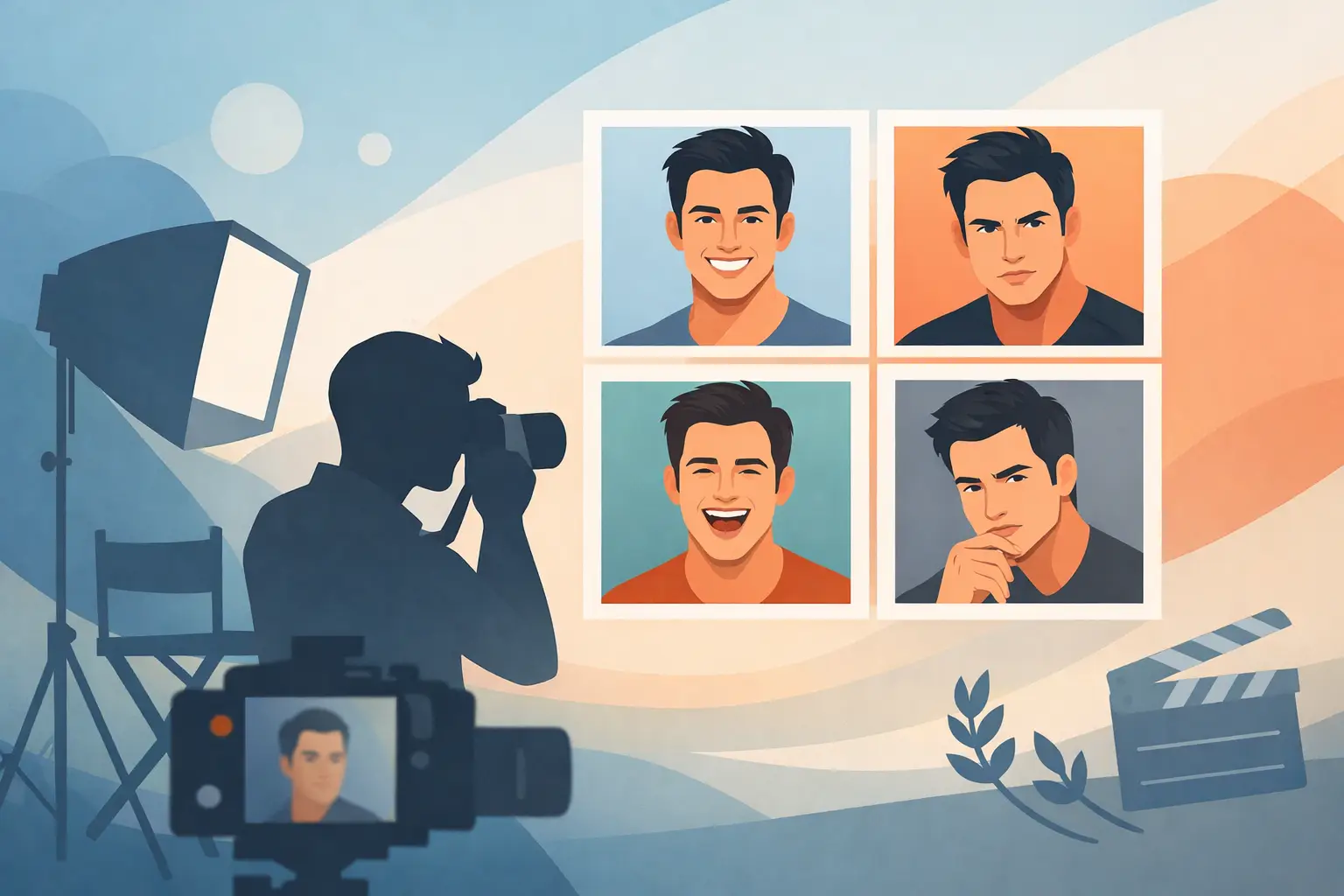
You do not need a dozen different facial expressions in one session. Most actors are better served by two or three distinct looks that remain connected to their real personality. These are the most useful starting points.
Open and approachable
This is often described as a soft smile, but it is more than lifting the corners of your mouth. Your eyes should look alert, relaxed, and interested. Imagine greeting someone you genuinely like, rather than being told to “say cheese.”
An approachable expression is a strong option for commercial work, comedy, young professional roles, romantic leads, friendly authority figures, and many contemporary television submissions. It can also work beautifully for actors who naturally have serious features but want to show warmth without losing credibility.
Quiet confidence
Quiet confidence is one of the most versatile actor headshot expressions. Your mouth may be neutral or carry the slightest hint of a smile, while your eyes communicate focus and ease. There is no need to look tough or overly serious. The feeling is simply: you know who you are, and you are comfortable being seen.
This expression works well for dramatic roles, professional characters, detectives, lawyers, executives, and grounded leads. It can be especially useful when you want a headshot that has range without becoming vague.
Thoughtful and emotionally available
A thoughtful expression has softness, depth, and a sense that something is happening behind the eyes. It is not sadness. It is not a frown. It is the look of someone listening carefully or considering what matters.
For actors interested in drama, indie film, character work, and emotionally layered roles, this expression can be effective. The key is to keep your face relaxed. Pressed lips, a furrowed brow, or a hard stare can quickly turn “thoughtful” into “unhappy” or “unapproachable.”
Lightly playful
A lightly playful expression has an edge of personality without looking like a comedy sketch. It might be a knowing half-smile, a spark in the eyes, or a relaxed expression that suggests wit and confidence.
This can support comedic roles, charismatic characters, creative professionals, romantic roles, and people who naturally bring an energetic presence into a room. It is less about trying to look funny and more about allowing your natural sense of humor to show.
Strong and direct
A direct look can be powerful when it is grounded. You are looking into the lens with clarity, not challenging it. Your jaw and forehead remain relaxed, and your eyes stay open and engaged.
This approach can suit action-oriented roles, authority figures, intense drama, and characters with a clear point of view. Use it carefully if your natural expression already reads stern. A photographer can help soften the posture, light, or mouth position so that strength does not become intimidation.
Match the Expression to Your Casting Type
Your headshot should not trap you in one category forever. Still, it should make practical sense for your current age range, appearance, and the roles you are getting called in for. Review recent auditions, feedback from your agent, and shows or films that cast people with a similar energy.
If you are frequently seen for kind teachers, nurses, neighbors, or relatable parents, a warm and open image may be more useful than an intense dramatic look. If you are called in for conflicted leads, sharp professionals, or complicated supporting characters, quiet confidence or emotional availability may be a better fit.
This is also where two looks can help. One photo might show your more approachable commercial side, while another reveals your grounded dramatic range. The expressions should feel related, not like two different people. Casting teams want range, but they also want a clear sense of who you are.
How to Look Natural Instead of Posed
The fastest way to look stiff is to concentrate on every part of your face at once. When actors try to control their eyebrows, smile, jawline, chin, and eyes simultaneously, the result often feels tense. A good headshot session creates enough direction that you can stop managing yourself and start responding.
Before the session, avoid practicing exaggerated expressions in the mirror for hours. It can make you more self-conscious. Instead, identify a few feelings or situations that bring out the energy you want. Think about a trusted friend walking into the room, a great piece of news, a private joke, or a moment when you felt capable and calm. These simple prompts create a more genuine response than forcing a facial pose.
During the shoot, small adjustments matter. Dropping your shoulders, taking a slow breath, slightly shifting your weight, or letting your mouth rest can transform an image. Your expression is connected to your whole body. If your neck is tight or your shoulders are lifted, your face will usually show it.
Common Expression Mistakes to Avoid
A full, fixed smile in every frame is one of the most common mistakes. A smile can be valuable, but when it stays frozen, it can look more like a business portrait than an actor headshot. Let your expression move naturally between frames so the final image has life.
Another issue is trying to look “serious” by narrowing the eyes too much. A small amount of focus can add intensity, but excessive squinting makes the eyes disappear. Your eyes are the connection point in a headshot, so they need light and clarity.
Be careful with character faces, too. Unless your agent has a specific reason for a highly specialized look, avoid expressions that are angry, seductive, distressed, or overly quirky. Those choices can limit the viewer’s imagination. A casting director should see your potential, not feel that you have already decided the entire role for them.
Finally, do not select a photo only because you think you look the most conventionally attractive in it. The strongest actor headshot is often the frame where you look most alive. It may have a softer smile, a more natural angle, or a little more vulnerability than your usual favorite photo. That is often what makes it memorable.
Work With Direction, Not Against It
Even experienced actors can feel awkward in front of a still camera. Acting involves movement, another person, a scene, and a purpose. A headshot can feel strangely quiet by comparison. That is why practical coaching during the session makes a meaningful difference.
At RP Photography, the goal is not to force one signature expression on every actor. It is to create a relaxed process, offer clear prompts, and watch for the moments when your expression becomes believable and specific. Professional lighting and editing matter, but the image still needs to feel like a real person someone wants to cast.
Come prepared with a clear idea of the work you want to pursue, but leave room for discovery. The best frame may arrive just after you stop trying to make the “perfect” face and allow the camera to see your natural presence.
One thought on “Best Actor Headshot Expressions That Get You Seen”
Comments are closed.