
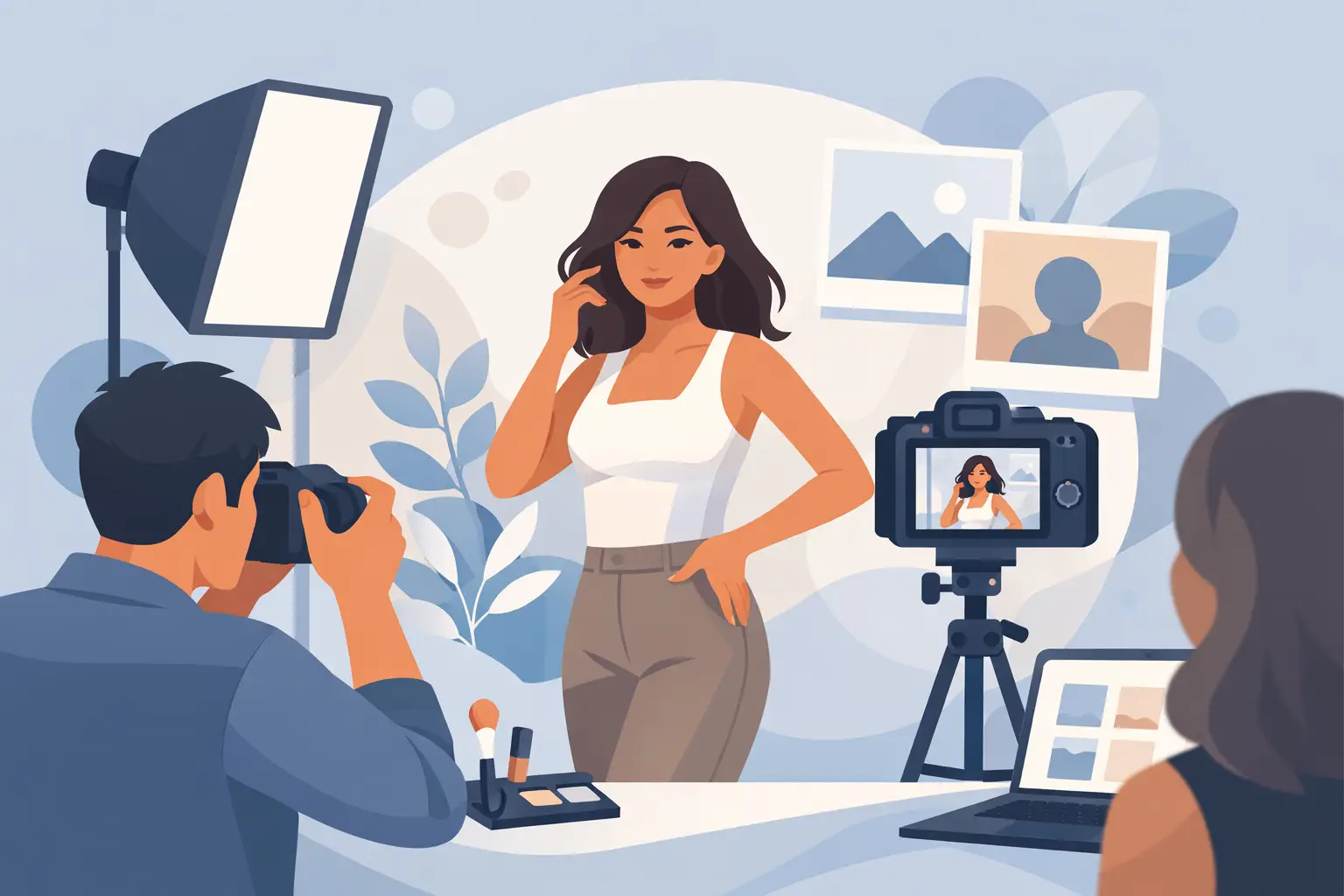
A strong modeling portfolio is not a collection of your favorite photos. It is a clear, professional introduction to how you look on camera, how you move, and where you may fit in the market. This model portfolio session guide will help you arrive prepared, use your time well, and leave with images that feel natural rather than over-posed.
For aspiring models, the goal is rarely to look like someone else. The better goal is to create a set of photographs that shows your real features, your confidence, and your ability to take direction. A casting professional, agency, or potential client should be able to understand your look within seconds.
Start With the Type of Work You Want
Before choosing clothing or saving pose ideas, think about the kind of modeling work you would like to pursue. Commercial, lifestyle, fashion, fitness, beauty, and actor-model portfolios can require very different images. You do not need to lock yourself into one category early on, but having a direction helps your session feel focused.
Commercial modeling usually benefits from approachable expressions, relaxed body language, and clothing that looks current without being distracting. Fashion-focused images may allow for stronger styling, more angular poses, and bolder expressions. If you are building an acting portfolio as well, include natural head-and-shoulders portraits that show your personality clearly.
Your current experience also matters. A first portfolio session should prioritize clean, versatile images over elaborate concepts. Once you have booked work or identified the kinds of images clients request, you can add more specialized shots. Starting simple is not playing it safe – it is making sure the portfolio can work for more opportunities.
What a Good Starter Portfolio Includes
A useful portfolio shows variety, but it should still look like the same person. You do not need twenty different looks. You need a small set of polished images that gives viewers a reliable sense of your face, build, style, and range.
A well-planned session often includes a clean headshot, a three-quarter portrait, and at least one full-length image. From there, add looks with different expressions and wardrobe changes. One set can feel friendly and open, while another can be more serious, editorial, or confident. The changes should be intentional, not random.
For most newer models, these image types are a practical place to begin:
- A natural, well-lit headshot with minimal styling
- A smiling portrait that feels approachable and commercial
- A neutral or serious expression for contrast
- Full-length images that show posture and proportions clearly
- A lifestyle or fashion-forward look that reflects your target market
Avoid relying only on highly edited beauty images or dramatic concepts. They can be useful additions, but they should not hide what you actually look like. Clean images build trust because they let agencies and clients see the person they may hire.
Choose Wardrobe That Supports, Not Competes
Bring clothing that fits well and makes you feel comfortable standing, sitting, and moving. If you are constantly adjusting a neckline, pulling at a hem, or worrying about wrinkles, it will show in your posture.
Solid colors are usually the easiest choice for portfolio images. Black, white, denim, earth tones, and colors that complement your skin tone photograph well. Simple layers, such as a fitted jacket over a plain shirt, can create a second look without requiring a full wardrobe change.
Bring more options than you expect to wear, but avoid arriving with a bag full of unrelated pieces. Two to four coordinated looks are often enough for a focused session. Include clean shoes if full-length photos are planned, along with basic accessories that fit each outfit. Large logos, busy patterns, and overly trendy pieces can date an image quickly unless they are part of a specific fashion concept.
Undergarments deserve attention too. Choose pieces that work under each outfit and do not create visible lines or straps. For fitted clothing, a quick mirror check before the session can save time later.
Keep Hair and Makeup Recognizable
Professional hair and makeup can be a helpful option, especially if you want a polished beauty or fashion look. Still, your portfolio should not depend on a version of you that is difficult to recreate. Casting teams want to know what you look like on a normal, well-presented day.
Aim for clean skin, groomed brows, neat hair, and makeup that enhances rather than transforms. Bring a hairbrush, lip balm, powder, and any products you use for quick touch-ups. If you have facial hair, decide whether you want it groomed or clean-shaven before you arrive, then keep the choice consistent across the look.
Posing Is About Direction, Not Perfection
Most people do not know what to do with their hands the moment a camera comes out. That is normal. Good portfolio photography is not about showing up with a long list of poses memorized. It is about working with a photographer who can coach you through small adjustments that make a meaningful difference.
A slight turn of the shoulders, a shift of weight, or a change in where you place your chin can make an image feel more confident and flattering. Rather than holding one pose too long, think in small movements. Turn your head slightly, soften your eyes, look just past the camera, then return to the lens. These transitions create natural variety.
Your expression matters as much as your pose. Practice a few options in the mirror beforehand: a relaxed neutral look, a subtle smile, a full smile, and a more focused expression. The goal is not to force emotion. Think of something that gives you the feeling you want to show, then let the expression happen naturally.
If you are nervous, say so at the start of the session. A professional photographer expects this and can give clearer direction, show you what is working, and build the pace gradually. Feeling comfortable is not separate from looking good on camera. It is usually where the best images begin.
Prepare the Day Before Your Session
The best preparation is practical. Try on every outfit, steam or iron what needs attention, and place your shoes and accessories together. Get a normal night’s sleep, drink water, and avoid making a major change to your hair, skincare routine, or grooming immediately before the shoot.
Do not crash diet, overtrain, or try to change your appearance at the last minute. Those choices can leave you tired, uncomfortable, or less like yourself. A portfolio session should show your current potential, not create pressure to meet an unrealistic standard.
On the day of the shoot, arrive a few minutes early with your wardrobe organized. Wear loose, comfortable clothing if you are changing on location so you do not have deep marks on your skin from tight waistbands or straps. Give yourself enough time that the session does not begin with you feeling rushed.
Review Your Images With a Professional Eye
After the session, it can be tempting to choose only the photo where you think you look most glamorous. That image may be valuable, but it should not be the only deciding factor. The best portfolio selections are the ones that communicate clearly and fit the work you want to book.
Look for images where your eyes are engaged, your posture looks natural, and your styling does not distract from your face. Compare similar frames and choose the strongest version rather than keeping near-duplicates. A smaller portfolio with distinct, fully edited images is more effective than a large gallery with repeated poses.
Be selective about retouching as well. Professional editing should refine the final image while keeping you recognizable. Temporary blemishes, stray hairs, and small distractions can be cleaned up. Changing your facial structure, body shape, skin texture, or defining features too heavily can create problems when you meet a client in person.
Update Your Portfolio as You Grow
Your first session is a starting point, not a final statement. As your appearance, confidence, and goals develop, update your images. Replace older photos that no longer reflect your current hairstyle, body of work, or market direction.
For aspiring models in Cambridge, Kitchener, Waterloo, and Guelph, a guided professional session can make the process feel far more manageable. You do not need to arrive as an experienced model. You need to arrive prepared to collaborate, take direction, and show up as yourself. The images that create opportunities are often the ones where confidence looks believable – because it is.