
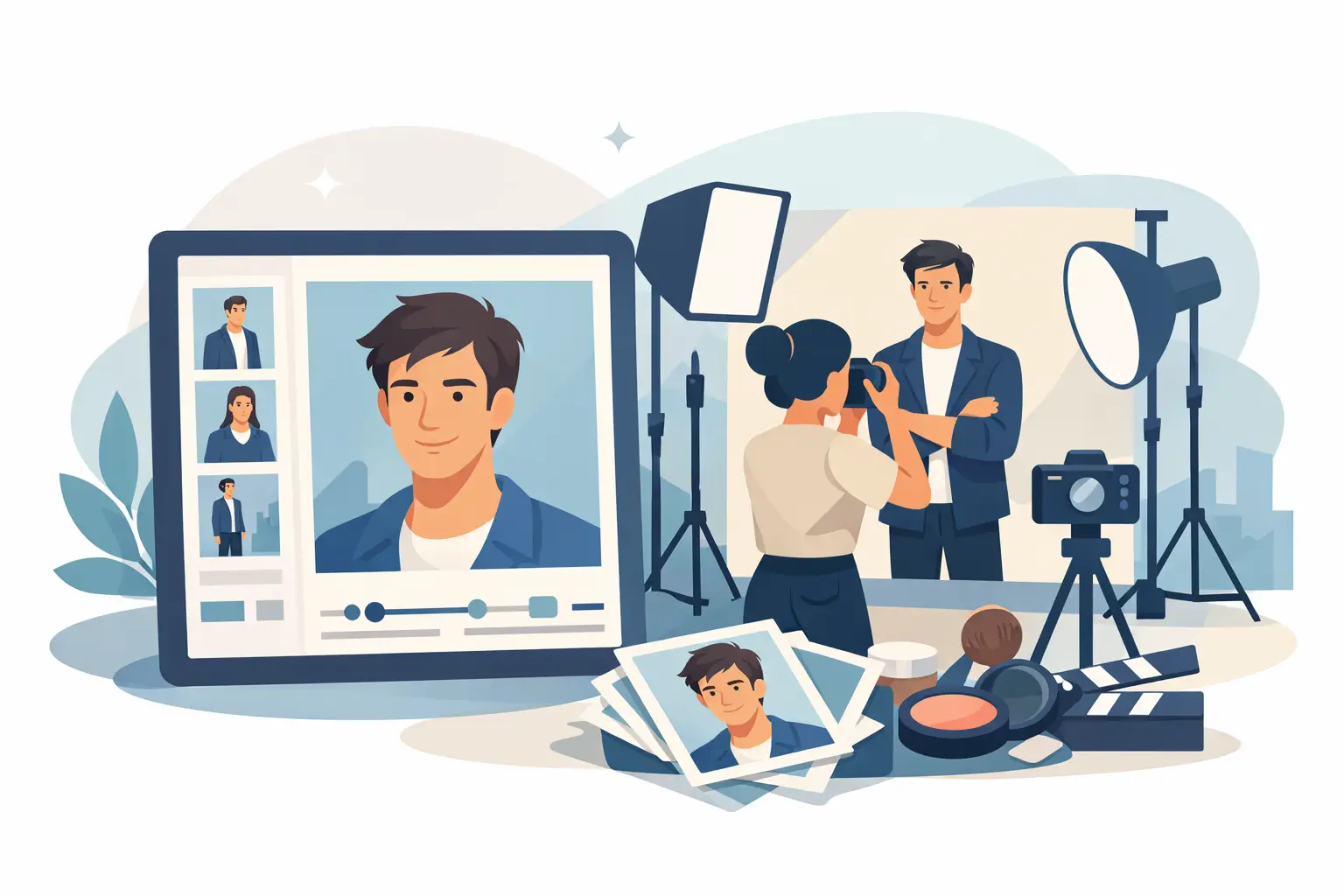
Casting teams are not looking for a perfect version of you. They are looking for a clear, believable version they can picture in a role. That is the real starting point for how to prepare actor photos: arrive looking like yourself on a very good, well-rested day, with enough polish to look professional and enough honesty to feel castable.
A strong actor headshot should make it easy to understand your energy before you enter the room. It is not a fashion campaign, a graduation portrait, or a heavily filtered social media image. It is a professional tool that helps an agent, casting director, or production team quickly connect your face with the kinds of roles you may play.
Start With the Roles You Want to Be Considered For
Before choosing an outfit or booking a session, think about your current casting range. Are you regularly read as an approachable young professional, a grounded parent, a sharp executive, a trusted best friend, a student, or someone with an edge? Your headshot does not need to lock you into one character, but it should support the impression you naturally make.
Be realistic about where you are now, rather than trying to photograph a future version of yourself. A recent graduate may eventually play a senior lawyer, but a headshot that relies on overly formal styling can feel forced if that is not yet their natural casting lane. The most useful actor photos are current, credible, and easy to place.
If you are building a portfolio, you may need more than one look. A commercial-friendly image can show warmth and approachability, while a theatrical image may be quieter, more focused, or more dramatic. These should still look like the same person. Different expressions and wardrobe choices can create range without changing your identity.
How to Prepare Actor Photos With the Right Wardrobe
Your clothing should frame your face, not compete with it. Bring a few options, but choose them with a purpose. Solid colors, subtle texture, and pieces that fit well generally photograph better than busy graphics, prominent logos, or highly reflective fabrics.
Aim for clothes that feel like something you would genuinely wear when you want to look put together. If a jacket, dress, or shirt makes you feel stiff, self-conscious, or unlike yourself, that discomfort often shows up in your posture and expression. Comfort matters because relaxed confidence reads clearly on camera.
Color choice depends on your skin tone, hair color, and the backdrop, but mid-tone colors are often a safe place to start. Deep blue, forest green, burgundy, soft gray, and muted earth tones can add shape without pulling focus. Bright white can work in some setups, but it may feel stark or wash out detail. Black can look polished, though it sometimes loses separation against a darker background.
Bring a few layers when possible. A simple shirt, a light jacket, or a textured sweater can give you different looks without creating a complete wardrobe change. Avoid bringing ten unrelated outfits and hoping to decide at the studio. Narrow your choices in advance, then bring two or three strong options.
For theatrical shots, keep styling simple enough that your eyes remain the focal point. For commercial work, a little more color and openness can help communicate ease and warmth. The right choice depends on the roles you want, which is why it helps to discuss your goals with your photographer before the session begins.
Plan Grooming Early, Not the Night Before
Schedule haircuts, color appointments, brow grooming, and any new skincare treatments several days before your shoot. A dramatic haircut or a brand-new product the night before can create surprises you do not want in your final images. Give yourself time to settle into any change.
Your makeup should usually look like an elevated version of your everyday appearance. The camera benefits from a little definition, especially around the eyes and face, but heavy contouring, glitter, and trendy makeup can date a headshot quickly. If you work with a makeup artist, communicate that the goal is a professional actor headshot, not an evening look.
Men and anyone with facial hair should decide in advance whether to arrive clean-shaven, with their usual stubble, or with a neatly shaped beard. There is no single correct choice. Consistency matters more. Show the version of yourself casting teams are most likely to see when you walk into an audition.
Get a full night’s sleep, drink water, and avoid experimenting with foods, supplements, or skincare immediately before the session. These small details will not replace good lighting and direction, but they can help you feel more comfortable and refreshed.
Practice Expression, But Do Not Rehearse a Face
Many actors worry that they will look awkward in front of the camera. That is common, including for people who are confident onstage or on set. A headshot session is different from performing a scene because the camera captures tiny shifts in the eyes, jaw, shoulders, and mouth.
It helps to spend a few minutes in front of a mirror noticing your natural expressions. Look for the difference between a genuine soft smile, a friendly open expression, calm confidence, curiosity, and focused intensity. The point is not to memorize poses. It is to recognize what feels natural so you can return to it more easily.
Avoid trying to create a dozen characters with your face. A casting director should see you, not a collection of strained expressions. Good photographer direction will help you adjust your chin, shoulders, eyeline, and breathing while keeping the result believable.
During the session, think of a simple situation rather than forcing an emotion. For a warm commercial look, imagine greeting someone you are happy to see. For a more grounded theatrical look, focus on listening. These small mental prompts tend to create more life in the eyes than telling yourself to “look serious” or “smile bigger.”
Prepare the Practical Details for Shoot Day
Give yourself more time than you think you need. Rushing into a session after traffic, a stressful meeting, or a last-minute wardrobe search can leave you feeling tense. Arrive early enough to settle in, check your clothing, and talk through the plan.
Pack your outfits on hangers or fold them carefully to reduce wrinkles. Bring a lint roller, basic touch-up items, and any accessories you truly need. Keep jewelry simple unless it is a recognizable part of your everyday look. Large earrings, statement necklaces, and accessories that move easily can distract from your face.
If you wear glasses regularly, bring them. They may be part of the look casting teams expect from you. A photographer can work with you to manage reflections and find angles that keep your eyes visible. If you only wear glasses occasionally, consider whether they serve your casting goals or simply add visual noise.
Tell your photographer if you have a preferred side, a feature you feel sensitive about, or previous photo experiences that made you uncomfortable. Clear communication is useful, not high-maintenance. An experienced headshot photographer can offer practical direction while making sure the images still feel like you.
At RP Photography, the goal is not to leave clients guessing about what to do with their hands, face, or posture. Simple coaching throughout the session helps actors relax, make small adjustments, and choose images that feel polished without looking overworked.
Choose Final Images for Clarity, Not Just Flattery
After the session, it is tempting to select only the image where you think you look most conventionally attractive. That matters less than choosing a photo that feels alert, current, and true to your casting range. The best shot is often the one where your eyes feel present and your expression creates a clear point of view.
Ask yourself whether the image still looks like you on a normal day. Would someone recognize you when you enter an audition room? Does the expression support the roles you want to pursue? Is your face the first thing a viewer notices?
Professional retouching should clean up temporary distractions while preserving skin texture, expression, and character. Removing a small blemish is different from reshaping your features until you no longer resemble yourself. Casting teams value accuracy, and a recognizable photo helps build trust before you meet.
Update actor photos when your appearance changes in a meaningful way, such as a new haircut, different facial hair, substantial weight change, or a shift in your casting range. You do not need new photos every few months, but holding onto an image that no longer represents you can work against you.
Walk into your session prepared, but leave room for the moment. The right headshot is rarely the most posed frame. It is the one that makes someone pause, see a real person, and want to know what they can do.