
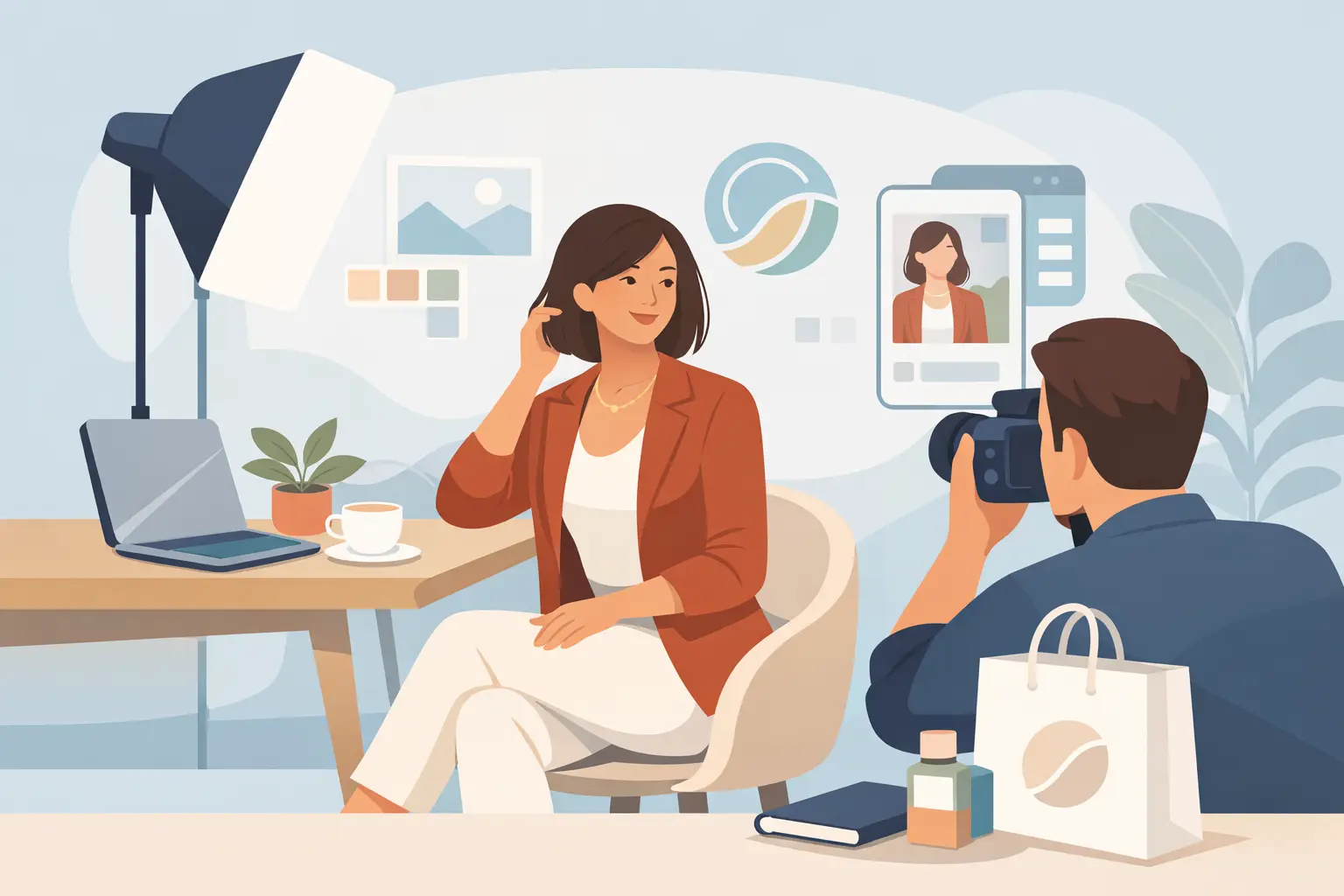
Your business may be excellent, but a cropped event photo or a stiff selfie can make it harder for people to see that right away. This branding session guide entrepreneurs can use is designed to help you show up with professional images that feel like you, support your goals, and give clients a reason to trust you before the first conversation.
A personal branding session is not about pretending to be a different kind of business owner. It is about creating clear, polished photos that communicate what you do, who you help, and what working with you feels like. For a consultant, that may mean approachable authority. For a realtor, it may mean local confidence and energy. For a creative business owner, it may mean personality without losing professionalism.
Start With the Job Your Photos Need to Do
Before thinking about outfits or poses, think about where the images will live. A LinkedIn profile needs a clean, recognizable headshot. Your website may need horizontal images with open space for text, as well as photos of you working, meeting with clients, or using the tools of your trade. Social media often benefits from a wider mix of close portraits, detail shots, and lifestyle images.
The strongest sessions begin with a short list of priorities. Ask yourself what you are promoting over the next six to twelve months. Maybe you are launching a new service, updating your website, applying for speaking opportunities, or building a more consistent presence online. Your photographer can then plan images around real business needs instead of creating a gallery that looks good but has limited use.
It also helps to identify the impression you want to leave. You might want to appear calm and strategic, warm and client-focused, creative and bold, or polished and established. None of these require dramatic posing. They come through in your location, clothing, expression, lighting, and the way the session is guided.
Branding Session Guide for Entrepreneurs: Plan the Visual Direction
Your visual direction should match your business, not a trend you saw online. A sleek downtown office can work well for a financial professional or agency owner. A bright home studio may suit a designer, maker, or wellness provider. A relaxed outdoor setting can be effective when your work is personal, community-based, or service-oriented.
There is a trade-off with every location. A studio offers controlled lighting, privacy, and a clean background that keeps attention on you. An on-location session adds context and variety, but it can involve weather, crowds, clutter, and changing light. Many entrepreneurs get the best result by combining a simple headshot setup with a nearby location that reflects their work.
Choose locations based on purpose, not just appearance. A coffee shop may look inviting, for example, but only if it supports the story of your business and allows enough space to photograph comfortably. If you work remotely, a well-lit workspace with a tidy desk, laptop, notebook, and a few relevant materials can feel more believable than a generic office.
Try to avoid including logos, busy signage, or random visual distractions unless they are part of your brand. A photo should still make sense when someone sees it at a small size on a phone screen.
Bring Props That Add Context
Props are useful when they show how you work. A realtor might bring a tablet and property materials. A coach may have a notebook or a video call setup. A fitness professional might include equipment used with clients. Keep the selection focused. Too many objects can make a portrait look staged and take attention away from your expression.
A good rule is simple: if the item would naturally be present in a client meeting or workday, it may belong in the session. If it is only there to fill space, leave it out.
Wear Clothes That Keep the Focus on You
The best outfit is one that fits well, feels comfortable, and makes sense for the clients you want to attract. You do not need to dress more formally than you would in an important meeting, unless your industry calls for it. A lawyer may choose a tailored jacket, while a photographer or interior designer may prefer a refined but more relaxed look.
Bring two or three options if your session allows for it. One can be more polished and professional for a website or LinkedIn profile. Another can be slightly more casual for social content or behind-the-scenes images. Solid colors and subtle textures generally photograph well because they keep the image clean and timeless.
Avoid clothes that pull, wrinkle easily, or need constant adjustment. Very small patterns, large logos, and highly reflective fabrics can be distracting on camera. Consider the background, too. If your location is light and neutral, a medium or deeper color can help you stand out. If the setting is darker, lighter tones may create a fresh contrast.
Most importantly, do not buy an outfit that feels unlike you just for the photos. People meet you after seeing these images. Your portraits should set an accurate expectation.
Prepare for Natural, Confident Expressions
Many entrepreneurs worry that they are not photogenic. Usually, the real issue is that they have not been professionally directed before. Being told to stand in front of a camera without guidance would make almost anyone feel awkward.
A well-run branding session includes coaching on where to place your hands, how to angle your body, and when to look toward or away from the camera. Small adjustments can make a major difference. You do not need to know how to pose before arriving, and you should not feel pressured to perform a big personality that is not natural to you.
Get enough rest the night before, drink water, and give yourself extra time to get ready. Rushing into a session can show in your posture and expression. If hair and makeup are part of your routine for an important meeting, use the same level of polish for your photos. The goal is not to look overdone. It is to look like a confident version of yourself on a good day.
Think Beyond the Straight-to-Camera Headshot
You will likely want at least one direct, approachable headshot, but your image library should do more. Looking slightly off camera can create useful space for website banners. Working at a desk, reviewing notes, walking through a space, or speaking with a client can provide variety for marketing materials.
These lifestyle images should still look intentional. A photographer can help you create movement and natural interaction without making the photos feel overly posed. The result is a collection that gives your audience a fuller sense of your business.
Make the Most of Your Final Images
Once your edited photos are ready, use them consistently. Choose one current headshot for your LinkedIn profile, email signature, and professional directories so people recognize you across platforms. Use the wider images on your website, service pages, presentation slides, and promotional materials.
Do not upload every photo at once and then forget about them. Rotate images into your marketing as your business evolves. A new offer, seasonal campaign, media feature, or speaking engagement may call for a different image from the same session. Planning for variety from the start gives you more value over time.
If you are serving clients across Cambridge, Kitchener, Waterloo, or Guelph, professional branding photos can also help create familiarity in a competitive local market. People often choose the business that feels clear, credible, and easy to approach. Your photos quietly support all three.
Your next branding session does not need to feel intimidating. Come prepared with a purpose, a few thoughtful choices, and a willingness to be guided. The best images will not simply show your face. They will make it easier for the right people to see why they should work with you.