
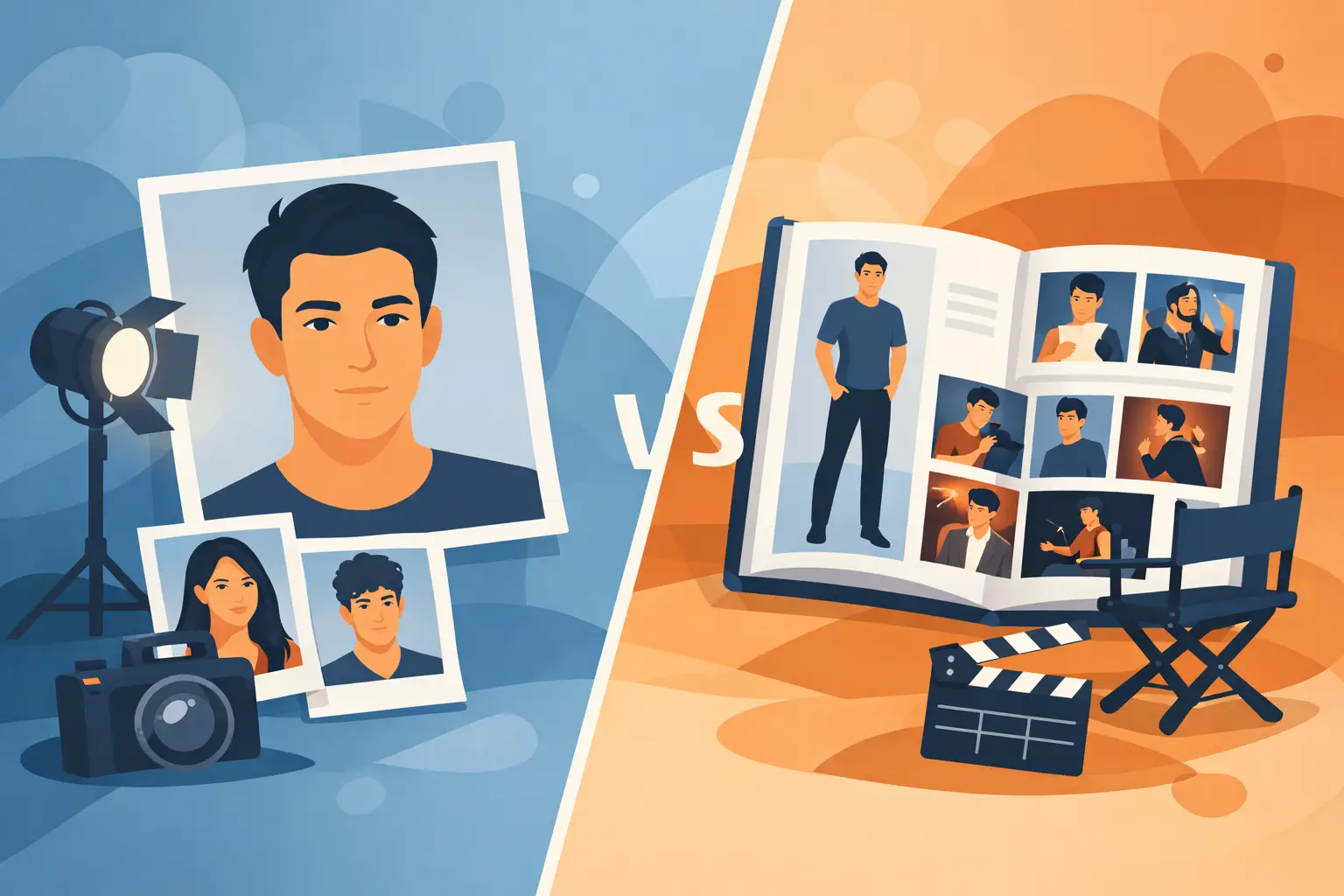
A casting professional may look at your submission for only a few seconds before deciding whether to read further. That is why the question of acting headshots vs portfolio matters so much. These are not interchangeable photo types. Your headshot is your introduction as an actor, while a portfolio gives people a wider sense of your range, experience, and on-camera presence.
If you are new to acting, it can be tempting to book one big photo session and assume every image will work everywhere. A better approach is to understand what each set of images needs to accomplish. You will spend less on photos you cannot use and walk away with materials that support auditions, casting profiles, agency submissions, and personal promotion.
What an Acting Headshot Is Designed to Do
An acting headshot is a current, professional image that shows casting teams what you genuinely look like right now. It is typically framed from the chest or shoulders up, with your face, eyes, and natural expression clearly visible. The goal is not to look dramatically different, overly styled, or like a fashion model. The goal is to look recognizable when you walk into an audition or join a video call.
A strong headshot creates a clear first impression. It tells a casting director that you look approachable, confident, believable, intense, warm, funny, polished, or grounded, depending on the expression and wardrobe choice. Those qualities should be present in you already. The photo simply brings them forward.
For most actors, a headshot is the most essential image to have. It is commonly used on casting platforms, agency submissions, audition requests, actor resumes, and professional social profiles. If you can only invest in one type of session at the beginning, start with a well-executed headshot.
What casting teams expect to see
Casting teams want accuracy and clarity. They need to know who they are considering without working through distracting filters, dramatic shadows, busy backgrounds, or heavy retouching. A current headshot should reflect your present hairstyle, facial hair, age range, and overall appearance.
This does not mean the image needs to be plain or lifeless. Professional lighting, thoughtful posing, a flattering crop, and careful editing make a major difference. The best acting headshots feel natural while still looking polished. You should look like yourself on a very good day, not like a different person.
Wardrobe should support that goal. Solid colors and simple layers usually photograph well because they keep attention on your face. You may bring a few options that suggest different casting directions, such as approachable professional, creative, athletic, or edgy. Avoid clothing with large logos, tiny patterns, or anything that feels more memorable than your expression.
What an Acting Portfolio Is Designed to Do
An acting portfolio is a broader collection of images that helps show more than one side of you. It can include additional headshots, three-quarter portraits, full-length photos, editorial-style images, production stills, character-inspired looks, or images from past work when usage rights allow.
Think of the portfolio as supporting material, not a replacement for your main headshot. It gives an agent, director, producer, or collaborator a fuller picture of your look and potential. For actors building a personal website or preparing for agency meetings, a portfolio can be especially useful.
The exact format depends on where you are in your career. A newer actor may need a small, intentional selection of professional images that show versatility. An experienced actor may have approved production stills, theater photographs, branded character work, or images that support different casting categories.
A portfolio should show range, not confusion
Range is valuable, but it needs to feel believable. A portfolio does not need ten unrelated characters, five costume changes, and a different personality in every frame. That can make it harder for someone to understand your natural casting lane.
Instead, show connected variations. Perhaps your primary headshot feels warm and approachable, while a second image has more intensity. A full-length portrait may show your posture and physical presence. Another image might feel contemporary and professional. Together, these photos should make sense as one actor with multiple possibilities.
For younger performers and aspiring actors, this is where practical coaching during a photo session helps. Small changes in body position, hand placement, eye line, and expression can create useful variety without making you feel like you are pretending to be someone else.
Acting Headshots vs Portfolio: The Key Differences
The simplest difference is purpose. A headshot is an identification and casting tool. A portfolio is a broader marketing tool.
Your headshot should be current, focused, and easy to scan. It usually leads your casting profile and needs to work even at a small size on a screen. Your portfolio has more room for context. It can show different angles, wardrobe options, proportions, and moods that would not all belong in a single submission image.
There is also a difference in quantity. Actors generally need one primary headshot and may benefit from one or two alternate looks. A portfolio can contain several images, but every photo should earn its place. More images are not automatically better. A concise portfolio with six strong, varied photos often makes a better impression than a gallery filled with near-duplicates.
Finally, the level of styling may differ. Headshots should remain straightforward and highly accurate. Portfolio images can be a little more expressive, as long as they still look professional and consistent with the work you want to pursue.
When You Need a Headshot, a Portfolio, or Both
If you are submitting to casting calls, updating a casting profile, or applying to an agency, prioritize your headshot. A clear, professional image is often the first requirement, and it gives you a strong foundation for every next step.
If you are creating an actor website, meeting with industry contacts, developing a personal brand, or pursuing work that overlaps with commercial modeling, promotional work, or content creation, a portfolio becomes more valuable. It gives people more material to review after your headshot gets their attention.
You may need both if you are actively building an acting career and want a polished, flexible set of materials. The good news is that you do not always need separate sessions. With planning, a portrait session can begin with the clean, casting-ready headshots you need most, then add a few wider and more varied images for your portfolio.
This approach is often more efficient, especially for actors who want professional guidance but do not want a complicated all-day shoot. A photographer can help you choose backgrounds, wardrobe changes, and expressions that give you usable variety while keeping your images consistent.
How to Plan a Photo Session That Gives You Useful Images
Start by identifying where your photos will be used in the next six to twelve months. If your priority is auditions, make your primary headshot the focus. If you are refreshing an entire online presence, plan for a few portfolio images after you have captured the essential headshot looks.
Before your session, gather a few examples that feel close to your casting type. Do not try to copy another actor exactly. Instead, notice what you respond to: natural window-style light, clean studio backgrounds, direct eye contact, softer expressions, or a more cinematic feeling. Sharing those preferences helps your photographer shape a session that still feels like you.
Bring wardrobe choices with distinct but realistic purposes. For example, you might choose a simple darker top for a more serious look, a lighter color for an open commercial look, and one structured layer for a confident professional image. Try everything on beforehand. Clothes that are comfortable and fit well will help you move naturally.
During the shoot, do not worry about knowing how to pose. Most people are not used to being photographed, and that is normal. Clear direction on posture, chin position, shoulders, and expression is what turns a nervous start into images that feel relaxed. At RP Photography, sessions are built around that kind of practical guidance, so clients can focus on being present rather than guessing what to do with their hands.
Choosing Images After the Session
When reviewing your final images, choose the photo that looks most like the person casting will meet. It may not be the most dramatic expression or the most heavily styled outfit. Usually, the best primary headshot is the one with clear eyes, a natural expression, and a believable sense of personality.
For portfolio selections, look for variety in framing and feeling. Avoid picking five images from the same angle in nearly identical clothing. A useful set might include a main headshot, a second headshot with a different energy, a three-quarter portrait, a full-length image, and one or two photos that support your most likely casting directions.
Keep your files organized and update them when your appearance changes significantly. A new hairstyle, major change in facial hair, or a different overall look is a good reason to refresh your main headshot. Your portfolio can evolve more gradually as you gain stronger images and real production experience.
The right photo does not have to make you look like a celebrity. It needs to make casting professionals curious to see what you can do when you step into the room.