
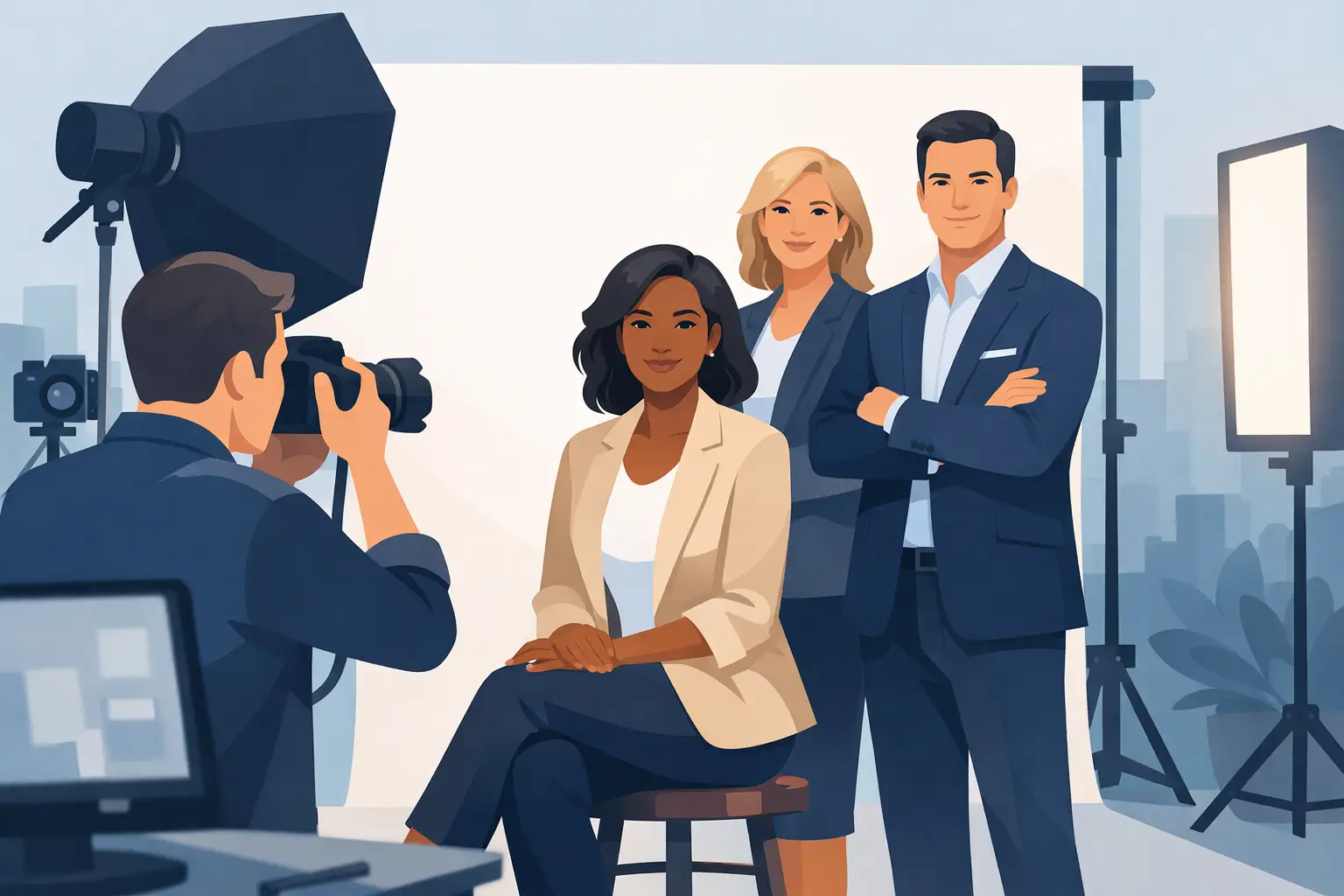
A senior leader’s portrait is often seen before their bio, meeting request, or first conversation. This executive portrait session guide is designed to help you arrive prepared and leave with images that look polished, capable, and like you on your best day – not overly posed or artificially formal.
A strong executive portrait does more than show what you look like. It gives clients, colleagues, recruits, and investors a quick sense of your professionalism. The goal is not to create a different version of you. It is to make your confidence, approachability, and credibility easy to see.
Start With Where the Portrait Will Be Used
Before choosing a shirt or scheduling a location, think about where the image needs to work. A LinkedIn profile photo may call for a close, welcoming crop. A company website might need horizontal room for text beside the image. A speaker bio, annual report, press release, or personal branding campaign may benefit from several expressions, crops, and backgrounds.
Tell your photographer how and where you plan to use the photos. That information shapes the session. A formal law firm profile may need a refined studio look, while a consultant, realtor, or founder may want a brighter environmental portrait that feels more personal. Neither approach is automatically better. The right choice depends on your role, your audience, and the image your business wants to communicate.
If you need photos for more than one purpose, plan for variety. A few small changes in posture, expression, jacket, or background can produce a useful set of images without making the session feel complicated.
Choose Clothing That Supports Your Message
The camera notices fit, texture, and contrast. It also notices when someone is uncomfortable in what they are wearing. Choose clothing that fits well at the shoulders and neckline, allows you to sit and move naturally, and reflects how you would dress for an important client meeting.
For many executive portraits, a solid-color blazer, suit jacket, structured dress, or polished business-casual outfit works well. Navy, charcoal, deep blue, soft neutrals, and rich muted colors tend to photograph reliably. These choices keep attention on your face while still adding depth to the image.
Bring two options when possible. One can be more formal, such as a suit jacket and dress shirt, and the other can be slightly more relaxed. This gives you options for different platforms and lets the photographer guide you toward what works best with the background and lighting.
Avoid clothing with large logos, very busy patterns, overly shiny material, or wording across the chest. Tiny checks and narrow stripes can sometimes create visual distortion on camera. Pure white can work, but it may need careful lighting to retain detail. Solid black can look sophisticated, though it can lose separation against a dark background. These are not hard rules. They are reasons to bring choices and make decisions with the final setting in mind.
Accessories should feel intentional but not distracting. Glasses are welcome if you wear them regularly. Clean the lenses before the session and, if possible, bring a second pair in case reflections become an issue. Jewelry, watches, ties, pocket squares, and scarves can add personality when they support the overall look rather than compete with it.
Prepare the Details the Camera Sees
You do not need a dramatic makeover for an executive portrait. A little preparation simply prevents small distractions from taking attention away from your expression.
Schedule a haircut several days before the session rather than the same day, so it has time to settle naturally. If you color your hair, plan that appointment early enough to avoid a rushed look. Consider professional makeup if it helps you feel confident, especially for a longer branding session or images that will be used in print. The best camera-ready makeup still looks like you in person.
The night before, set out your complete outfit, including shoes if full-length or three-quarter portraits are planned. Steam or press clothing, check for loose threads, and remove lint. Pack a simple touch-up kit with a comb or brush, blotting papers, lip balm, and any products you normally use. A lint roller is surprisingly useful, particularly with dark jackets.
Get a reasonable night’s sleep, drink water, and give yourself enough time to arrive without rushing. No one needs to be perfectly rested to take a good photo, but being hurried makes it harder to settle into a natural expression.
What Happens During the Session
Most people do not enjoy being photographed at first. That is normal, including for experienced executives. The difference between a stiff headshot and a convincing portrait is rarely about knowing how to pose. It comes from clear direction, good lighting, and having a few minutes to get comfortable.
A professional session should not leave you guessing what to do with your hands, shoulders, or smile. Your photographer will guide small adjustments: turning slightly instead of facing the camera squarely, lowering one shoulder, shifting weight, relaxing your jaw, or looking just beside the lens for a more conversational feel. These small changes make a meaningful difference.
Expect to move through a range of expressions. A warm smile may be ideal for client-facing work, while a calm, direct expression may better suit a leadership profile or board biography. Often, the most useful image sits between those two extremes: relaxed, engaged, and confident without looking forced.
Do not worry if your smile feels awkward during the first few frames. Talking between shots, taking a breath, and resetting your posture are all part of the process. Good portraits are built through direction and repetition, not through holding one perfect pose for an uncomfortable amount of time.
Studio or Location: Choose What Helps the Image Work
A studio portrait is a practical choice when you need consistency, clean backgrounds, and controlled lighting. It is especially effective for corporate teams, professional profiles, and situations where several people need a unified look. The setting is simple, but the result does not have to feel generic. Lighting, background tone, wardrobe, and expression still create a distinct image.
On-location portraits can add context. A bright office, a modern lobby, a neighborhood streetscape, or a workspace can make sense for entrepreneurs, real estate professionals, and leaders whose environment is part of their brand. The trade-off is that locations can introduce distractions, changing light, weather concerns, and background clutter. The best location is not always the most impressive one. It is the one that supports the message without pulling focus from you.
For professionals in Cambridge, Kitchener, Waterloo, and Guelph, an on-location session can also save time for a busy team. A photographer can create professional results in an office or selected outdoor setting when the space and schedule are a good fit. For a consistent company-wide look, however, a controlled setup may be the smarter choice.
Plan for a Team Session Without Making It Feel Like a Production
If your organization is updating several executive portraits, consistency matters. Decide ahead of time whether everyone will use the same background, crop style, lighting approach, and level of formality. This helps the team page look intentional instead of assembled over several years.
Consistency does not mean everyone must wear the same color or show the same expression. It means the images should belong together. Share simple wardrobe guidance in advance, allow enough time per person, and appoint one contact who can keep the schedule moving. Leaders are busy, but rushing every person through the camera usually creates more problems than it saves.
It also helps to build in a little flexibility. A person who wears glasses may need an extra moment to manage reflections. Someone arriving from a meeting may need time to straighten a jacket and settle in. A comfortable, well-organized session gives people a better chance to look natural.
Review Your Images With Purpose
When selecting final images, do not focus only on whether you like a particular angle. Ask whether the photo does its job. Does it look current? Does your expression fit your role? Would a new client feel comfortable contacting you? Does the image look credible beside the rest of your company’s visual presence?
Choose at least one versatile image that works across LinkedIn, company profiles, and proposals. If your session includes multiple options, select additional images for speaking engagements, media use, website banners, or marketing materials. Professional editing should refine the portrait without erasing character. Natural skin texture, recognizable features, and a realistic appearance build more trust than heavy retouching.
Your executive portrait does not need to be severe to look professional, and it does not need to be overly casual to feel approachable. Arrive prepared, let yourself be guided, and give the process a few unhurried minutes. The most effective image is often the one where you stop trying to look like an executive and simply look like a capable person people want to work with.