
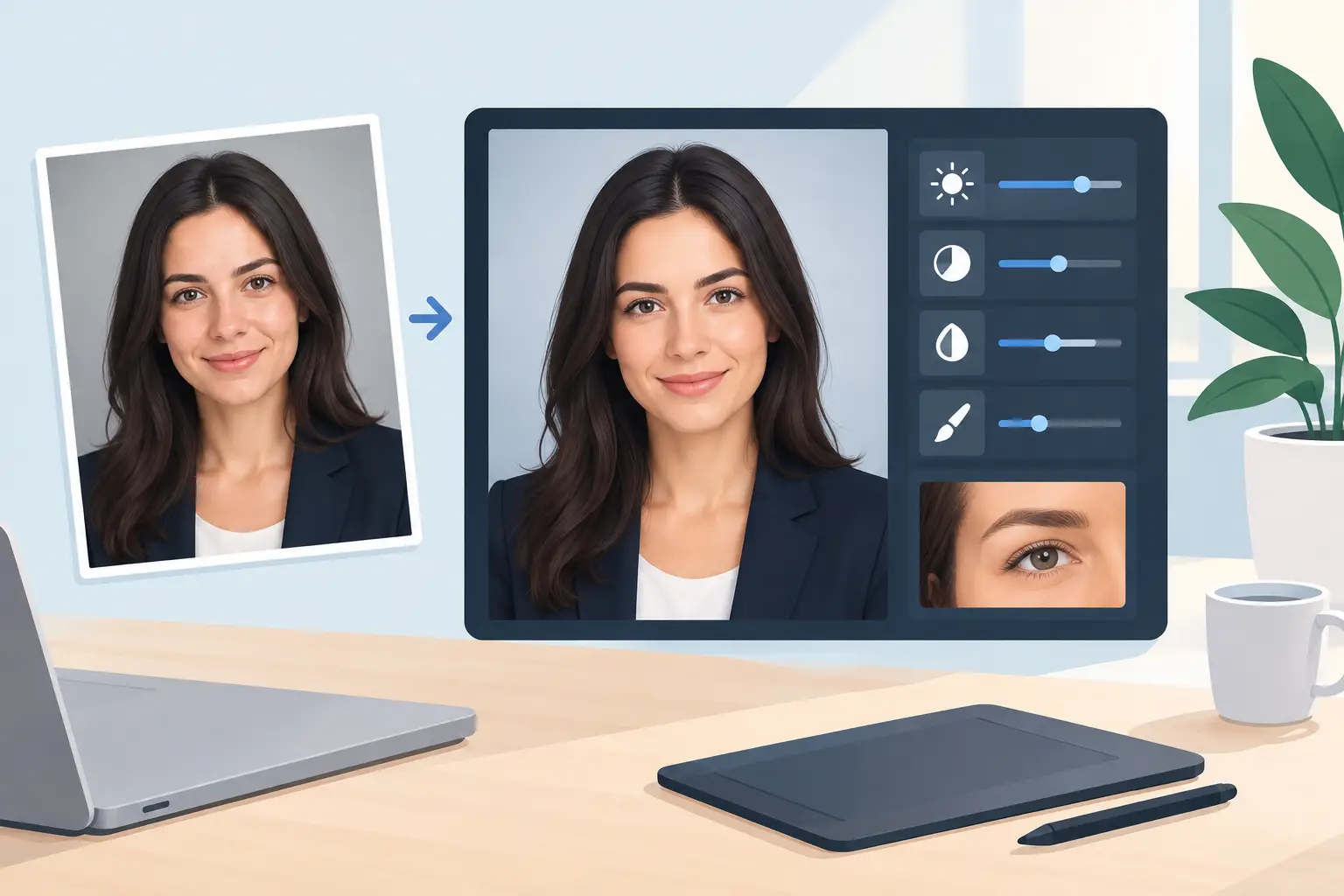
A strong headshot should look like you on a very good day: well lit, confident, approachable, and ready to represent your work. So, are headshots professionally edited? In most professional sessions, yes. Editing is part of the process that turns a well-captured image into a polished final photograph you can use on LinkedIn, a company website, a resume, an actor portfolio, or real estate marketing.
The key is that professional editing should support your appearance, not replace it. You should still recognize yourself immediately, and so should the people who meet you after seeing your photo.
What professional headshot editing usually includes
A camera captures far more detail than most people expect. That is useful for sharp, high-quality images, but it can also highlight temporary redness, lint on a jacket, a distracting flyaway hair, or uneven lighting that was not obvious during the session. Professional editing refines those small distractions so the viewer’s attention stays where it belongs: on your expression and presence.
Most finished headshots receive thoughtful adjustments to exposure, contrast, color balance, and cropping. These corrections make sure skin tones look natural, the image feels consistent across devices, and the composition works for its intended use. A LinkedIn profile photo, for example, needs enough space around the face to display properly in a circular crop, while a company bio may need a more horizontal layout.
Retouching may also include reducing temporary blemishes, softening minor under-eye shadows, taming stray hairs, removing clothing lint, and making small corrections to a wrinkled backdrop. If glare on glasses or a shine on the forehead is distracting, that can often be reduced as well. The goal is not perfection. It is a clean, professional image that feels believable.
Are headshots professionally edited beyond basic corrections?
Sometimes, but the right level of retouching depends on the person, the role, and where the image will be used. A corporate executive portrait may call for a subtle, polished finish that looks natural on an About page. A realtor’s headshot may need a bright, welcoming look that works across signs, social media, and marketing materials. An actor or model portfolio image often benefits from a lighter touch because casting teams want an honest representation of the person walking into the room.
A good photographer will not take a one-size-fits-all approach. They will consider your industry, your personal brand, and how closely the photo needs to match your everyday appearance. For most professionals, natural retouching is the best choice. It helps you look rested and put together without creating an image that feels overly filtered.
There is a practical reason for this restraint. Your headshot builds trust before a conversation begins. If it looks dramatically different from you in person, it can create the wrong impression. A well-edited photo should make people think, “That is a great photo of them,” not, “Who is that?”
What should stay natural in a professional headshot
Professional editing works best when it preserves the features that make your face yours. Skin texture, smile lines, freckles, natural facial shape, and other defining characteristics do not need to disappear for a headshot to look polished. In fact, removing every detail can make a photo look flat or artificial.
This is especially relevant for job seekers, entrepreneurs, and professionals whose work depends on credibility. An image with realistic skin texture and true-to-life color usually feels more confident than one that has been heavily smoothed. The same goes for teeth whitening, eye brightening, and facial reshaping. Small adjustments can be helpful, but they should never become the focus of the image.
If there is something you are self-conscious about, bring it up before or during the session. A professional photographer can talk through what is reasonable to adjust and what is better handled through lighting, posing, wardrobe, or expression. Often, a slight change in camera angle or posture makes a bigger difference than extensive editing ever could.
Editing starts before the photo is taken
The best final headshots are not created only at a computer. They begin with a well-planned session. Flattering lighting, a comfortable environment, clear direction, and thoughtful posing all reduce the need for heavy retouching later.
This is why coaching matters, particularly if being photographed makes you feel stiff or unsure. A photographer can guide you on where to place your shoulders, how to position your chin, when to relax your hands, and how to create a natural expression. You do not need to know how to pose before you arrive. The right direction helps you look comfortable without feeling overly staged.
Wardrobe also has an effect on editing. Choose clothing that fits well, is clean and pressed, and supports the message you want to send. Solid colors often photograph well, while very small patterns, highly reflective fabrics, and large logos can pull attention away from your face. Bringing a backup option is useful if you are deciding between a more formal corporate look and something relaxed for personal branding.
How much editing is too much?
Too much editing usually becomes noticeable when skin has no texture, facial proportions are changed, or the image has a filtered look that does not match real life. It can also become a problem when every photo from the same organization is edited differently. For company teams, consistency in lighting, crop, color, and retouching helps create a stronger brand presence.
That does not mean every image should look identical. People have different skin tones, hair textures, and comfort levels, and editing should respect that. Consistency is about professional quality, not making everyone look the same.
There are also situations where more detailed work may be appropriate. If a headshot will be printed large for a campaign, used in a publication, or included in a high-visibility marketing piece, extra retouching may be worthwhile. It simply needs to be discussed in advance so expectations are clear. Basic image cleanup and high-end commercial retouching are not always the same service.
Questions to ask before booking a headshot session
Before choosing a photographer, ask what is included with the final images. Find out whether the session includes retouching, how many edited photos you receive, how long delivery takes, and whether the photographer can create crops for specific platforms. These details help you compare services fairly instead of focusing only on the session price.
It is also worth asking to see examples of finished headshots, not just a few highly styled images. Look for natural skin tones, flattering light, and expressions that feel genuine. If you are booking for a team, ask how the photographer keeps images consistent across new hires and different shooting dates.
For professionals in Cambridge, Kitchener, Waterloo, and Guelph, location flexibility can matter too. A studio setup may provide a clean, controlled look, while an office or on-location session can make sense when you need several team members photographed efficiently. Either option can produce polished results when lighting and editing are handled with care.
Preparing for an edited headshot you will feel good about
Do not treat editing as a reason to ignore the basics. Get enough rest if you can, drink water, and choose wardrobe that makes you feel capable and comfortable. If you get a haircut, color treatment, or grooming service, schedule it a few days before the session rather than at the last minute. This gives you time to settle into the change.
Most importantly, be honest about how you plan to use the photo. A headshot for a law firm profile has different needs than one for an acting submission or an entrepreneur’s personal brand. When your photographer understands the purpose, they can guide the session and edit the final images accordingly.
A professionally edited headshot is not about hiding who you are. It is about removing distractions and presenting your best, most recognizable self with confidence. When the lighting, direction, and retouching work together, you get more than a nice photo. You get an image that makes it easier to show up professionally before you ever enter the room.