
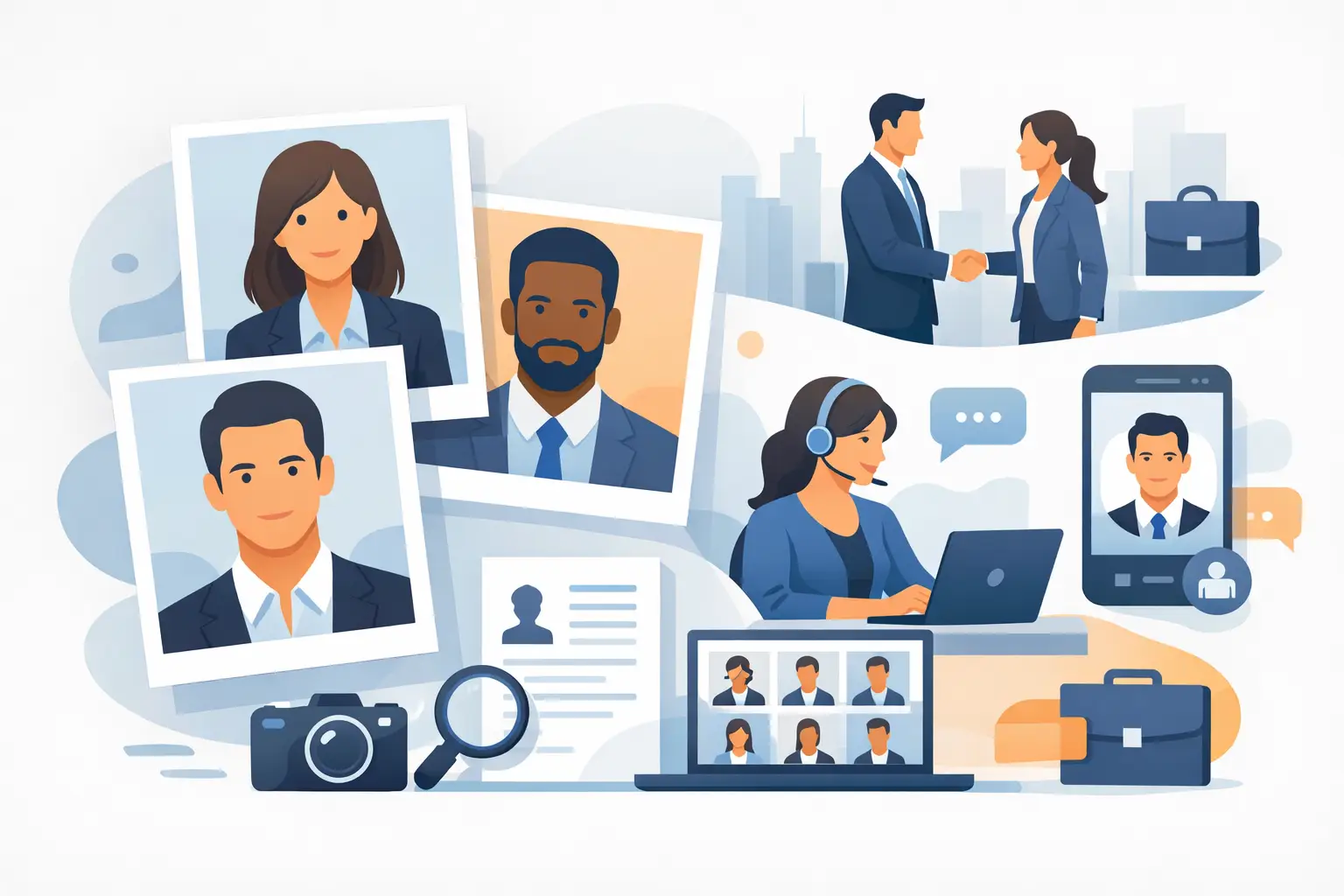
A lot of people book a session thinking they just need one decent photo for LinkedIn. Then they realize professional headshots are used for far more than that. If you have any public-facing role at all – employee, business owner, realtor, actor, consultant, or job seeker – your image shows up in more places than you probably think.
That is why a strong headshot is not just a nice extra. It is a practical business tool. It helps people recognize you, trust you, and remember you before they ever meet you in person.
What are professional headshots used for in real life?
The short answer is visibility and credibility. A professional headshot gives you a polished image that fits the way you want to be seen. That could mean approachable and trustworthy, confident and capable, or creative and expressive. The exact look depends on your field, but the purpose stays fairly consistent: you want people to feel like they are looking at the real you on a very good day.
For most clients, headshots end up being used across several platforms at once. A single image might appear on LinkedIn, a company bio page, a conference speaker profile, and an email signature. That is why it helps to think beyond one immediate need. Good headshots often do a lot of work over time.
LinkedIn, resumes, and job search profiles
One of the most common answers to what are professional headshots used for is career growth. Whether you are actively job hunting or just keeping your profile current, people often look you up before an interview, referral call, or networking meeting.
A professional photo signals that you take your work seriously. It also makes your profile feel more complete and current. That matters on LinkedIn, where hiring managers, recruiters, and potential clients are making fast judgments based on very limited information.
Resumes are a bit more situational. In the US, many traditional resumes do not include a photo, especially in corporate settings. But professional headshots are still often used alongside resume submissions in online portfolios, personal websites, speaker kits, and professional bios. If you work in a field where personal branding matters, a polished image helps tie everything together.
There is a trade-off here. A very formal headshot can work well for law, finance, and corporate leadership, while a more relaxed portrait may be better for coaching, sales, or creative work. The goal is not to look generic. It is to look right for the opportunities you want.
Company websites and team pages
For businesses, headshots are often part of customer trust. When someone lands on an About page or team page, they want to know who they are dealing with. Strong staff photos make a business feel more established, more transparent, and more professional.
This is especially important for service-based businesses. If clients are choosing a real estate agent, financial advisor, consultant, therapist, or sales rep, they are not just buying a service. They are buying confidence in the person behind it.
Consistent team headshots also help with branding. When everyone is photographed in a similar style, the business looks organized and credible. That does not mean every image needs to feel stiff or identical. It means the lighting, background, crop, and quality should feel intentional.
For growing companies, updated headshots are one of the easiest ways to improve how the brand is presented online. Outdated, uneven staff photos can make even a strong business look less polished than it is.
Personal branding and business marketing
Entrepreneurs and small business owners often need more than one traditional head-and-shoulders image. They need photos that can work across websites, social media, press mentions, podcast guest profiles, proposals, and marketing materials.
This is where professional headshots overlap with personal branding portraits. A headshot is usually tighter and more focused on the face. A branding portrait may include more environment, movement, or tools of the trade. Both are useful, and many professionals need a mix.
If you run your own business, your photo often becomes part of your brand. People may see your face on Instagram, in a newsletter, on a landing page, or in a media feature. A professionally made image helps create consistency. It also saves you from scrambling for a usable photo every time a new opportunity comes up.
A good session can give you options that feel polished without looking overly posed. That balance matters. If the photo is too casual, it may not support your credibility. If it is too stiff, it can create distance. The best headshots feel confident, natural, and easy to connect with.
Realtor marketing and client-facing sales roles
Realtors are one of the clearest examples of how headshots directly support business. Your face appears on signs, listing materials, business cards, social media, and websites. In many cases, people start forming an opinion about your professionalism before they ever call.
The same applies to mortgage brokers, insurance agents, sales professionals, and other client-facing roles. A professional headshot helps you look approachable and capable at the same time. That combination matters because people want to feel comfortable with you, but they also want to trust your expertise.
For these industries, phone snapshots and cropped group photos usually fall short. Marketing materials need images that are clean, high-resolution, and edited properly. They also need to feel current. If your headshot is five or ten years old, it can create a disconnect when clients meet you in person.
Acting, modeling, and casting submissions
Actors and aspiring models use headshots differently from corporate professionals. In those industries, the image is less about broad business polish and more about accurate, marketable representation.
Casting directors want to see what you actually look like. Agencies want images that feel professional but truthful. Overediting, dramatic filters, or a photo that no longer reflects your current look can work against you.
That is why acting headshots are usually simpler than people expect. The expression, eye contact, and overall feel matter more than flashy styling. The image should help someone imagine you in a role.
Models may also need a range of images depending on where they are in their career. A clean headshot can be part of a portfolio, comp card, or agency submission. In this context, professional does not always mean highly formal. It means intentional, flattering, and suited to industry expectations.
Speaking engagements, media, and professional bios
Another common use for headshots is anything tied to public visibility. If you are speaking at an event, appearing on a panel, guesting on a podcast, or being featured in an article, you will usually be asked for a photo.
This is where many people realize their only available image is either too casual, too old, or too low quality to use. A professional headshot solves that problem before it becomes urgent.
Media and event organizers often need specific image sizes and clean files that reproduce well in print and digital formats. Professionally shot and edited headshots hold up better across all of those uses. They also save time because you are not trying to crop a vacation photo into something it was never meant to be.
Internal company use still matters
Not every headshot is for public marketing. Companies also use them for email signatures, internal directories, ID systems, Slack or Teams profiles, training platforms, and onboarding materials.
These uses may seem minor, but they still shape how a company presents itself. Consistent employee photos make internal systems look more polished and help teams put names to faces, especially in remote or hybrid workplaces.
For individual employees, a clean profile image can support professional presence inside the company as well as outside it. It is a small detail, but small details add up.
Why a professional headshot works better than a quick photo
The biggest difference is not just camera quality. It is guidance, lighting, expression, posing, and editing. Most people are not naturally comfortable in front of a camera. They worry about looking stiff, awkward, or unlike themselves.
A well-run headshot session helps with that. You get direction on posture, angle, facial expression, and wardrobe choices. The result is a photo that looks natural but still refined.
That is also why experience matters. A photographer who understands business headshots knows how to create images that fit different goals. A corporate executive, a realtor, and an actor do not all need the same kind of photo. The best result comes from matching the image to the actual use.
At RP Photography, that practical side of the process matters just as much as the final edit. People want to look polished, but they also want to feel comfortable enough to look like themselves.
The real value is flexibility
The best headshots are not limited to one platform or one moment. They give you a reliable image library you can use when opportunities come up, whether that is a new job application, a company promotion, a website refresh, or a speaking request.
If you have ever searched your camera roll for something usable five minutes before sending a bio, you already know the value of having professional images ready to go. A good headshot removes friction. It helps you show up consistently, and that can make a bigger difference than people expect.
If you are wondering whether it is worth getting one, the better question is where people are already seeing you without one.
3 thoughts on “What Are Professional Headshots Used For?”
Comments are closed.