
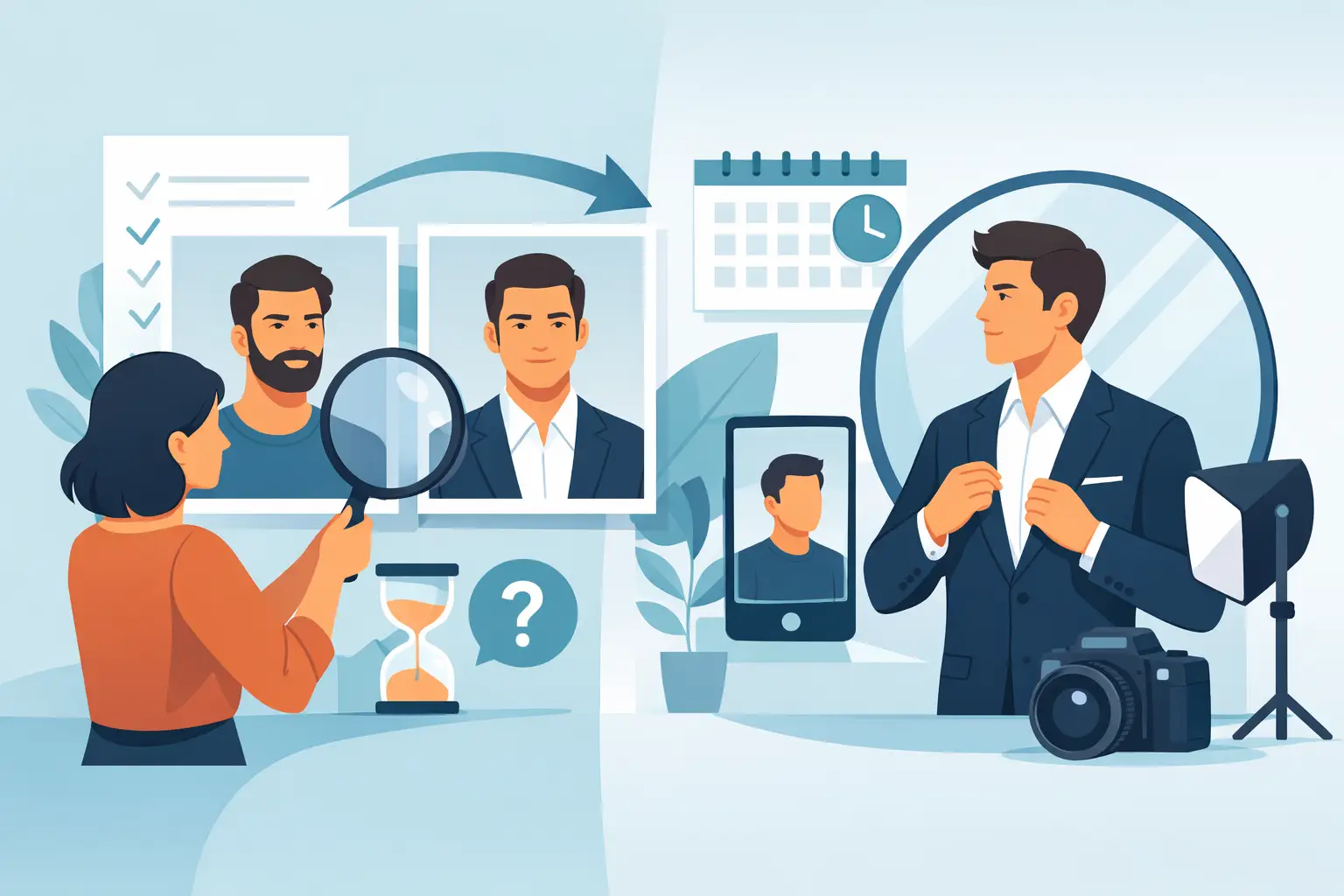
Your headshot is often seen before you are. It appears beside a LinkedIn message, on a company bio, in a real estate listing, or at the top of a casting profile. That is why knowing when to update headshots matters: the goal is not to chase a new photo every few months, but to make sure the image people see still feels like you.
A strong headshot should look current, professional, and appropriate for the work you want to attract. If someone meets you after seeing your photo, they should recognize you right away. When there is a noticeable gap between your online image and your real-life appearance, it can quietly affect trust, first impressions, and confidence.
When to Update Headshots for Your Career
There is no single schedule that works for everyone. A corporate professional with a stable role may only need a new headshot every two or three years. A realtor, entrepreneur, actor, or job seeker may benefit from updating more often because their image is used more actively in marketing, networking, and client-facing materials.
The better question is not, “How old is this photo?” It is, “Does this image still represent how I look and the professional direction I am taking?” If the answer is no, it is probably time for a refresh.
1. Your appearance has noticeably changed
A new hairstyle, different hair color, a change in facial hair, new glasses, or a meaningful change in weight can all make an older headshot feel disconnected from your current appearance. You do not need to update a photo for every small change, but you should replace it when a colleague or client might have trouble recognizing you in person.
Glasses are a common reason to book a new session. If you now wear them every day, your professional photo should probably show them. The same applies if you have stopped wearing them. Your headshot should reflect the version of you who walks into meetings, meets clients, and represents your business now.
2. Your current photo is more than two or three years old
Age alone does not make a headshot unusable, especially if your appearance has stayed consistent. Still, photography styles, website design, and professional expectations change over time. A photo from several years ago may have overly dramatic lighting, heavy retouching, an outdated crop, or a background that no longer fits your brand.
For most professionals, a two- to three-year update cycle is a practical baseline. If your headshot is used heavily in marketing, annual updates can be a smart investment. Realtors, business owners, speakers, and people building a personal brand often need a more current library of images than someone who only uses one photo on a company directory.
3. You have changed roles, industries, or career goals
The headshot that worked for a recent graduate may not suit a senior leadership role. The image used for a corporate position may not support a new consulting business. A polished, approachable photo can communicate a different message depending on wardrobe, expression, background, and how the image is cropped.
If you are applying for jobs, moving into management, launching a business, or changing industries, look at your headshot through the eyes of the person you want to reach. Does it look aligned with that next step? It should feel credible without looking overly formal or unlike you.
For example, a financial professional may want a clean studio image with a classic wardrobe choice. A creative entrepreneur may need a mix of headshots and wider personal branding portraits that feel more conversational. Neither approach is better. It depends on where and how the photos will be used.
4. Your photo does not match your current brand
Businesses evolve. Maybe your website has been redesigned, your company has grown, or your visual identity now feels more modern and client-focused. An old headshot can stand out for the wrong reasons when it clashes with the rest of your marketing.
This is especially relevant for teams. If half the staff has bright, consistent, professionally lit portraits and the other half has cropped event photos or old phone images, the company page can look disjointed. A coordinated team headshot day creates consistency while still allowing each person to look natural.
5. You are relying on a crop from a casual photo
A vacation photo, wedding guest photo, or group shot may capture a genuine smile, but it is rarely a strong substitute for a professional headshot. The lighting may be uneven, the crop may be awkward, and the setting may distract from your face. People can usually tell when an image was not created for professional use.
A professional session does more than provide a sharper image. It gives you guidance on posture, expression, wardrobe, and angles. For people who worry that they look stiff in photos, that direction makes a real difference. You should not have to guess where to put your hands or force a smile that does not feel like yours.
6. You need images for more than one platform
One tightly cropped portrait is useful, but it may not cover every need. Your LinkedIn profile, website bio, speaker page, email signature, business card, and social media accounts may all require different crops or orientations. A recent session can provide flexibility without making every image look identical.
This is also a good reason to update headshots when you are preparing for a website launch, a new business announcement, a media feature, or a hiring push. Planning ahead is easier than scrambling for a usable image after an opportunity appears.
7. You are an actor or model with an outdated look
For actors and aspiring models, current photos are not optional. Casting teams and agencies need to see how you look now, including your current haircut, style, and overall type. If you have changed your appearance or your portfolio no longer reflects the roles you are pursuing, update it promptly.
Authenticity matters here. Heavy retouching may seem appealing, but images that remove defining features or create an unrealistic version of you can work against you. A well-lit, well-directed portrait should make you look polished while still looking like the person who arrives at the audition or meeting.
8. You hesitate before sending people to your profile
This may be the clearest sign of all. If you avoid sharing your LinkedIn profile, feel embarrassed by your company bio photo, or think, “I really should replace that,” trust that instinct. Your image should support your confidence, not create one more thing to second-guess before an important introduction.
How Often Should Different Professionals Refresh a Headshot?
A general schedule can help, but it should not replace common sense. Corporate employees and established professionals can usually plan for every two to three years, unless their appearance or role changes sooner. Job seekers should use a current headshot before beginning a serious search, particularly when their LinkedIn profile is central to their networking strategy.
Entrepreneurs, consultants, realtors, and sales professionals may want new images every one to two years. Their face is part of their marketing, and clients often decide whether to contact them based on a website, social profile, or listing. Updated photos also give them fresh content for announcements and promotional materials.
Actors, models, and other talent should update whenever their appearance changes or when their existing images no longer fit the work they want. Team headshots can be reviewed annually, especially after hiring, rebranding, or major changes in leadership.
Plan the Update Before You Need It
The best headshot sessions begin with a clear use case. Before booking, think about where the image will appear and what you want it to communicate. A friendly, approachable look may be ideal for client service roles, while a more refined and direct expression may suit executive branding or legal and financial work.
Choose clothing that feels like a polished version of what you normally wear. Solid colors usually photograph well, and it helps to avoid busy patterns or logos that pull attention away from your face. Bring a second option if you are unsure. A photographer can help you decide what works best on camera and against the chosen background.
For professionals in Cambridge, Kitchener, Waterloo, and Guelph, an in-studio or on-location session can be tailored to your workplace, brand, and schedule. The right setting depends on whether you need a clean corporate look, environmental portraits, or images that show more of your personality.
A current headshot is a small detail with a wide reach. When it looks like you, feels aligned with your goals, and makes you comfortable sharing your profile, it is doing its job well.
One thought on “When to Update Headshots: 8 Signs It’s Time”
Comments are closed.