
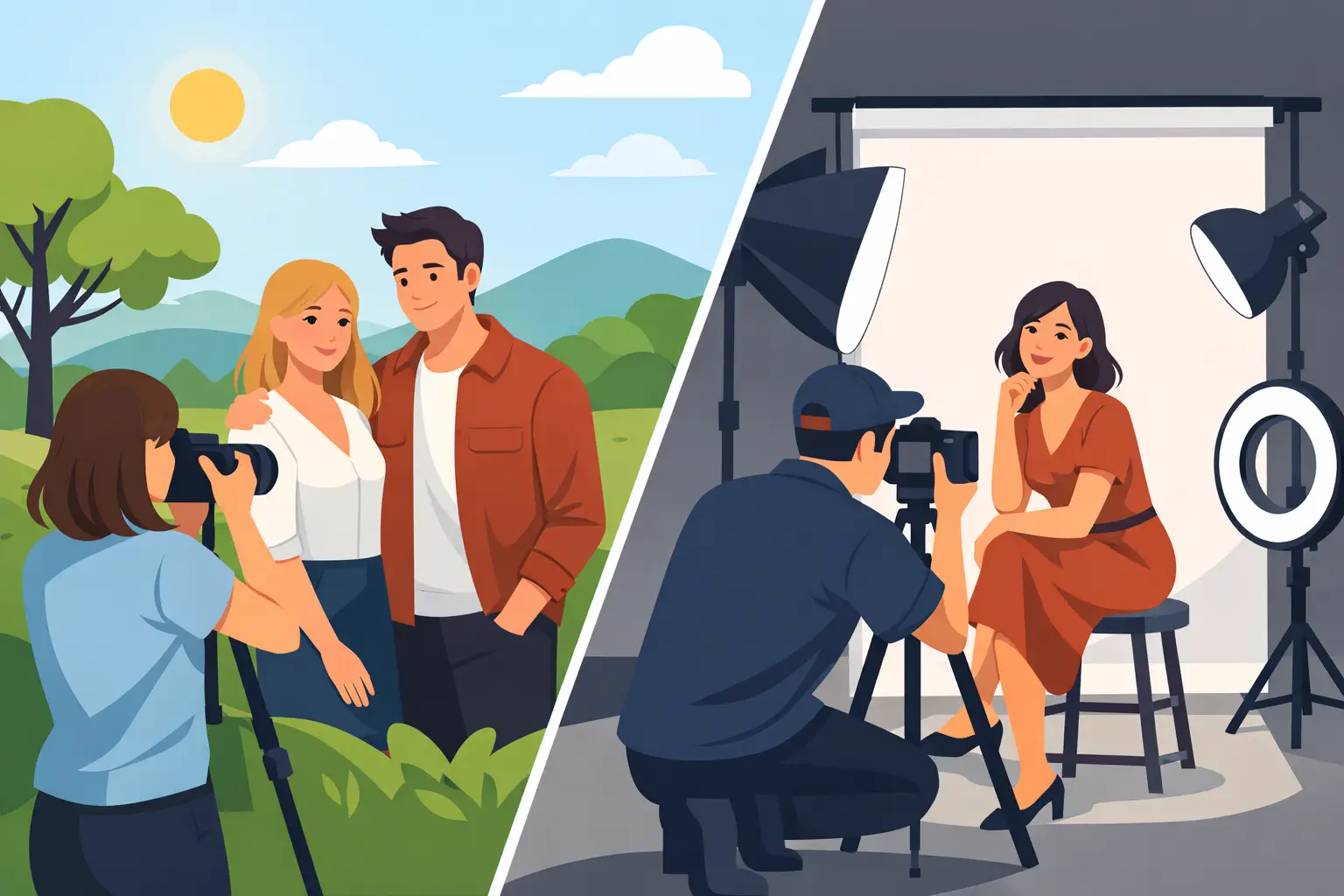
A portrait session should support the job your photo needs to do. A LinkedIn headshot, actor portfolio image, realtor marketing photo, and personal branding portrait can all call for a different approach. When weighing on location versus studio portraits, the better option is not about which setting is more impressive. It is about where you will look most natural, what your audience needs to see, and how much control the final images require.
For many clients, the biggest concern is simple: “Will I know what to do?” The answer should be yes in either setting. Good direction, flattering light, and thoughtful editing matter far more than whether the background is a clean studio wall or a familiar office. Still, each setting creates a noticeably different result.
On Location Versus Studio Portraits: The Core Difference
Studio portraits are built around control. The lighting, backdrop, framing, and overall mood can be carefully shaped with fewer variables. This makes a studio a strong choice when you need a clean, polished headshot that stays focused on your expression.
On-location portraits use a real environment as part of the image. That might be your office, a modern lobby, a workplace, an outdoor urban setting, or a space that reflects your brand. The setting can add context and personality, but it also introduces changing light, visual distractions, weather concerns, and less predictability.
Neither option is automatically more professional. A studio headshot can look refined and approachable. An on-location image can look equally polished while showing people more about your work, personality, or business. The decision comes down to purpose.
When a Studio Portrait Is the Better Choice
A studio session is often the most practical option for professionals who need a timeless image for LinkedIn, resumes, company websites, speaker bios, and business profiles. A simple background keeps attention on your face, which is especially useful when the photo will appear small on a screen or alongside other team headshots.
Controlled lighting is a major advantage. Instead of working around a dark office, bright window, overhead fixtures, or mixed color temperatures, the photographer can create even, flattering light from the start. This is valuable if you are concerned about looking tired, shiny, or stiff on camera. Proper lighting and posing guidance can make a major difference without making the final image look overdone.
Studio portraits also create consistency. If a company is updating headshots for several employees over different days, a repeatable setup helps every image feel like part of the same brand. That consistency makes a team page, proposal document, or company directory look organized and professional.
A studio may also be the easier choice if you are short on time. There is no need to find a suitable background, move furniture, wait for foot traffic to clear, or plan around rain and wind. You arrive, settle in, receive clear coaching, and focus on the session.
The trade-off is that studio images can be less specific to your work. A clean gray, white, or neutral background says professionalism, but it does not show your office, team culture, or day-to-day environment. For some careers, that simplicity is exactly right. For others, it leaves an opportunity untapped.
Studio portraits work especially well for
Professionals updating a LinkedIn profile or resume, job seekers who need a versatile image, actors who need clean portfolio photos, and companies that want consistent team headshots usually benefit from a studio setup. It is also a dependable choice if you have never had professional photos taken before and want a calm, straightforward experience.
When an On-Location Portrait Adds More Value
An on-location portrait is a strong fit when the environment helps tell your story. A realtor photographed in a bright, well-designed property, an entrepreneur in their workspace, or a consultant in a modern office can appear more connected to the service they provide. The background does not need to dominate the image. It simply gives the viewer useful context.
For personal branding, on-location images are often more flexible than a traditional headshot. You can create a mix of close-up portraits, mid-length images, working shots, and relaxed poses in one session. That variety gives you usable content for websites, presentations, social profiles, business cards, and marketing materials without making every photo feel identical.
Location also helps some people relax. If you feel more comfortable in your own office or a setting related to your work, that comfort can show in your expression. You may stand more naturally, have an easier time finding a genuine smile, and feel less like you are posing for a formal picture.
For local businesses in Cambridge, Kitchener, Waterloo, and Guelph, on-location photography can be particularly useful when a workplace or recognizable business environment supports the brand. It can show that your business is established, welcoming, and real. This matters for service providers whose clients want to know who they will be working with.
The trade-off is that a location needs to earn its place in the photo. An office with cluttered desks, harsh ceiling lights, busy signs, or distracting decor can weaken an otherwise strong portrait. A professional photographer can choose angles, manage light, and soften a background, but there are limits. Not every available space is the right photo space.
Think About Where the Image Will Appear
Before choosing a setting, consider the life of the image. If you need one reliable headshot for several professional uses, studio is often the safer investment. A clean portrait is adaptable and does not become dated when you move offices, change branding, or update your work environment.
If you need images for a website homepage, an About page, regular marketing, or a personal brand, location usually offers more storytelling potential. A visitor can see your face and get a sense of your professional world in the same moment. For entrepreneurs and realtors especially, this can make an online presence feel more personal and credible.
Corporate teams may need both. Studio-style headshots provide the consistency needed for staff directories, while location images can support recruitment pages, company culture content, and marketing campaigns. Choosing one format does not have to mean giving up the benefits of the other.
Light, Weather, and Timing Matter More Than Most People Expect
A studio session is not affected by rain, wind, early sunsets, or changing daylight. That reliability is helpful for busy professionals and larger teams with limited scheduling flexibility. It also means the session can be planned around your calendar rather than the forecast.
On location, light changes throughout the day. A space that looks excellent in person can be difficult at noon or too dark late in the afternoon. Outdoor sessions bring additional variables, including weather, crowds, and seasonal changes. These are not reasons to avoid a location shoot. They are reasons to plan it carefully.
The best on-location sessions allow time to assess the space and select the most flattering areas. Window light may work beautifully in one corner, while another area may need professional lighting to create a clean result. The goal is never to force a photo in a convenient spot. It is to make the setting work for you.
Comfort and Coaching Are Part of the Decision
Some clients assume studio photography will feel more formal, while location photography will feel more casual. That can be true, but the experience depends more on the photographer’s direction than the room itself. A comfortable session includes practical help with posture, hand placement, expression, and small adjustments that make a big visual difference.
If you are nervous about being photographed, choose the setting that removes the most stress. For one person, that is a quiet studio with no audience and no distractions. For another, it is a familiar workplace where the surroundings feel natural. There is no wrong answer, and you do not need to arrive knowing how to pose.
Clothing should support the setting as well. Solid colors and simple layers tend to work well in a studio, where your wardrobe becomes a more prominent part of the image. On location, choose clothing that complements the environment without blending into it or competing with a busy background. Bring a backup option when possible, especially for personal branding sessions with multiple looks.
Make the Choice Based on Your Goal, Not a Trend
Studio portraits are clean, consistent, efficient, and highly versatile. On-location portraits offer context, variety, and a stronger sense of personality. The best choice depends on whether your audience needs a focused professional headshot or a fuller picture of who you are and what you do.
If you are unsure, start with the question your photo should answer. “Who is this professional?” may call for a confident studio headshot. “What is it like to work with this person or business?” may call for an image made in a setting that feels true to your brand. A thoughtful session plan can make either choice feel natural, polished, and genuinely like you.
2 thoughts on “On Location Versus Studio Portraits Compared”
Comments are closed.