
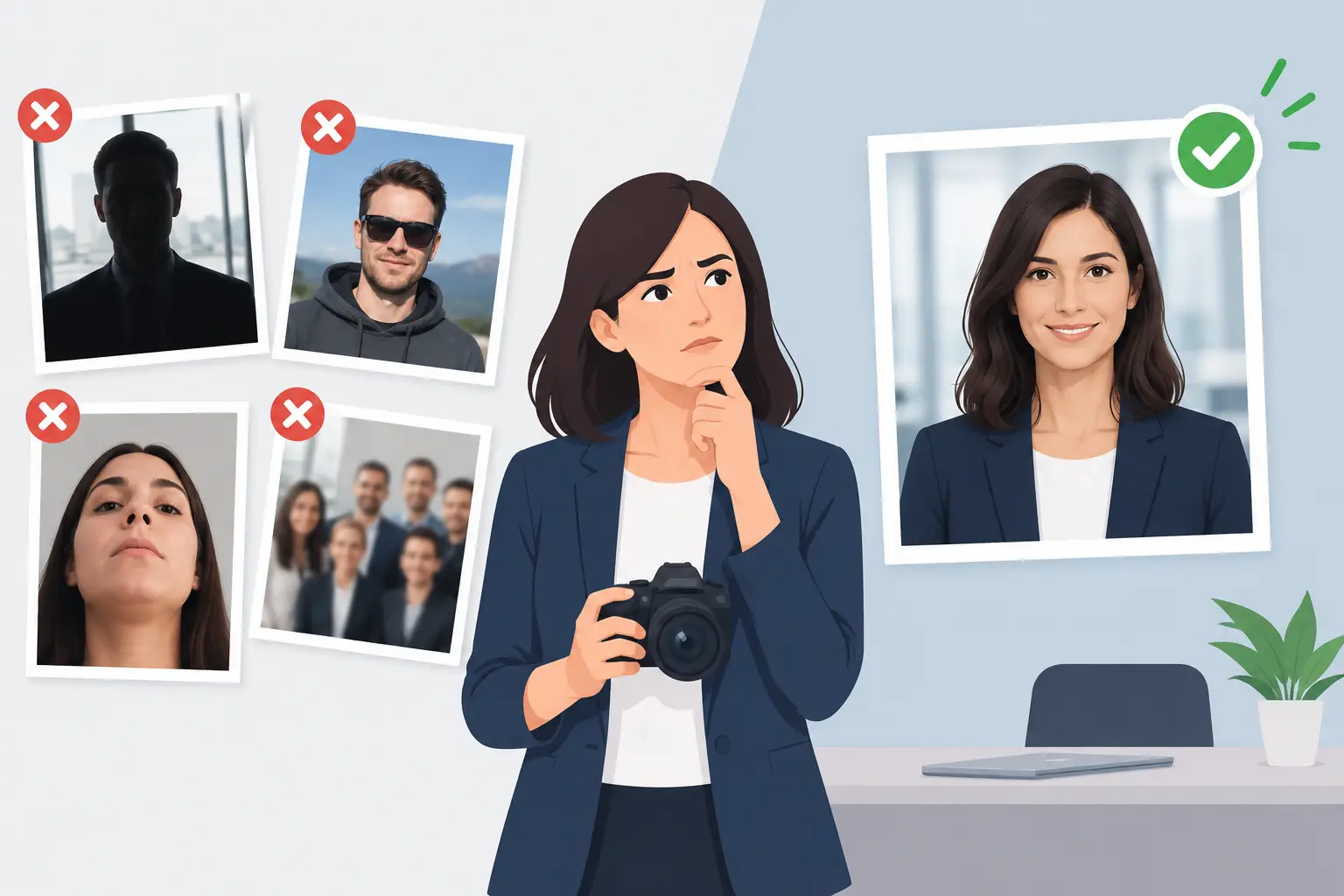
A corporate photo can be technically sharp and still send the wrong message. If the lighting is harsh, the wardrobe competes with the face, or each team member looks like they came from a different company, the result can weaken trust before a client reads a single word. The top corporate photo mistakes are rarely about being unphotogenic. They usually come down to planning, consistency, and not having the right guidance during the session.
For a LinkedIn profile, company website, proposal, speaker bio, or team page, your photo is part of your professional presence. The good news is that most problems are easy to prevent when everyone understands what the images need to do.
1. Treating a corporate photo like a casual snapshot
A quick phone photo may work for an informal social post, but it often falls short where credibility matters. Poor indoor lighting can create dark eye sockets, overhead shadows, and uneven skin tones. A wide-angle lens can also distort facial features when the camera is held too close.
Professional photos do not need to feel overly formal or stiff. They should simply look intentional. A well-lit, properly composed headshot creates a clear focal point: you. It tells clients, recruiters, and colleagues that you take your work seriously without making you look unlike yourself.
2. Using an outdated headshot
An old headshot can create an awkward first meeting. If your hair, glasses, facial hair, or overall appearance has changed significantly, update the image. The goal is not to chase every small change in your look. It is to make sure someone who meets you recognizes you immediately.
This matters especially for realtors, sales professionals, consultants, and job seekers whose image appears across several public-facing places. A current photo supports trust. It also avoids the impression that your website or LinkedIn profile has been left unattended for years.
3. Choosing wardrobe that distracts from your face
The best corporate headshot wardrobe is usually simple, well-fitted, and appropriate for your industry. Busy patterns, oversized logos, very bright neon colors, and shiny fabrics can pull attention away from your expression. Clothing that is too loose or too tight can also look less polished on camera than it does in a mirror.
Solid colors and subtle textures tend to photograph well. Mid-tone blues, greens, burgundy, charcoal, and other colors that complement your complexion are often safe choices. Pure white can work, but it may need careful lighting to retain detail. Black can look polished, though it can lose definition against a dark background.
There is no single right outfit for every role. A financial advisor may want a more traditional business look, while a creative business owner might choose smart casual clothing that reflects a more relaxed brand. The important thing is that the clothing supports the message you want to send.
4. Not coordinating team photos
One of the most noticeable top corporate photo mistakes is allowing every team member to choose a different background, crop, lighting style, and level of formality. Individually, the photos may look fine. Together, they can make a company page feel disorganized.
Before booking a team session, decide on a few basics: the background style, whether the images will be head-and-shoulders or half-length, the intended wardrobe level, and where the photos will be used. You do not need identical outfits. In fact, that can look forced. You do need a shared visual direction.
For teams with new hires throughout the year, keep notes on the lighting setup, backdrop, pose style, and crop. This makes future additions feel like part of the same organization rather than an afterthought.
5. Ignoring the background
A background should add context or keep the focus cleanly on the person. It should not compete for attention. Cluttered desks, crowded office kitchens, exit signs, random wall art, and bright windows can all distract from an otherwise strong portrait.
An office setting can be useful when it reflects the business well. A modern boardroom, clean reception area, or workspace with depth can make a corporate portrait feel more personal than a plain backdrop. But the space needs to be selected and framed carefully. If the room looks cramped, messy, or poorly lit, a studio-style setup may be the stronger choice.
6. Forcing stiff poses and expressions
Many people arrive for a headshot convinced they are bad at photos. Usually, they have simply been told to stand still, smile, and hope for the best. That approach produces tight shoulders, a strained smile, and an expression that does not feel natural.
Good posing is subtle. Small adjustments to posture, chin position, shoulder angle, and where you place your hands can make a meaningful difference. The camera also responds to comfort. A photographer who offers clear direction and keeps the pace relaxed can help people settle into an expression that looks confident rather than performed.
You do not need to copy someone else’s pose. A strong corporate portrait should look like you on a good, approachable day.
7. Over-editing the final images
Professional retouching should refine a photo, not erase the person in it. Reducing temporary blemishes, softening distracting shine, evening out color, and cleaning up small wardrobe issues are all reasonable. Removing every line, texture, and natural feature can make a portrait look artificial.
The best editing preserves recognizability. Clients should see a polished version of the professional they will meet, not a heavily filtered version that feels disconnected from reality. This is particularly important for personal branding, where authenticity is part of the value you offer.
8. Forgetting how the photo will be used
A photo designed for a company website may need more space around the subject than one intended for a LinkedIn profile. A vertical portrait can work beautifully on a brochure or speaker page, while a horizontal image may be better for a website banner. If you need room for text beside the image, that should affect where you stand in the frame.
Tell your photographer about the intended uses before the session. This allows the shoot to include the right crops, orientations, and expression options. It is much easier to capture variety during the appointment than to try to create it later from one tightly cropped image.
9. Scheduling without leaving time to prepare
Rushing into a photo session after a stressful meeting, a long commute, or a last-minute wardrobe decision can show on camera. You do not need hours of preparation, but give yourself enough time to arrive calm, check your clothing, and settle in.
For company photo days, build a realistic schedule. Short appointments can work well, especially for larger teams, but people need a few minutes to get comfortable. Encourage employees to bring a second jacket, shirt, or top if they are unsure. Small choices often create useful variety without extending the session.
10. Choosing only on price and skipping professional guidance
Budget matters, particularly when booking photos for an entire team. But the least expensive option can become costly if the images need to be redone, do not match across the website, or fail to represent the quality of your business.
Look beyond the final number. Ask whether edited images are included, whether the photographer provides posing guidance, whether they can work on location, and whether the style suits your brand. A comfortable, well-organized experience often produces better photos because people are more relaxed and the session has a clear purpose.
A better approach to corporate photos
The strongest corporate images are planned but not overproduced. They balance consistency with personality, polish with approachability, and professional direction with room for each person to look natural. That balance is especially valuable for teams in Cambridge, Kitchener, Waterloo, and Guelph that want a cohesive look without turning photo day into a stressful production.
Before your next session, think about the first impression your images should create. Then choose a setting, wardrobe direction, and photography approach that help people see the capable, trustworthy professionals behind your business.