
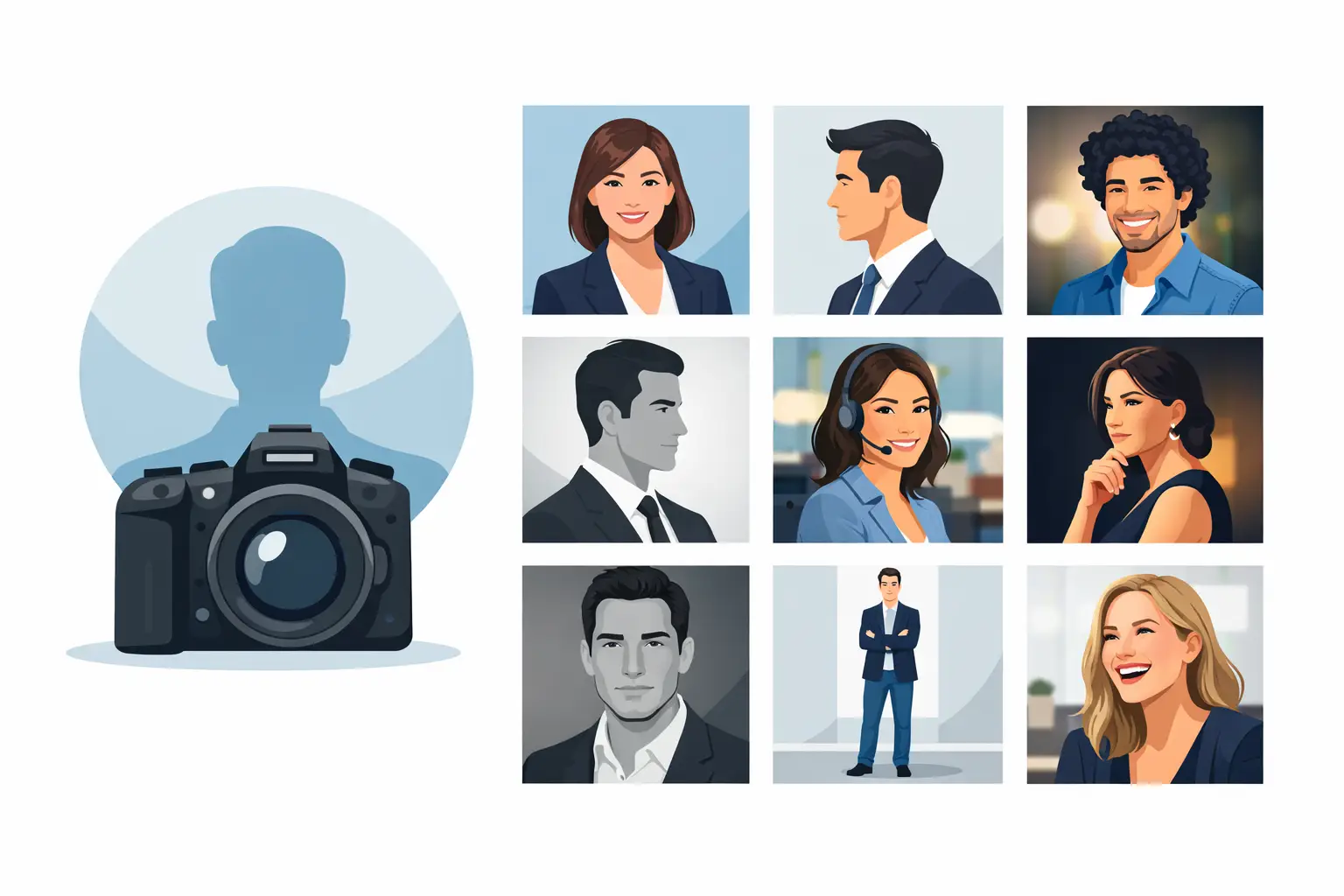
A lawyer updating LinkedIn, a realtor printing new signs, and an actor submitting for auditions do not need the same photo. That is why understanding the different types of professional headshots matters. The right headshot should match where it will be used, what impression it needs to create, and how polished or approachable you want to look.
A lot of people assume a headshot is just a clean photo from the shoulders up. Sometimes it is. But in practice, there are several styles, and each one serves a different purpose. Choosing the right one can save time, avoid a mismatch with your industry, and help you get more value from your session.
Why the type of headshot matters
A headshot is not only about looking good. It is about looking right for the job, brand, or audience in front of you. A formal corporate portrait may work perfectly on a law firm website, but it can feel stiff for a creative entrepreneur. A relaxed branding image may help a consultant feel more approachable, but it would not always fit an actor’s casting profile.
This is where a lot of people get stuck. They know they need new photos, but they are not sure what style to book. The good news is that most people do not need to figure it out alone. Once you know how the image will be used, the right direction becomes much clearer.
1. Corporate headshots
Corporate headshots are the most familiar style. These are typically used for company websites, LinkedIn profiles, press releases, conference materials, and internal directories. The goal is to look professional, confident, and polished without appearing overly staged.
Most corporate headshots use simple backgrounds, clean lighting, and a straightforward pose. Clothing is usually business or business casual, depending on the company culture. In some industries, a more formal look builds trust. In others, a softer and more relaxed presentation can feel more current.
If you work in finance, law, consulting, healthcare, or a larger corporate setting, this is often the safest and most practical choice.
2. LinkedIn headshots
LinkedIn headshots often overlap with corporate headshots, but they deserve their own category because the audience is different. On LinkedIn, your photo sits next to your name, headline, and work history. It needs to feel professional, but it also needs to feel personal enough that people want to connect with you.
This style usually works best when it is clean and natural rather than overly formal. A friendly expression matters here. If your profile photo looks too stern, too heavily retouched, or too dramatic, it can create distance. For job seekers, managers, and professionals building their network, a strong LinkedIn image can make the whole profile feel more credible.
3. Actor headshots
Actor headshots are a very specific type of professional headshot. They are designed for casting, not for general business use. That means they need to look like you on a good day, not a heavily stylized version of you.
Casting directors want a clear, honest sense of your look, age range, and personality. Wardrobe is usually simple, expressions are intentional, and retouching should stay light. The image needs to feel natural while still being sharp and well-lit.
This is one of the biggest areas where people choose the wrong style. A corporate-style photo may look polished, but it often does not work for acting submissions. Actor headshots need more personality and realism, with less emphasis on formal presentation.
4. Model headshots and portfolio images
Models often need more than one image type, but a modeling headshot is usually part of a broader portfolio. The goal is to show facial structure, versatility, and camera presence. Depending on the agency or use case, this can range from very clean and minimal to more editorial in feel.
For newer models, simpler is usually better. Agencies often want clear images that show what you actually look like. For experienced models updating a book, there may be room for more styling or a stronger concept. It depends on whether the images are meant for agency submission, commercial work, or personal promotion.
5. Personal branding headshots
Personal branding sessions go beyond the standard headshot. They are still built around your face and expression, but they often include more variety in posing, wardrobe, background, and framing. These images are made for people whose business is closely tied to their personal identity.
Coaches, consultants, entrepreneurs, speakers, and creative professionals often benefit most from branding-style portraits. You may want photos that feel polished but not corporate, confident but not stiff. A personal branding image can include a work setting, lifestyle details, or visual cues related to your service.
This is one of the most flexible types of professional headshots because it can be tailored to the tone of your brand. The trade-off is that it takes more planning than a basic studio session. If you need photos for a website, social media, speaking events, and marketing materials, that extra variety is often worth it.
6. Realtor headshots
Realtor headshots sit somewhere between corporate and personal branding. Real estate is a professional industry, but it is also highly personal and local. Clients want to trust you, and they want to feel comfortable reaching out.
A good realtor headshot should look polished, approachable, and current. It often appears on signs, business cards, listing materials, social media, and agent profiles, so it needs to reproduce well across different formats. A stiff studio portrait can sometimes feel too formal for this audience. On the other hand, a casual image can miss the mark if it does not feel professional enough.
This is where photographer guidance matters. Small adjustments in posture, smile, wardrobe, and background can shift the image from generic to highly usable.
7. Resume and job search headshots
Not every job seeker needs a formal headshot on a resume, especially in the US, where that practice varies by industry. But many people do need a strong professional image for LinkedIn, digital applications, speaker bios, company introductions, and networking platforms.
A job search headshot should be current, flattering, and aligned with the kind of role you want. If you are applying in a traditional field, a classic professional look usually makes sense. If you are in tech, design, or a startup environment, the image can often be a bit more relaxed.
The key is credibility. Hiring managers and recruiters should see someone who looks polished, confident, and easy to trust.
8. Team and group headshots
When a business needs photos for multiple staff members, consistency becomes a big part of the job. Team headshots are not just individual portraits taken on the same day. They need matching lighting, framing, background, and overall style so the final set looks cohesive.
These are often used on company websites, proposals, presentations, and marketing materials. They can be photographed in a studio setup or on location at the office. On-location sessions are especially helpful for larger teams because they minimize disruption and keep the look consistent across employees.
For growing companies, it is smart to think ahead. A style that is easy to repeat makes future hires much easier to photograph without the gallery looking mismatched.
How to choose the right type of professional headshot
Start with the main use. If you only need one image for LinkedIn and a company bio, a classic corporate headshot is usually the best fit. If you need content for a website, social media, and marketing pieces, personal branding may be the stronger option. If you are in acting or modeling, choose a photographer who understands those industries specifically.
It also helps to think about your audience. Do you need to look formal and authoritative, or warm and easy to approach? Those are not small differences. They affect wardrobe, expression, background, and lighting.
Finally, think about how much variety you need. Some people need one solid image. Others need a full set that can work across several platforms. Neither approach is wrong, but the session should match the goal.
A good photographer will help narrow this down before the camera comes out. At RP Photography, that guidance is a big part of the process, especially for clients who know they need better photos but are not sure what style makes the most sense.
What all good headshots have in common
No matter the category, strong headshots share a few basics. They look like you at your best. They feel natural, not forced. They are well-lit, professionally edited, and suited to the platform where they will be seen.
Comfort matters too. People worry about posing, facial expression, or looking awkward, and that is completely normal. The best sessions are not about being naturally photogenic. They are about getting the right direction so you can relax and come across as confident.
If you are deciding between different types of professional headshots, do not start with trends. Start with purpose. The right image is the one that helps people recognize your value the moment they see it.
One thought on “8 Types of Professional Headshots”
Comments are closed.