
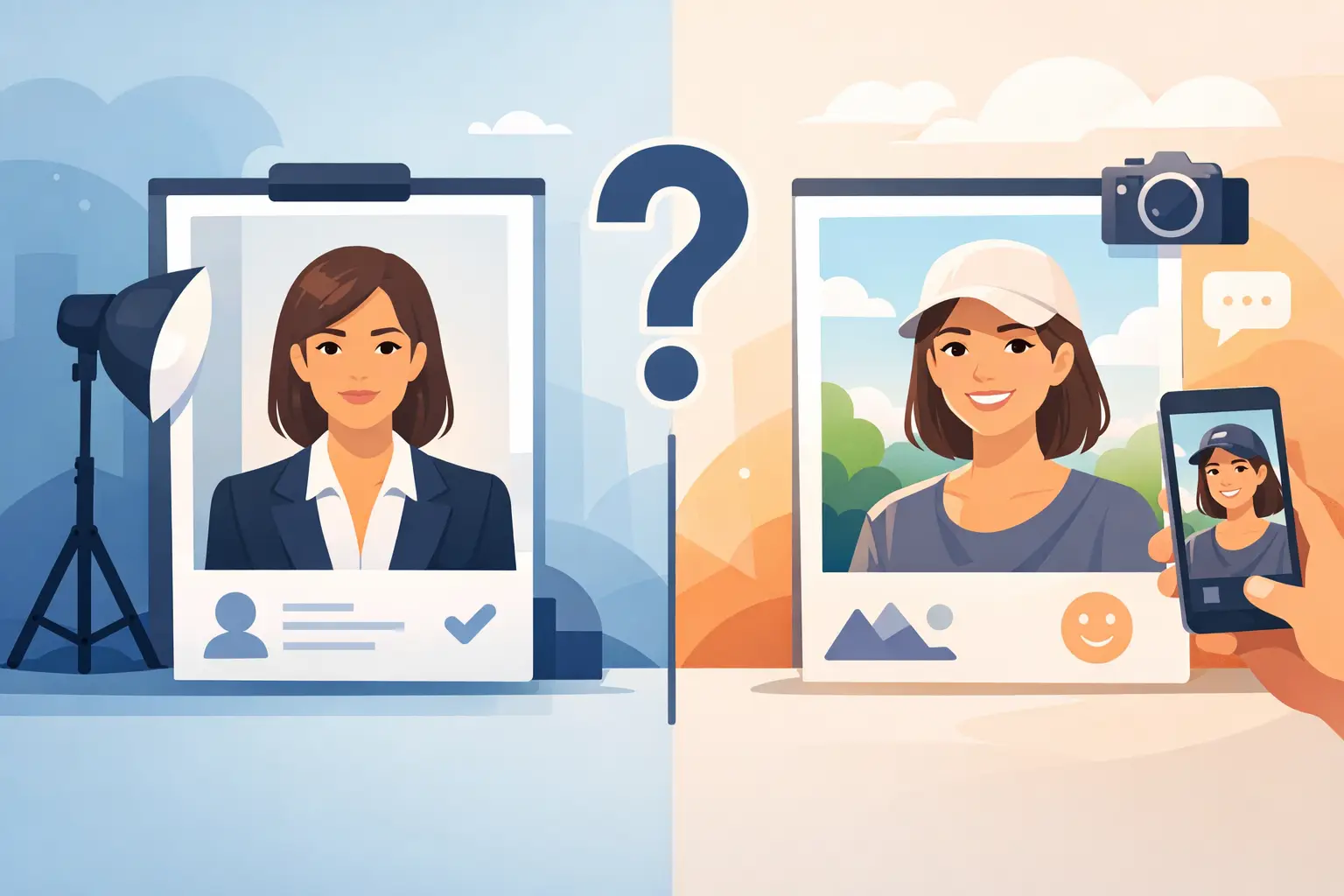
If you’re updating LinkedIn at 10 p.m. with a cropped vacation photo and asking yourself, do headshots have to be professional, the honest answer is: not always, but often enough that it matters.
A headshot is a small image doing a big job. It shapes first impressions before you speak, shake hands, or send a follow-up email. For some uses, a clean, well-lit photo taken at home can be enough. For others, a professional headshot is the difference between looking credible and looking careless.
Do headshots have to be professional for every use?
No. Not every headshot needs a studio setup, detailed retouching, and a guided session. The real question is what the image is being used for and what people expect when they see it.
If you’re adding a casual profile photo to a private social account, professional photography is probably unnecessary. If you’re applying for jobs, building a personal brand, joining a company website, marketing yourself as a realtor, or submitting to casting calls, expectations change quickly. In those cases, your photo is part of your presentation, and presentation affects trust.
That is why the answer depends less on photography rules and more on context. A headshot should match the level of professionalism your audience expects from you.
When a DIY headshot is enough
There are situations where a non-professional headshot can work just fine. If the image is temporary, low stakes, or being used in a more casual setting, you may not need to book a full session.
A DIY headshot can be usable if it has good natural light, a simple background, sharp focus, and flattering framing. It should still look intentional. That means no heavy filters, no distracting clutter, no car selfies, and no obvious crop from a group photo.
For students, early job seekers, or someone testing a new online profile, a well-done phone photo can be a reasonable short-term option. The key phrase there is short-term. If the image starts representing your business, your career, or your reputation, the standard should go up.
When professional headshots are worth it
Professional headshots matter most when your image directly influences whether someone trusts you, hires you, or contacts you.
That includes LinkedIn profiles, company team pages, business cards, speaking bios, real estate marketing, actor submissions, model portfolios, and personal branding websites. In these settings, people are making fast judgments. A polished image suggests you take your work seriously. A weak image can create doubt, even if your experience is strong.
This is especially true in competitive fields. If you are a realtor, consultant, lawyer, entrepreneur, or corporate professional, your headshot often appears next to people who have invested in strong photography. You do not need the most expensive session in town, but you do need an image that looks current, confident, and credible.
Actors and aspiring models face a slightly different issue. Their headshots are not just about looking polished. They need to look accurate, well lit, and true to type. A casual DIY shot can easily miss the mark because it lacks the technical quality and direction needed for industry use.
What makes a headshot look professional?
People often assume a professional headshot means expensive lighting or a formal studio backdrop. Those tools can help, but they are not the whole story.
A professional-looking headshot usually comes down to a few essentials: clean light, natural expression, proper lens choice, sharp focus, thoughtful editing, and guidance during the session. The biggest difference is not always the camera. It is the experience behind the camera.
Most people do not know how to pose themselves in a way that looks relaxed and confident. They tilt too far, tense their jaw, hold their shoulders awkwardly, or force a smile. A professional photographer helps fix those small things in real time. That coaching is a big part of the value.
Editing matters too. Good retouching should not make you look like someone else. It should simply remove distractions, balance the image, and keep the final photo polished and realistic. When editing is overdone, the headshot can feel artificial. When there is no editing at all, even a decent image can look unfinished.
The trade-off between cost and impact
A lot of people ask this question because they are trying to decide whether the cost is justified. That is a fair concern.
If you need one image for a minor internal profile, spending a lot may not make sense. But if that same image will appear on LinkedIn, your website, your email signature, your company page, and marketing materials for the next two years, it becomes a much better investment.
A strong headshot gets reused across platforms. It also tends to save time. You are less likely to keep changing photos, second-guessing your image, or avoiding opportunities because you dislike how you look online.
This is where affordable professional photography can make a real difference. You do not always need an elaborate branding session. Sometimes you simply need a clean, effective headshot that helps you show up well wherever people find you.
Do professional headshots really change how people see you?
Yes, although maybe not in a dramatic, movie-style way. The effect is subtler and more practical.
People tend to trust images that feel clear, current, and intentional. A professional headshot can make you seem more established, more approachable, and more prepared. That matters when someone is deciding whether to book a consultation, call you back, invite you to interview, or add you to a shortlist.
It is not about pretending to be someone you are not. A good headshot should still look like you on a normal, confident day. The goal is not perfection. The goal is a strong, accurate first impression.
For professionals who feel awkward in front of the camera, this is often the biggest surprise. They assume they are not photogenic, then see what happens when lighting, angles, expression coaching, and editing all work together. The result usually looks more natural, not less.
When informal photos can hurt more than help
The biggest problem with a weak headshot is not that it looks casual. It is that it can send the wrong message.
A blurry image can suggest a lack of attention to detail. An outdated headshot can feel misleading. A heavily filtered image may come across as unprofessional. A tight crop from a wedding or group event often looks like an afterthought.
None of these issues automatically ruin your chances, but they create friction. In crowded markets, small details influence decisions. If someone is comparing two similar professionals and one looks polished while the other looks thrown together, the polished image usually wins the first round of attention.
That does not mean everyone needs the same style. A lawyer’s headshot, a startup founder’s branding portrait, and an actor’s submission image should not all look identical. Professional does not mean stiff. It means fit for purpose.
How to decide what level of headshot you need
Start by asking where the image will appear and who will see it. If the audience includes employers, clients, casting directors, business partners, or the public, professional photography is usually the safer choice.
Next, think about how often the image will be used. A one-time internal directory photo has a different value than a headshot that will represent you across multiple platforms. Then consider whether your industry is image-sensitive. Real estate, sales, acting, consulting, and personal branding all place a high value on a strong visual first impression.
Finally, be honest about whether you can create a clean, current, flattering photo on your own. Some people can. Many cannot, and there is no shame in that. Looking natural on camera is harder than it seems.
For clients across Cambridge, Kitchener, Waterloo, and Guelph, this is often the turning point. They do not need something flashy. They need a photo that helps them look confident, capable, and easy to trust.
So, do headshots have to be professional?
Not always. But if the photo is tied to your career, your business, or your reputation, professional usually makes sense.
The better question is not whether you are required to get one. It is whether the image you are using supports the impression you want to make. If it does, great. If it does not, upgrading your headshot is one of the simplest ways to present yourself more clearly and confidently.
A good headshot should feel like you at your best – not overdone, not stiff, and not trying too hard. Just clear, credible, and ready for the opportunities you want next.