
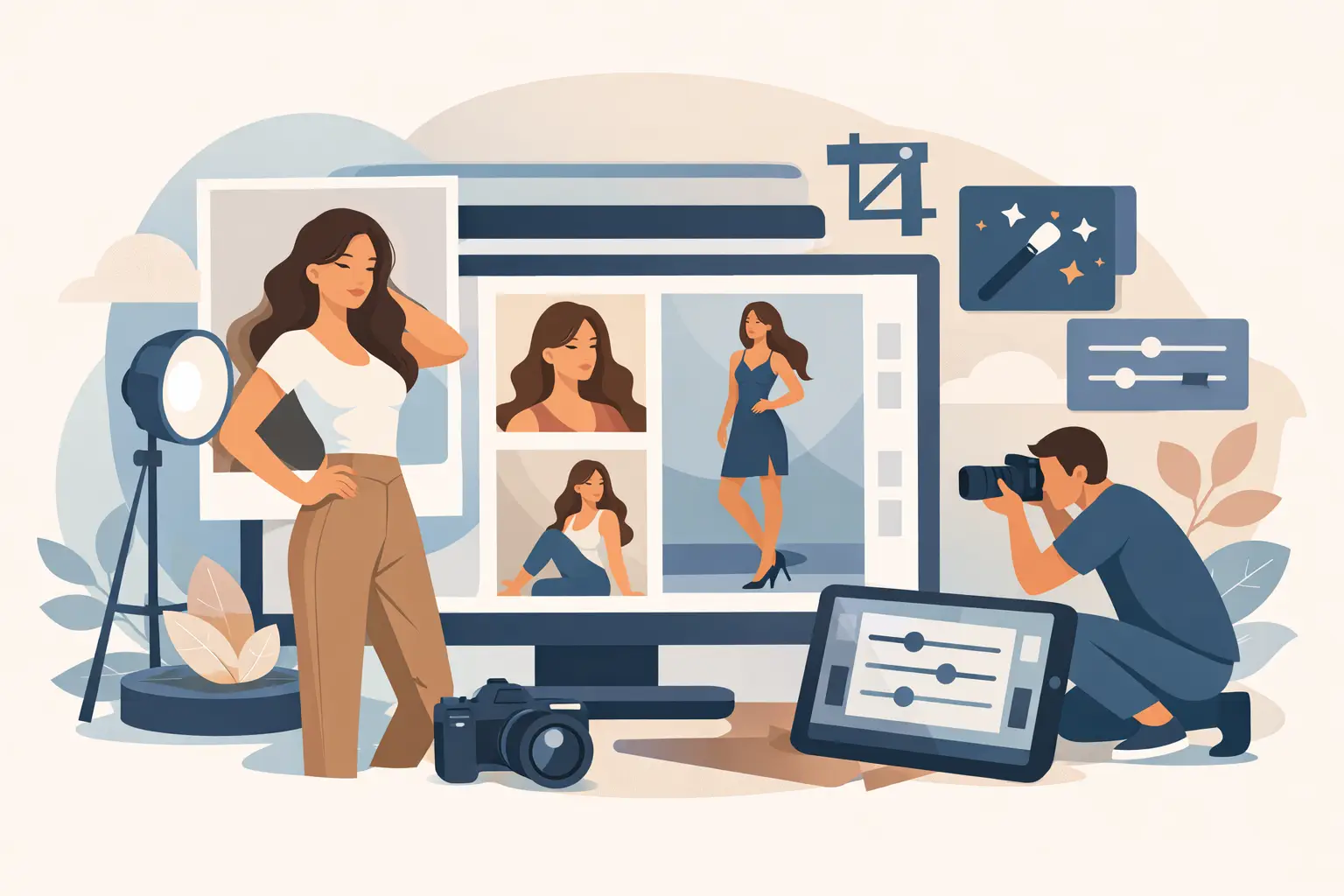
A modeling portfolio is not a collection of every photo you have ever liked. It is a focused set of images that helps an agency, casting director, brand, or client quickly understand how you look on camera and where you may fit. If you are learning how to build a modeling portfolio, the goal is not to look like someone else. It is to create clear, polished images that make your potential easy to see.
A strong portfolio can begin with a single well-planned session. You do not need a long resume, expensive wardrobe, or years of experience before stepping in front of the camera. You do need honest images, thoughtful variety, and guidance that keeps the final result professional without making you look overly posed.
Start with the type of modeling you want to pursue
Before booking a shoot or choosing outfits, decide what kind of work you want your portfolio to support. Fashion, commercial, fitness, beauty, lifestyle, e-commerce, and acting-related work all call for slightly different images. Your portfolio should reflect the work you want, not only the work you have already done.
For example, commercial models are often hired to look approachable, relatable, and natural in real-life settings. Their images may include warm smiles, clean casual styling, business-casual looks, and lifestyle portraits. Fashion-focused models may need more emphasis on shape, movement, styling, and full-body posing. Beauty modeling puts more attention on skin, hair, makeup, and close-up detail.
You can have range without trying to cover every category at once. A new model usually benefits from choosing one main direction and one supporting look. If you are interested in commercial and lifestyle work, a polished professional look plus a relaxed casual look can be more useful than six unrelated concepts.
How to build a modeling portfolio with the right core images
Most new portfolios should be simple, clean, and easy to review. Start with images that show your face, proportions, expression, and ability to take direction. These are often more valuable than heavily styled photos because they give agencies and clients a realistic sense of your appearance.
Your first portfolio should normally include a mix of headshots, three-quarter portraits, and full-body images. A clean beauty image or close-up can be useful if it suits your goals. Include both smiling and more neutral expressions, especially for commercial or lifestyle work. The goal is to show that you can communicate different moods while still looking like yourself.
Avoid filling the portfolio with near-duplicates. Ten photos taken in the same outfit, with the same expression and background, do not demonstrate range. Select the strongest image from each setup, then make sure every additional photo adds something different: a new expression, pose, outfit, location, or use case.
A practical starter portfolio often includes these four types of images:
- A natural, well-lit headshot that clearly shows your face
- A full-body image in simple, fitted clothing
- A polished lifestyle or commercial portrait with an approachable expression
- A more editorial, fashion-forward, or personality-driven image that suits your intended market
You may add more later as you gain experience and identify the work you enjoy. At the beginning, quality matters much more than volume.
Choose outfits that support the camera, not distract from you
Wardrobe should help create variety while keeping the attention on your face and body. Bring options that fit well, feel comfortable, and suit your intended type of modeling. Clothing that is too loose can hide your shape, while clothing that is too tight or difficult to move in can make posing feel awkward.
Solid colors usually photograph well, particularly black, white, denim, navy, earth tones, and soft neutrals. A bold piece can work if it fits the concept, but avoid relying on large logos, busy patterns, or trendy items that may date your images quickly. Clean shoes and simple accessories are often enough.
Plan two to four outfits rather than bringing an entire closet. For a commercial portfolio, you might choose fitted jeans and a plain top, a business-casual outfit, and a relaxed lifestyle look. For fashion work, build more contrast through silhouettes, layers, and stronger styling. Discussing your wardrobe with your photographer before the session can save time and help ensure each change photographs differently.
Hair and makeup should still look like you. A polished version of your everyday appearance is generally safer than a dramatic transformation, unless a specific creative concept calls for it. Agencies and clients want to know what you actually look like when you arrive on set.
Prioritize good direction over complicated posing
Many aspiring models worry that they do not know how to pose. That is normal. Professional modeling images should not depend on you arriving with a memorized set of poses. A good photographer will coach you through posture, hand placement, angles, facial expression, and movement while helping you stay relaxed.
The best poses usually have a purpose. A full-body image should show your proportions and confidence. A close-up should keep attention on your eyes and expression. A lifestyle image should feel believable, not like you are forcing a smile at an invisible camera.
Small adjustments make a major difference: shifting weight to one leg, lengthening through the neck, relaxing the shoulders, turning slightly away from the lens, or changing where your eyes are directed. The point is not to create a stiff pose. It is to create shape and energy while making the image feel natural.
If you are new to being photographed, tell your photographer. Coaching is part of a well-run portfolio session, not an extra you should feel embarrassed to request.
Use locations and backgrounds strategically
A studio is excellent for clean, agency-ready images because the background does not compete with you. It is especially useful for headshots, simple full-body shots, beauty images, and polished commercial work. Studio lighting can also keep the look consistent across the portfolio.
On-location photos add context and personality. A modern outdoor setting, an urban street, a bright interior, or a workplace-style environment may suit lifestyle and commercial modeling. The trade-off is that a busy location can age quickly or pull focus from the model if it is not chosen carefully.
For many first portfolios, a mix of studio and location images works well. Start with clean shots that establish your appearance, then add a few environmental images that show how you fit into a campaign, brand, or everyday story. If you are booking in Cambridge, Kitchener, Waterloo, or Guelph, choose settings that support your look rather than selecting a location just because it is popular.
Edit for polish, not a different person
Professional editing should refine an image, not erase the person in it. Color correction, exposure balancing, temporary blemish cleanup, and subtle skin refinement can help photos look finished. Heavy skin smoothing, altered body shape, or changing defining features can create problems when your portfolio does not match your real appearance.
This matters especially when approaching agencies or attending castings. Clients need to feel confident that the person they meet will resemble the person in the photos. Keep your portfolio current as your hairstyle, look, or experience changes.
When reviewing final images, ask a practical question: could someone use this photo to cast me for the work I want? If the answer is unclear, the image may be attractive but not useful for the portfolio.
Keep the final selection focused and current
A new model can often begin with six to 12 strong images. That is enough to show variety without asking a busy viewer to sort through too much. Lead with your strongest photo, then organize the remaining images so the sequence feels balanced. Do not place several nearly identical close-ups or full-body shots beside one another.
As you book work, replace weaker starter images with professional tearsheets, campaign photos, or images from sessions that better represent your direction. Do not remove clean basics too quickly, though. A current headshot and a straightforward full-body image remain useful even as your portfolio becomes more developed.
Your portfolio will grow with your experience, but the first version only needs to do one job well: make it easy for the right people to see you clearly. Show up prepared, choose images with intention, and work with a photographer who gives practical direction. Confidence on camera is not something you have to arrive with. It is often something you build, one strong image at a time.