
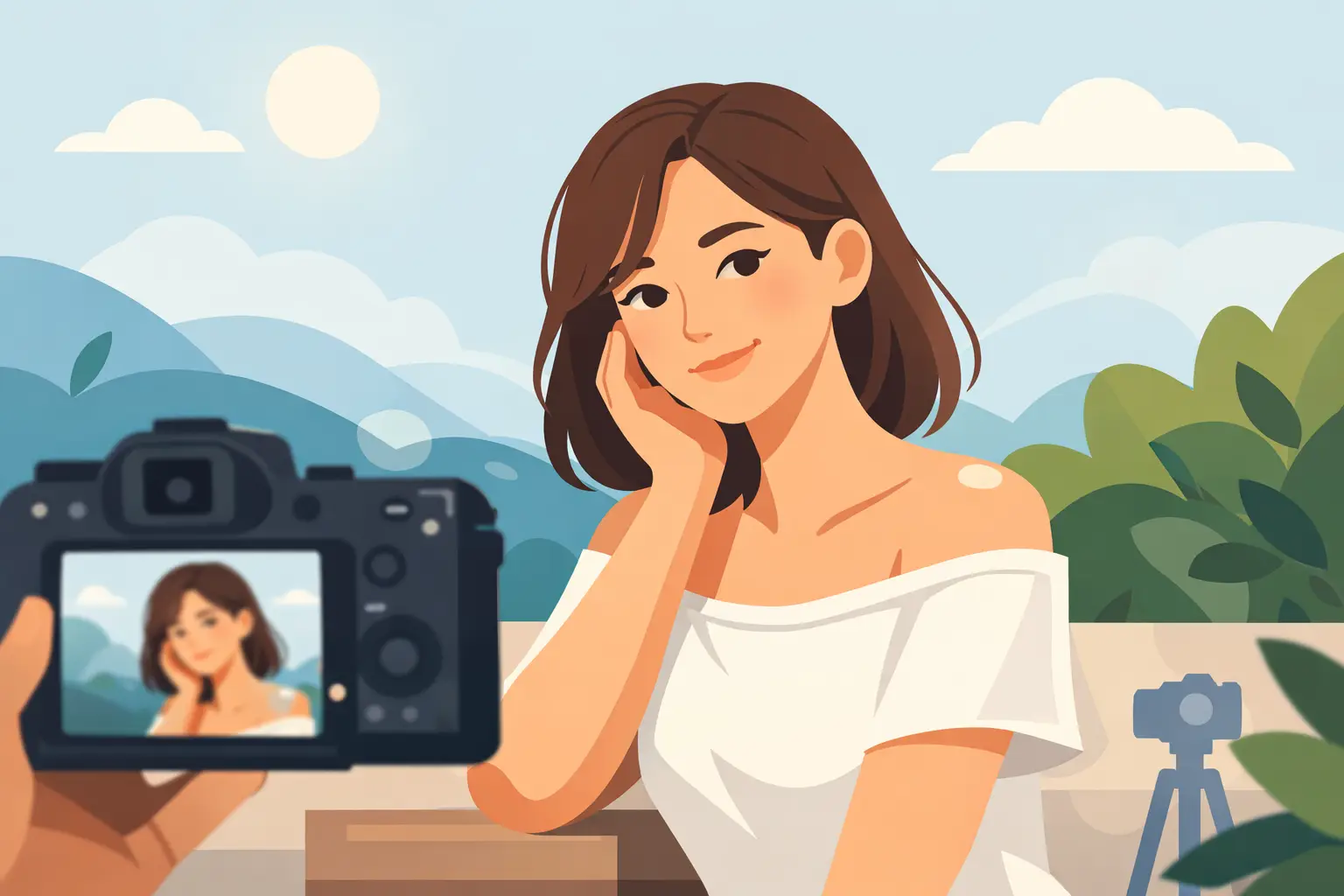
Most people do not walk into a portrait session thinking, I’ve got this. They usually worry about looking stiff, forcing a smile, or not knowing what to do with their hands. If you have ever wondered how to look natural in portraits, the good news is that it is not about being a model. It is about a few small adjustments that help you look more like yourself on your best day.
The biggest mistake people make is assuming natural means unplanned. In portraits, natural usually comes from good direction, comfortable pacing, and simple posing that suits your face, posture, and purpose. A polished headshot for LinkedIn, an actor portrait, and a personal branding image can all feel natural, but they will not all be posed the same way.
Why people look stiff on camera
Stiffness usually starts before the photo is even taken. Most people become overly aware of their face, shoulders, and hands the second a camera points at them. That self-consciousness creates tension, and tension shows up fast. Your jaw tightens, your shoulders rise, and your smile starts to look like you are waiting for the photo to be over.
There is also the issue of timing. A natural-looking portrait is rarely the first frame. It often happens in the brief moment after you exhale, adjust your posture, or react to a simple prompt. That is why experienced photographers coach constantly through a session instead of expecting perfect poses right away.
How to look natural in portraits starts with posture
If you want to look relaxed, start by avoiding the posture most people default to. Standing straight at the camera with your weight evenly distributed tends to make your body look rigid. It is not flattering for most people, and it rarely feels natural.
A better approach is to shift your weight slightly onto one leg, relax your knees, and angle your body just a bit instead of facing the camera square on. This creates shape without looking overly posed. Keep your spine tall, but not military-straight. Think confident rather than formal.
Your shoulders matter more than people realize. When they creep up, the whole portrait feels tense. Drop them, roll them back lightly, and let your arms hang naturally before placing your hands where they make sense for the shot. Small changes in posture can make a huge difference.
What to do with your hands
Hands cause a lot of stress because people think they need to do something special with them. Usually, they do not. The goal is to give your hands a purpose so they do not look awkward or lifeless.
For professional portraits, that might mean one hand in a pocket, lightly holding a jacket lapel, resting your hands together loosely, or crossing your arms in a relaxed way. For branding portraits, you may hold glasses, a notebook, a phone, or another prop that fits your work. The key is to avoid clenched fists or pressed-flat hands, which tend to read as nervous.
If a pose feels strange, it will probably look strange. That is a useful rule to remember.
Expression matters more than posing
A technically correct pose can still look unnatural if your expression is off. This is where many portraits fall apart. People focus so much on standing correctly that they forget their face needs to look alive.
The most natural expressions usually come from soft engagement, not a huge smile pasted on for ten seconds. A slight smile, relaxed mouth, and focused eyes often look stronger than an exaggerated grin. If you are smiling, let it build and fade naturally instead of holding it too long.
Your eyes do a lot of the work in a portrait. If they look disconnected, the photo feels flat. Try thinking about a real person rather than the camera itself. For a business headshot, that might mean imagining you are greeting a client. For an actor portrait, it may be a more direct, intentional expression. Context matters.
Breathe before the shutter clicks
People often hold their breath without realizing it. That instantly creates tension in the face and neck. A simple inhale and exhale right before the shot can soften your expression and help your posture settle into place.
This sounds minor, but it works. So does moving slightly between frames instead of freezing in one exact position. Tiny shifts in chin angle, eye line, and shoulder position often produce the most natural results.
Wear clothes that help, not distract
Wardrobe has a direct effect on how natural you look because what you wear changes how you feel. If your outfit is too tight, too formal for your personality, or something you rarely wear, it can show in the photos.
Choose clothing that fits well, feels comfortable, and matches the purpose of the portrait. A corporate headshot should look polished and professional. A personal branding session may allow more personality. A model portfolio image might call for cleaner styling that keeps the focus on you.
Solid colors usually photograph better than busy patterns. Simple layers can add structure and variety. Make sure clothes are steamed, clean, and fitted properly through the shoulders and sleeves. Even a great expression can get lost if your outfit looks distracting or uncomfortable.
Grooming also matters, but the goal is still to look like yourself. You want a refined version of your everyday appearance, not someone unrecognizable.
How to look natural in portraits during the session
The session itself plays a big role in whether you look comfortable. Good portraits are not just about camera settings. They come from pacing, coaching, and a clear sense of what the final images need to accomplish.
If you are being photographed for work, it helps to tell your photographer where the images will be used. A LinkedIn headshot, company bio photo, and realtor portrait all need slightly different energy. When the purpose is clear, the direction becomes more precise, and your expressions tend to feel more natural because they make sense for the situation.
It also helps to expect some awkwardness in the first few minutes. That is normal. Very few people look completely relaxed at the start. The best sessions build momentum. You settle in, get feedback, make a few adjustments, and suddenly the process feels much easier.
This is one reason guided portrait sessions matter so much. At RP Photography, many clients come in saying they are not comfortable in front of the camera. With steady direction and a relaxed pace, that usually changes quickly. Looking natural is often less about raw confidence and more about having the right support.
Don’t chase perfect
Trying too hard to get the perfect expression usually backfires. The more you monitor every part of your face, the less natural you tend to look. It is better to stay engaged, follow direction, and let the photographer work through small variations.
Natural portraits often come from the in-between moments – after a laugh, during a subtle shift in posture, or right when your expression settles. Those moments cannot be forced, but they can be encouraged.
A few things that help right before your session
A little preparation goes a long way. Get enough sleep the night before, drink water, and avoid rushing to the session if you can. Showing up flustered usually shows on your face.
If you are unsure about wardrobe, bring options. If you wear glasses regularly, bring them cleaned. If you are getting a haircut, do it a few days in advance rather than the same day. These practical details reduce stress, and less stress usually means better portraits.
It also helps to set realistic expectations. You do not need to transform into someone more photogenic. You just need a setting, pose, and expression that bring out your strongest version.
Natural does not mean casual
This is an important distinction, especially for professionals. A natural portrait should still look intentional. You want to appear approachable, but also capable. Relaxed, but not sloppy. Warm, but not unfocused.
That balance depends on your industry and goals. A lawyer may need a more polished expression than a fitness coach. An actor may want more range than a corporate team member. There is no single formula, which is why portrait coaching should be tailored rather than generic.
The best portraits feel easy when you look at them. What you do not see is the small amount of structure behind that ease – the posture correction, the wardrobe choice, the timing, the expression coaching, and the steady reassurance that helps someone stop overthinking.
If you want to look natural in portraits, do not aim to be perfect on camera. Aim to be comfortable enough that your real expression can show up. That is the version of you people trust, remember, and want to work with.
4 thoughts on “How to Look Natural in Portraits”
Comments are closed.