
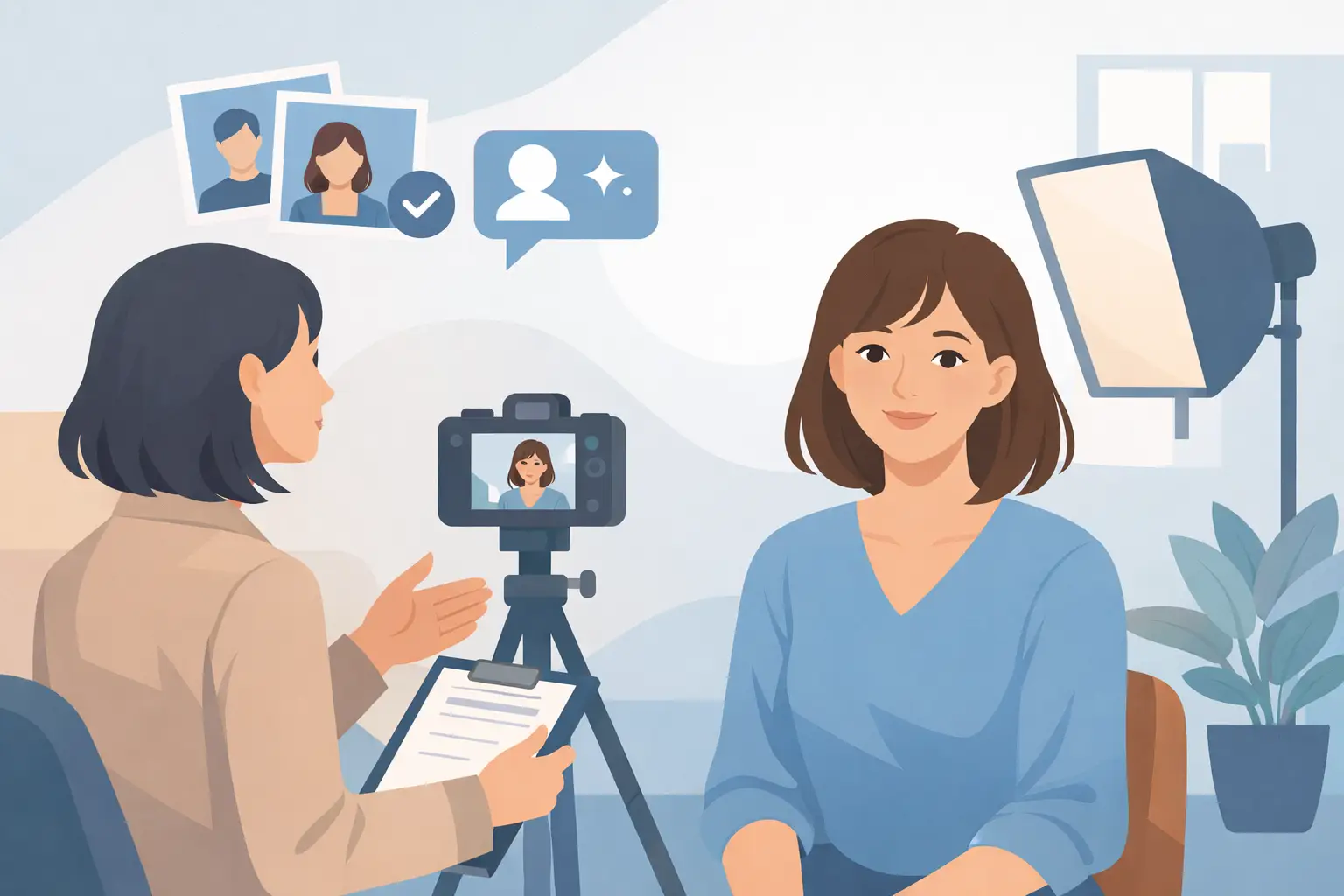
A good headshot should not look like you are trying too hard. It should look like the capable, approachable person a client, recruiter, casting director, or colleague would meet in real life. That is why headshot coaching for beginners matters so much. The right guidance replaces guesswork with a few simple adjustments that make you look comfortable, confident, and like yourself.
Many people arrive for a session saying they are not photogenic. Usually, that means they have not been coached through a professional photo before. Being photographed can feel unfamiliar, especially when the image will represent you on LinkedIn, a company website, a real estate profile, or a portfolio. You do not need modeling experience to get a strong result. You need clear direction, a little preparation, and room to relax.
What Headshot Coaching Actually Means
Headshot coaching is practical guidance during your session. A photographer helps you position your shoulders, angle your face, settle your expression, and make small changes that look natural in a still image. It is not about forcing a pose that does not suit you or turning your session into a performance.
The camera sees details differently than a conversation does. A chin that feels level may look slightly raised. Standing straight toward the lens can make the body look wider and flatter. A friendly expression may fade into a blank stare when you are concentrating. Coaching accounts for those small differences while keeping the final image believable.
For beginners, the biggest benefit is relief. You do not have to walk in knowing your best angle or wondering what to do with your hands. A well-run headshot session gives you one manageable instruction at a time, then adjusts based on how you naturally move and respond.
Before Your Session: Make a Few Smart Choices
Your clothing should support the purpose of the headshot, not compete with it. For most professional uses, choose a well-fitting top or jacket in a solid color that works well with your skin tone. Mid-tone or deeper colors often photograph well, while very bright white, neon shades, and busy patterns can pull attention away from your face.
Bring a second option if you are unsure. A blazer can create a more polished corporate look, while a simple fitted shirt may feel more appropriate for a personal brand or creative portfolio. Realtors, entrepreneurs, and business owners often benefit from having both a formal and a slightly more relaxed option, depending on where the image will appear.
Grooming should feel like an elevated version of your normal routine. Avoid trying a brand-new hairstyle, makeup look, or skincare product the night before. Small details matter on camera, but looking recognizable matters more. If you wear glasses every day, it often makes sense to wear them in your headshot. Just make sure the lenses are clean and let the photographer know so lighting and angles can be adjusted to reduce glare.
Get enough rest if possible, drink water, and give yourself time to arrive without rushing. Those basics will not replace professional lighting or editing, but they do help you start the session feeling more settled.
How to Pose Without Looking Posed
The easiest way to look stiff is to lock every part of your body at once. Headshot coaching starts by reducing that tension. Your photographer may ask you to shift your weight, turn your shoulders slightly away from the camera, or lean forward just a little. These adjustments create shape and energy without looking exaggerated.
Your shoulders matter more than most people expect. Facing the camera squarely can work for certain corporate portraits, but a slight turn is often more flattering and relaxed. From there, your face can return toward the lens. This creates a natural connection with the viewer while keeping your posture open.
Chin position is another common coaching point. People often pull their chin back when they feel nervous, which can soften the jawline and make the neck look shorter. The correction is usually subtle: bring your face slightly forward and lower the chin by a small amount. It may feel unusual for a second, but it generally looks much more natural in the photo.
Hands only become a problem when they are treated like a problem. In a close headshot, they may not be visible at all. In a wider personal branding portrait, the photographer can give them a job, such as lightly holding a jacket, resting one hand in a pocket, or keeping the arms comfortably at your sides. Simple is nearly always better than overly choreographed.
Let Your Expression Change
A single smile is not the goal. Most people have a range of expressions that could work well for their role and personality. A job seeker may want a warm, dependable expression. An attorney or financial professional may prefer calm confidence. An actor may need images that show character and range, while a business owner may want a friendly, direct look that encourages trust.
During the session, it helps to let your expression reset between frames. Take a breath, look away for a moment, then reconnect with the camera. A photographer may talk with you, ask you to think of a person you enjoy working with, or guide you through small expression changes. These are not tricks. They are ways to create a genuine reaction rather than holding a strained smile.
Why the Right Coaching Is Better Than Copying Poses Online
Reference photos can be useful for identifying the overall feeling you like: polished, creative, approachable, serious, or energetic. But copying another person’s pose exactly rarely works. Their face shape, posture, wardrobe, and lighting may be completely different from yours.
A good photographer uses references as a starting point, then adjusts the approach for you. The best angle is not always the same from person to person. Some clients look strongest with a slight smile, while others come across as more confident with a softer, neutral expression. The background and intended use also affect the final choice.
This is especially true for professionals who need a headshot to work across multiple places. A photo for LinkedIn may need to feel personable at a small size, while a corporate website image may need to match a consistent team style. If you are building a personal brand, you may need a little more variety in framing and expression. Coaching helps create images that fit those needs without making you look overproduced.
What to Expect During a Beginner-Friendly Session
A comfortable session should feel collaborative, not intimidating. Before the first photo, your photographer should understand where you plan to use the image and what impression you want to make. That conversation guides decisions about wardrobe, background, framing, and expression.
Once shooting begins, expect frequent, specific direction. Instead of hearing vague advice like relax, you may hear instructions such as turn your shoulders a little left, bring your chin forward slightly, or soften your smile. Clear coaching gives you something useful to do and prevents you from overthinking every frame.
You should also expect adjustments. Sometimes a minor change in posture improves the image immediately. Other times, the best result appears after a few minutes of conversation, when your face and shoulders stop reacting to the camera. There is no prize for getting it right on the first click.
At RP Photography, coaching is part of making professional headshots feel accessible for first-time clients. Whether your session is in a studio or at an appropriate on-location setting, the goal is the same: create a polished image while helping you feel at ease in front of the lens.
Common Beginner Mistakes to Leave Behind
Do not practice a frozen smile in the mirror for an hour. It can make you more self-conscious and does not account for lighting, lens choice, or live direction. Instead, focus on arriving prepared and open to coaching.
Avoid choosing clothing only because it is trendy. The best headshot wardrobe is clean, well-fitted, and appropriate for the audience you want to reach. Also, resist judging every photo while it is being taken. A frame can look slightly unusual before it is cropped, selected, and professionally edited.
Finally, do not assume confidence has to look serious. A warm expression can be just as professional as a more formal one. The right choice depends on your industry, your goals, and how you want people to feel when they see your photo.
Your first headshot session does not require a perfect pose or a camera-ready personality. Show up as yourself, let the coaching do its job, and give yourself permission to settle into the process. A strong image often begins the moment you stop trying to look like someone else.