
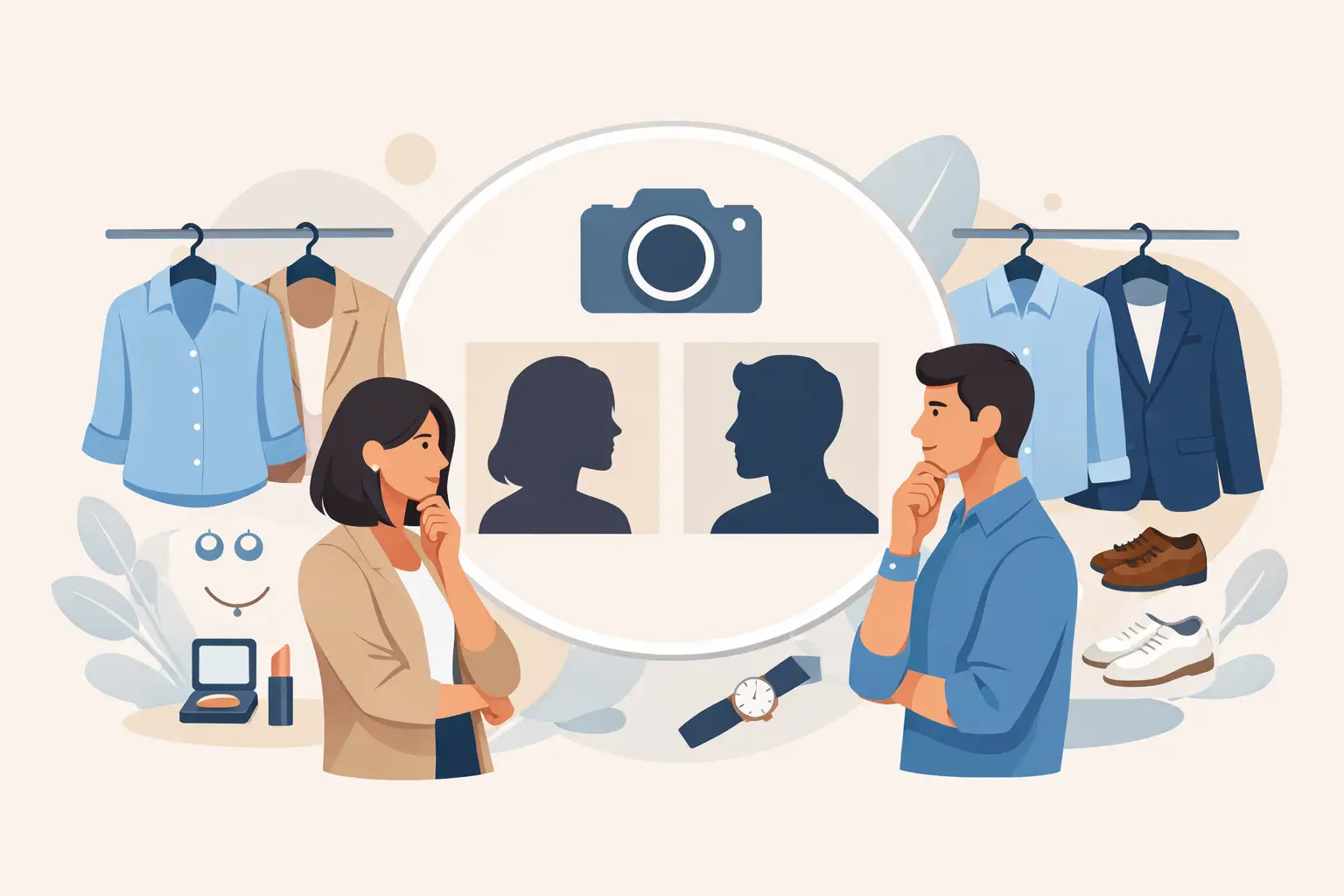
You booked the session, picked the date, and now the big question hits: what should I wear for headshots? It matters more than most people expect. The right outfit helps you look polished, confident, and like yourself. The wrong one can pull attention away from your face, make you feel stiff, or date the image faster than it should.
A strong headshot is not really about the shirt or jacket. It is about making sure nothing competes with your expression. When clothing fits well, photographs cleanly, and suits your industry, the final image feels natural and professional. That is the goal.
What should I wear for headshots if I want to look professional?
Start with clothing you would realistically wear to meet a client, interview for a role, or update your LinkedIn profile. That does not always mean formal. For some people, a blazer makes sense. For others, a well-fitted sweater, blouse, or structured top looks more current and approachable.
The safest choice is usually simple, solid-colored clothing with a clean neckline and a flattering fit. Mid-tone and darker shades often photograph best because they keep the attention on your face. Navy, charcoal, deep green, burgundy, soft blue, and black can all work well, depending on your skin tone and the background.
Fit matters as much as color. If something is too tight, it can create pulling and wrinkles. If it is too loose, it can look boxy or add bulk on camera. Headshots are close-up images, but the way clothing sits on your shoulders, collar, chest, and neckline still makes a big difference.
Choose clothes that match the job the photo needs to do
Not every headshot serves the same purpose, so your outfit should match where the photo will be used.
For corporate headshots, keep it polished and straightforward. Blazers, button-down shirts, simple blouses, knit tops, and dresses with structure all work well. If you work in finance, law, consulting, or leadership, a more formal look usually makes sense. If you are in tech, design, wellness, or a more casual service business, you may want something professional but less rigid.
For realtor headshots, aim for polished and approachable at the same time. You want to look trustworthy, capable, and easy to talk to. A tailored jacket, a clean shirt, or a flattering blouse often works better than something overly trendy.
For actors and aspiring models, the approach is different. Casting and portfolio images usually work best when clothing is simple and not too styled. The focus should stay on your features and range. Solid tops, clean necklines, and fitted basics often outperform outfits that feel too dressed up or too specific.
For personal branding portraits, you have a little more room to show personality. You might bring a few looks, such as one polished option, one more relaxed look, and one outfit that reflects your brand colors or industry. The key is still restraint. Personal style helps, but distraction does not.
Colors that usually photograph well
If you are unsure where to start, solid colors are your friend. They tend to look cleaner on camera than busy prints and make editing more consistent across a full set of images.
Jewel tones and rich neutrals are often reliable because they add depth without overpowering the face. Soft earth tones can also work well, especially for branding portraits or warmer skin tones. White can look crisp and modern, but it needs to fit well and be opaque. Black can be elegant and slimming, though in some lighting setups it may lose detail if the fabric is too flat.
The best color for you depends on your skin tone, hair color, and background. A color that looks great in person can photograph differently under studio lights or natural light. That is one reason it helps to bring a backup option.
What to avoid wearing in headshots
Most clothing mistakes come down to one issue: the outfit draws attention before your face does.
Very busy patterns, tiny stripes, loud florals, and high-contrast prints can all be distracting on camera. Neon shades tend to reflect strange color onto the skin. Thin fabrics may cling in unflattering ways or show underlayers. Wrinkled clothes will also show up more than you expect, especially in high-resolution images.
Logos and graphic designs are usually not a good choice unless they are part of a very specific branded look. Trend-heavy pieces can also age your headshot quickly. If you want the image to stay useful for a while, timeless is usually better than ultra-current.
Necklines, layers, and shape
Necklines frame the face, so they deserve attention. Crew necks can look neat and classic. V-necks often elongate the neck and feel a little more open. Collared shirts can add structure, while scoop necks or square necks can feel softer and modern. The best choice depends on your face shape, body type, and the impression you want to give.
Layers can add polish and dimension. A blazer, jacket, cardigan, or overshirt can make an outfit look more finished, especially for business headshots. Just make sure the layer fits cleanly through the shoulders and does not bunch when you sit or stand naturally.
Structure is helpful in photos. Clothing with some shape usually looks more intentional than loose, shapeless pieces. That does not mean stiff or formal. It just means your outfit should have a clear fit.
Jewelry, makeup, and grooming
Keep accessories simple. A small necklace, understated earrings, or a watch can work well, but statement pieces can pull attention away from your face. If jewelry is part of your everyday brand, wear it. If not, less is usually better.
Makeup should look like a polished version of your normal appearance. Matte finishes often photograph better than overly dewy or glittery products. The goal is even skin tone and defined features, not a completely different look.
For hair, choose a style that feels like you on a good day. Fresh cuts are great, but avoid doing anything dramatically different right before the session unless you are certain about it. If you shave, trim facial hair, or style your brows regularly, do that as you normally would. Headshots should look like your best real self.
Should I bring more than one outfit?
Yes, if your session allows for it. Bringing two or three options gives you flexibility and reduces stress if one choice does not feel right on camera.
A useful mix might be one clearly professional look, one slightly softer or more approachable option, and one outfit with a bit more personality for branding use. Keep the pieces coordinated but distinct. There is no need to bring your whole closet.
If you are deciding between outfits, choose the one that makes you stand a little taller. Confidence shows up immediately in photos. A technically good outfit that makes you feel uncomfortable is rarely the best choice.
What should I wear for headshots if I hate being photographed?
If being in front of the camera makes you nervous, simplicity helps. Wear something that already feels familiar, fits well, and does not need constant adjustment. The less you have to think about your clothes during the session, the easier it is to focus on expression and posture.
This is where good guidance matters. At RP Photography, a big part of the process is helping clients feel comfortable enough to stop overthinking every detail. The right outfit supports that. It should help you feel put together, not self-conscious.
A few practical checks before your session
Try everything on in advance, including underlayers. Sit down, stand up, and see how the fabric behaves. Check for pulling at the buttons, gaping necklines, wrinkles, pet hair, deodorant marks, and anything visible through the fabric.
It also helps to steam or press your clothing the night before and transport it carefully if you are changing on location. Small details are easy to miss in the rush, but they absolutely show up in final images.
If you are still unsure, go back to the basic rule: your face should be the focus. The best headshot outfits are not always the most stylish ones in your closet. They are the ones that make you look clear, confident, and credible.
When you are choosing what to wear, aim for simple, well-fitted, and appropriate for your field. If your outfit feels like you at your best, that usually reads well on camera too.
One thought on “What Should I Wear for Headshots?”
Comments are closed.