
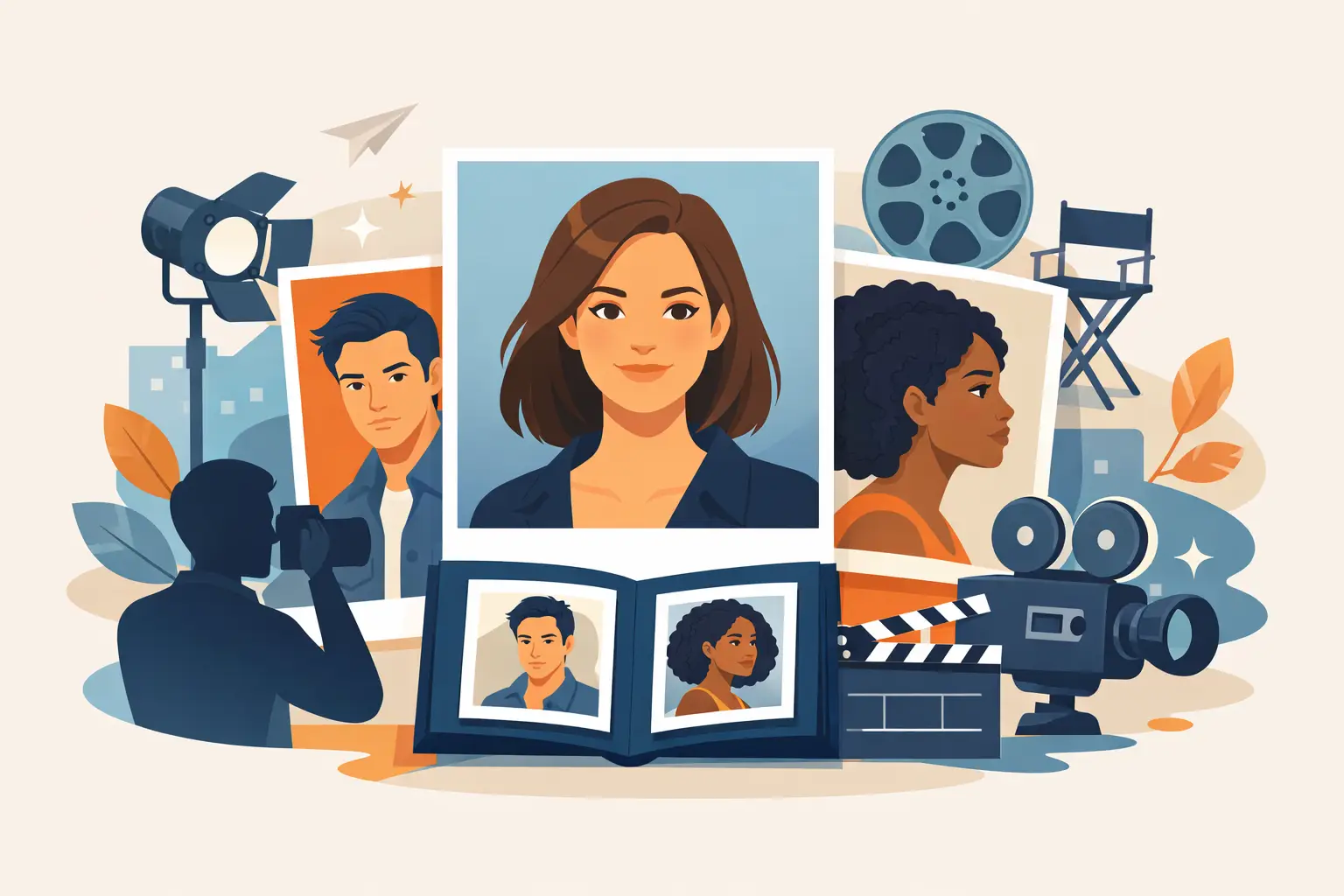
A casting professional may look at your materials for only a few seconds before deciding whether to learn more. The best acting portfolio photo examples make those seconds count. They show a clear, current version of you, hint at the kinds of roles you can play, and still feel natural enough that someone would recognize you when you walk into the room.
For actors, portfolio images are not simply a collection of flattering pictures. They are practical marketing tools. A strong set gives casting teams, agents, directors, and producers a quick sense of your age range, energy, professionalism, and possible character types without making you look overstyled or unlike yourself.
What Acting Portfolio Photo Examples Should Show
Your portfolio should answer a simple question: what could this person be cast as? That does not mean every image needs a costume or a dramatic expression. In fact, the most useful photos usually feel controlled, current, and believable.
Start with a professional headshot that makes direct eye contact and shows your face clearly. This is the anchor image. It should be well lit, edited with restraint, and close enough that your facial features are easy to read. Casting teams need to see your eyes, skin tone, hair, and overall presence without heavy filters, distracting shadows, or outdated styling.
From there, a portfolio can add images that show different sides of your look and personality. The goal is range, not reinvention. A warm, approachable portrait and a more serious, grounded image can suggest different role possibilities while still looking like the same person.
The approachable commercial look
A relaxed smile, clean wardrobe, and open body language work well for commercial auditions, lifestyle campaigns, and characters such as a colleague, friend, parent, student, or helpful professional. This image should feel easy rather than overly cheerful. Think confident, present, and comfortable in your own skin.
A simple solid-color top or a light layer often photographs well. Keep the background quiet so attention stays on your expression. If you wear glasses regularly and they are part of how people know you, include a version with them. If they are optional, it can be useful to have one image with glasses and one without.
The dramatic or character-driven look
A second portrait with a more serious expression can communicate depth. This does not require a scowl or an intense movie-poster pose. A calm face, stronger eye contact, darker wardrobe, and slightly more directional lighting can create a thoughtful, private, or authoritative feel.
This type of image can support roles such as a detective, attorney, executive, complicated parent, teacher, doctor, or independent lead. The details depend on your natural casting range. Someone who reads youthful and playful may benefit from a grounded, mature portrait. Someone with a naturally serious presence may benefit from a warmer image to show flexibility.
A full-length photo that feels believable
A full-length image gives viewers a better sense of your build, posture, proportions, and movement. It should not look like a fashion catalog photo unless fashion modeling is part of your work. Wear clothing that fits well and represents your everyday professional look.
Stand naturally, with relaxed shoulders and a clear shape to your body. Avoid hiding under oversized clothing or choosing something so tight that you look uncomfortable. A clean pair of jeans, tailored pants, a fitted shirt, a simple dress, or a structured jacket can work well when it matches your likely role range.
A natural lifestyle portrait
Lifestyle images can help an aspiring actor look more complete, especially when building a first portfolio. These photos may be taken outdoors, in an urban setting, at a cafe-style location, or in a simple interior with natural light. They should feel polished but not staged beyond recognition.
The trade-off is that lifestyle images are less universal than studio headshots. They can give your portfolio personality, but they should not replace a clean headshot. Use them as supporting images that show how you carry yourself in a real-world setting.
Build Range Without Looking Like Different People
One common mistake is trying to cover every possible character type in one session. A dramatic suit, athletic gear, an evening look, casual streetwear, and a themed costume may sound like variety, but together they can confuse the person viewing your portfolio.
Instead, choose two or three connected looks that reflect roles you can realistically pursue now. Your age, overall presence, voice, training, and local casting market all affect that decision. A teenager may need a youthful everyday image and a polished school or work-ready look. An adult actor might choose approachable professional, casual lifestyle, and serious dramatic portraits.
Clothing should support the story without becoming the story. Avoid bold logos, tight stripes, busy patterns, and accessories that pull focus from your face. Bring options in solid colors that complement your complexion, then narrow them down with your photographer. A good photographer will consider how fabrics, colors, and necklines read on camera, not just how they look on a hanger.
Hair, makeup, and grooming should also be current. Casting teams need to know who will arrive at an audition, not who you were several years ago or who you might be after a major transformation. If you change your hair color, grow a beard, cut your hair significantly, or shift your overall appearance, update your headshot and your key portfolio images.
Posing That Feels Like You
Most actors do not need to arrive with a long list of poses. What matters more is working with a photographer who gives clear direction and makes room for natural reactions. Small adjustments can change an image completely: lowering a shoulder, shifting weight, turning your face toward the light, or letting your expression settle between smiles.
For close-up portraits, focus on being present rather than trying to perform an emotion. Think about a person, a moment, or a simple intention that changes your eyes naturally. A photographer may ask you to soften your smile, look just beside the camera, or bring more energy into your posture. These prompts create real variation without forcing an artificial expression.
For full-length shots, movement helps. Walk a few steps, adjust your jacket, sit briefly, or shift from one foot to the other. Static posing can look stiff, especially when you are new to being photographed. The best frame often happens just after you stop trying to hold a pose perfectly.
Studio or Location: Which Is Better?
A studio session is often the best choice for your primary headshot. Clean backgrounds and controlled lighting keep the focus on your face. Studio images are versatile because they can be used across casting profiles, agency submissions, personal websites, and promotional materials.
An on-location session can add warmth and context. It may suit actors who want lifestyle images, a more editorial feel, or portraits that reflect a particular professional type. A polished downtown setting might support a young professional look, while a calm outdoor space can feel open and approachable.
There is no single right choice. Many actors benefit from both: a studio headshot for clarity and a small selection of location portraits for personality. RP Photography can guide actors through studio and on-location options in Cambridge, Kitchener, Waterloo, and Guelph, with practical direction throughout the session.
What to Leave Out of Your Portfolio
Do not include photos simply because they are attractive. A vacation image, a heavily filtered social post, or an old photo from a special event may not help a casting professional understand your current look. If an image has poor lighting, an unclear face, visible digital smoothing, or styling that no longer reflects you, leave it out.
Be cautious with extreme expressions and overly theatrical concepts. Unless the image is tied to a specific production or a legitimate editorial project, it can read as trying too hard. Your portfolio should create interest while leaving room for casting teams to imagine you in their project.
Also avoid quantity for its own sake. Five strong, current images are more useful than twenty similar photos. Choose a lead headshot, a second expression or mood, a full-length image, and one or two supporting portraits that add something new.
Prepare for a Better Session
Plan your wardrobe a few days ahead, steam or press your clothing, and bring more options than you expect to use. Get enough rest, drink water, and allow time to arrive without rushing. These details show in your face and posture more than most people realize.
During the session, say something if a pose, outfit, or direction does not feel like you. Good coaching is collaborative. You should leave with images that look professionally refined while still feeling recognizable and comfortable.
Your acting portfolio does not need to prove that you can play every role. It needs to make the right people curious about the roles only you can play.