
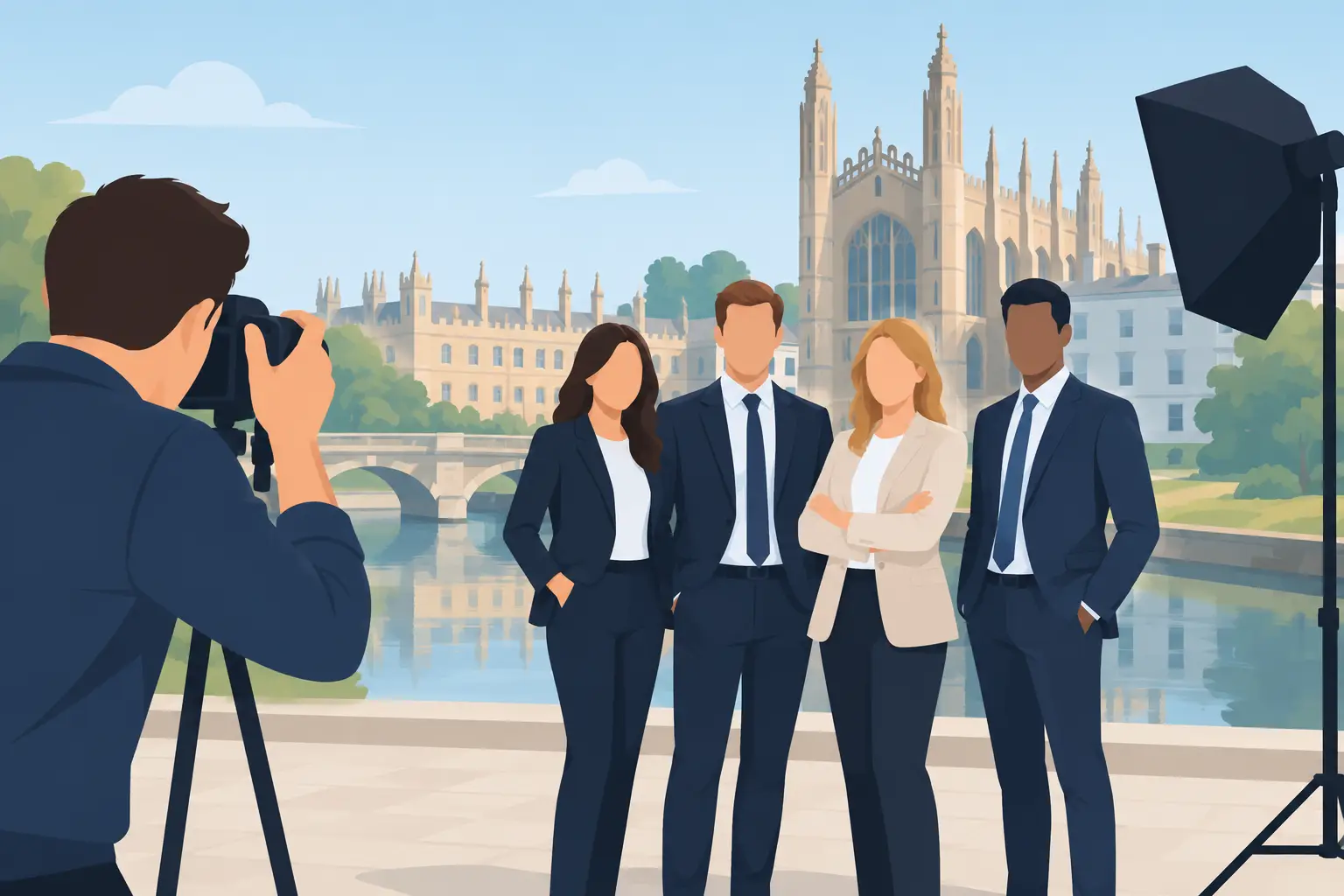
A new hire starts Monday, your website is being refreshed, and someone realizes the team page still features a mix of cropped event photos and outdated headshots. This Cambridge corporate photography guide helps you plan images that look consistent, professional, and true to the people behind your business.
Corporate photography is not just a box to check for the website. It shapes how clients, candidates, partners, and prospects see your company before they speak with anyone. A strong set of photos makes your team easier to trust. A rushed or inconsistent set can make even a well-run business appear less established than it is.
Start With the Business Purpose
The best corporate photo session begins with a clear answer to one question: where will these images be used? A LinkedIn headshot has a different job from a website leadership portrait. A recruitment campaign needs warmth and personality, while a professional services firm may need a more polished, formal look.
Before booking, identify the priority uses for your images. You may need individual headshots for email signatures and LinkedIn, team photos for your website, workplace images for marketing, or updated portraits for proposals and speaker bios. Knowing this early helps determine the right backdrop, location, framing, schedule, and number of final images.
It also prevents a common issue: asking one session to do everything without allowing enough time. One well-planned shoot can cover several needs, but it needs a realistic shot list and a photographer who understands how each image will be used.
Build a Consistent Visual Standard
Consistency does not mean everyone has to wear the same shirt or make the same expression. It means the photos feel like they belong to one organization. Lighting, background, crop, editing style, and overall energy should work together across the full set.
For many teams, a clean studio-style backdrop creates the easiest consistency. It works especially well for larger groups, growing companies, and teams that expect to add new hires throughout the year. A controlled setup means new headshots can match the original images more closely.
On-location portraits can be equally effective when the workplace supports your brand. A bright office, modern lobby, creative studio, or recognizable local setting can add personality and context. The trade-off is that natural light and office environments can change, so matching future photos may take more planning.
For businesses in Cambridge, Kitchener, Waterloo, and Guelph, flexible on-location photography can be a practical choice when gathering the entire team elsewhere would interrupt the workday. The important part is choosing a space that is tidy, well-lit, and aligned with the impression you want to make.
Cambridge Corporate Photography Guide: Choose the Right Image Types
Not every organization needs the same collection of images. A small consulting firm may get the most value from polished headshots and a few natural team portraits. A real estate brokerage may need individual agent photos, group images, and personal branding photos that can work across listings, social media, and print materials.
A useful corporate image library often includes these distinct categories:
- Individual headshots with a consistent look for staff profiles, LinkedIn, and internal directories
- Team and department photos that show connection without looking overly staged
- Leadership portraits for bios, media requests, presentations, and speaking engagements
- Environmental images of people working, meeting, or interacting in the office
- Detail images of the workspace, products, or branded elements for website and marketing use
You do not need every category for every session. Prioritize the images that will be used in the next six to twelve months. If your company is launching a new website, hiring, or updating sales materials, that may justify a broader shoot. If the immediate need is a consistent set of staff headshots, keep the session focused and efficient.
Make the Schedule Easy for Your Team
The smoothest corporate sessions feel organized without making people feel rushed. Employees are more relaxed when they know exactly where to go, how long their turn will take, and what they should bring.
Set up a simple schedule with a few minutes of buffer between people. Even a short headshot appointment benefits from time to settle in, adjust clothing, and receive posing direction. Avoid booking every slot back to back with no room for late arrivals, last-minute touch-ups, or a conversation with someone who is especially camera-shy.
If you are photographing a larger office, consider a dedicated room with enough space for lighting and a clear area for people to wait. Choose a time that avoids peak meetings, client calls, and busy reception hours. A well-organized process respects your team’s time and protects the quality of the images.
Give everyone advance notice of the dress expectations. This does not need to be overly strict. A simple guideline such as business casual in solid, neutral, or brand-friendly colors gives people enough direction while allowing individual style. Busy patterns, large logos, and very bright neon shades can distract from the face, particularly in headshots.
Help People Look Natural, Not Posed
Most people do not enjoy being photographed. They may worry about their smile, posture, glasses, or what to do with their hands. That is normal, and it is one reason professional direction matters.
A good corporate photographer does more than set up lights and press the shutter. They coach each person through small adjustments that create a more confident result: turning the shoulders slightly, relaxing the jaw, shifting weight, or changing the angle of the chin. These details make a meaningful difference without making the image feel artificial.
Encourage your team not to practice a fixed “camera face.” The goal is not a forced smile. It is a comfortable, approachable expression that fits the person and the role. A friendly, relaxed session usually produces better photos than one where people feel judged or hurried.
For group photos, avoid lining everyone up stiffly against a wall unless that formal look is intentional. Small changes in height, spacing, body angle, and interaction can make a team image feel more connected while still looking professional.
Pay Attention to Editing and Delivery
The shoot is only part of the process. Editing should create a polished, natural finish while keeping people recognizable. Professional retouching can reduce temporary blemishes, soften distracting shine, correct color, and refine small details. It should not leave the team looking overly smoothed, heavily filtered, or unlike themselves.
Ask how final images will be delivered and what formats are included. Businesses often need high-resolution files for print and web-sized files for online use. Cropping also matters. A horizontal website banner, square social profile image, and vertical portrait each require different framing.
Think about access after delivery as well. Someone in marketing or operations should be able to locate the approved images when a new proposal, press request, or staff announcement comes up. Clear file names and an organized folder save time later.
Plan for Growth, Not Just This Month
Corporate photography works best when it becomes part of an ongoing brand standard rather than a one-time scramble. New employees join, leaders change roles, and your business evolves. If your original images have a clear style, future sessions can continue that look without rebuilding the process from scratch.
Keep a record of the background, lighting approach, wardrobe guidance, and preferred crop from your first session. If a photographer provides a comfortable experience and consistent editing, that relationship can make future updates much easier. RP Photography works with individuals and teams who want that polished look without a stressful, overly formal session.
The right corporate photos should make your people look prepared, capable, and approachable. Give the session enough thought upfront, then let professional guidance handle the details. When your team recognizes themselves in the final images and feels good sharing them, you have created far more than a set of photos.