
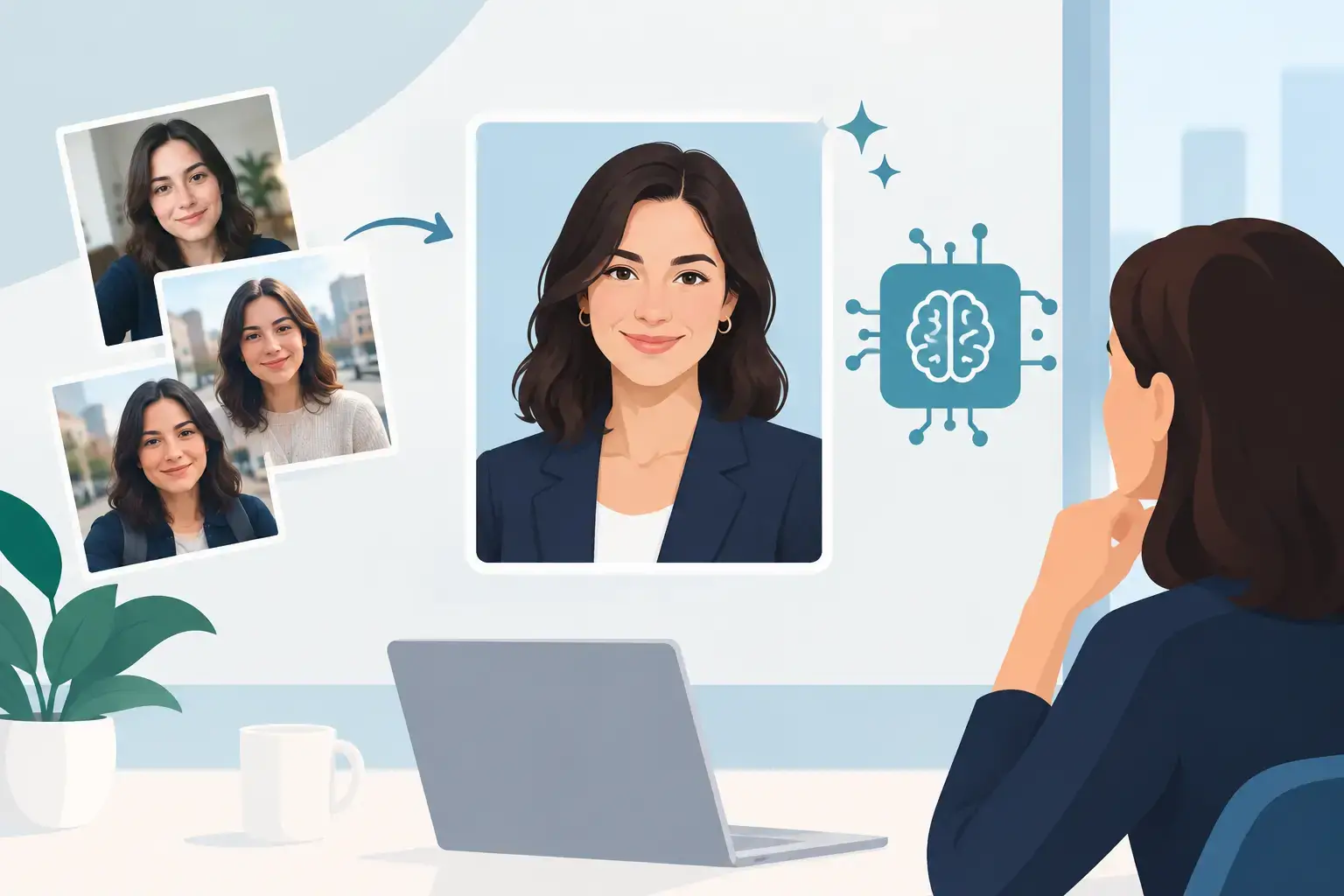
A new LinkedIn profile photo is often needed quickly: a job opportunity appears, a company updates its team page, or a realtor needs a fresh image before a listing goes live. AI headshots promise a convenient answer. Upload a few casual selfies, choose a style, and receive a polished-looking portrait without scheduling a session.
That convenience is real. But for professionals whose image supports their career, reputation, or business, the better question is not whether AI can create a headshot. It is whether the result represents you accurately, confidently, and consistently wherever clients, employers, casting teams, or colleagues see it.
What AI Headshots Do Well
AI-generated headshots use uploaded photos to create new images based on selected prompts or styles. Depending on the platform, you may be able to choose wardrobe, backgrounds, lighting, and a corporate, creative, or casual look. The process can be fast, relatively inexpensive, and useful when you need ideas for the kind of image you want.
For someone testing a new personal-branding direction or preparing a temporary profile image, AI can be a practical option. It may also help a camera-shy person see that a polished headshot does not have to mean a stiff, overly formal portrait.
The strongest AI results generally come from clear, well-lit source photos taken from several angles. Even then, the software is making decisions about your face, hair, skin texture, smile, clothing, and posture. It is not photographing a real moment. It is generating an interpretation based on the images and settings it receives.
That distinction matters more than many people expect.
Where AI Headshots Can Fall Short
A professional headshot has a straightforward job: it should help someone recognize you, trust you, and feel that your image matches the person they will meet. When an AI image subtly changes your face, that job becomes harder.
Sometimes the changes are obvious, such as altered teeth, unfamiliar hair, overly smooth skin, distorted hands, or clothing that looks believable only at a glance. Other times, the issue is more subtle. The eyes may not carry your usual warmth. Your smile may look slightly different. The image can be technically attractive while still feeling unlike you.
For a casual social profile, that may not be a major concern. For a lawyer, consultant, job seeker, entrepreneur, actor, or real estate professional, it can create a mismatch between your online presence and the person sitting across the table. Trust is built in small details.
AI also has a tendency to produce a familiar visual formula: perfect lighting, an immaculate office blur, exceptionally smooth skin, and a pose that looks a little too manufactured. If everyone on a company page uses a similar generated style, the images may look polished but less personal. A brand is stronger when its people look real, approachable, and consistent.
There are practical considerations, too. Before uploading photos to any AI service, review its terms, privacy practices, and rights around the images you provide. Your face is personal data. It is reasonable to know how those photos may be stored, used, or retained.
What a Professional Headshot Session Adds
A professional photographer does more than operate a camera. The session is built around helping you look like yourself on a very good day. That includes choosing flattering lighting, finding the best angle, guiding posture, and creating a relaxed expression that cannot be prompted into existence.
Many clients arrive worried they are not photogenic or that they do not know what to do with their hands. That is normal. You do not need modeling experience to get a strong result. Good direction turns uncertainty into simple, manageable adjustments: lower one shoulder, shift your weight, turn slightly, relax your jaw, and look just above the lens for a moment.
Those small changes create an image with better posture and a more natural presence. More importantly, they create a portrait that still looks like you.
Editing plays a role after the session, but it should support the image rather than replace the person. Professional retouching can reduce temporary blemishes, refine distracting details, and balance color while preserving skin texture, facial character, and expression. You should look polished, not digitally redesigned.
A session creates consistency for teams and brands
For corporate teams, consistency is often as important as individual quality. Different backgrounds, lighting styles, crops, and editing levels can make a company website look pieced together. A coordinated session creates a cleaner, more credible visual identity across leadership pages, staff bios, proposal documents, and marketing materials.
This is where an in-studio or on-location photographer can be especially useful. The setup can be tailored to your office, team schedule, brand colors, and intended uses. New hires can be photographed in the same style later, so the visual standard stays consistent.
For businesses in Cambridge, Kitchener, Waterloo, and Guelph, location flexibility can also remove a major obstacle. A team does not always need to spend time traveling to a studio when a professional setup can come to the office.
When AI Makes Sense and When It Does Not
AI is not automatically the wrong choice. It depends on what the image needs to accomplish.
An AI-generated image can be useful for a quick placeholder, an internal account, or an experiment with wardrobe and style. It may give you a clearer sense of whether you prefer a lighter background, a more formal jacket, or a friendlier expression before arranging a real session.
A professional photo is usually the better investment when your image directly supports business, hiring, sales, networking, casting, or personal branding. That includes LinkedIn profiles, company websites, speaker bios, real estate marketing, professional portfolios, business cards, and resumes. In these situations, authenticity is not an extra feature. It is part of the value of the image.
Actors and aspiring models should be especially careful with generated portraits. Casting professionals want to see the person who may walk into the room, not an AI-enhanced version with changed features. A strong portfolio image should show range, personality, and a realistic representation of how you look now.
How to Get a Better Headshot, Whatever You Choose
If you decide to book a professional session, prepare for it as you would for an important meeting. Choose clothing that fits well and feels like your normal professional style. Solid colors usually photograph well, while very busy patterns can compete with your face. Bring a second jacket, shirt, or top if you want options without making the session complicated.
Get enough rest, arrive a few minutes early, and give yourself permission to settle in. The goal is not to force a perfect smile in the first frame. The best expressions often appear after a few minutes of conversation and direction, once the camera feels less intimidating.
Be clear about where the photos will be used. A headshot for a financial advisor may need a different feel than one for a creative entrepreneur or a theatre performer. Share whether you need vertical and horizontal crops, space for text, a particular background color, or multiple images for a website and social profiles. These details help shape the session around a real business need.
If you already created AI images, bring them as a reference rather than treating them as a final answer. They can help identify what you liked about the lighting, wardrobe, or overall mood. A photographer can then create that polished direction in a way that looks natural and belongs to you.
A Better First Impression Starts With a Real One
Your headshot does not need to be dramatic or overly styled. It needs to feel current, confident, and believable. The right image gives people a clear introduction before the first call, meeting, audition, or showing.
AI can offer speed and visual inspiration, but a guided professional session offers something more durable: a portrait that reflects the real person behind the profile. When your image is part of your work, choosing a photo that people can recognize and trust is a practical way to stand out.