
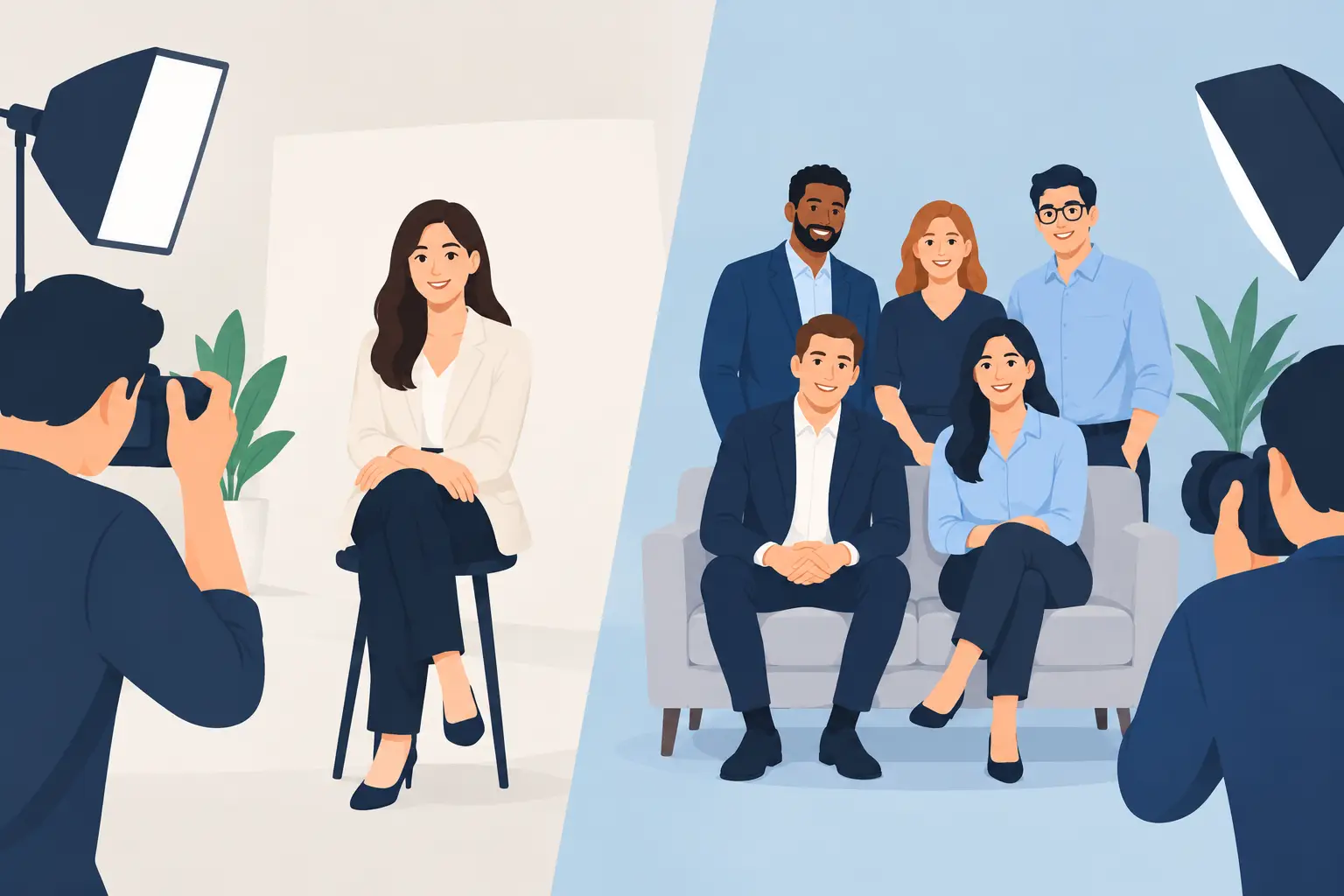
A new LinkedIn profile, company website refresh, or growing real estate team can create the same question: should everyone book separately, or should the group be photographed together? Individual versus team photo sessions are both valuable, but they solve different business needs. The right choice comes down to where the images will appear, how consistent you need them to look, and what will make the people being photographed feel most comfortable.
A professional photo should do more than show what someone looks like. It should help a job seeker appear prepared, a business owner look credible, or a team feel approachable and established. Knowing the difference between these two session styles helps you spend wisely and get images that are useful well beyond one post or one page.
What an individual photo session does best
An individual session puts the focus on one person and the role they want their image to support. It is a strong fit for professionals updating LinkedIn, job seekers building a polished resume, actors preparing a portfolio, realtors refreshing marketing materials, and entrepreneurs creating personal branding content.
Because the session centers on one person, there is more room for coaching. A photographer can adjust posture, expression, hand placement, and angle as the session progresses. That matters for people who feel awkward in front of a camera or have never had professional photos taken before. Small adjustments can make the difference between a photo that feels stiff and one that looks confident and natural.
Individual sessions also offer more flexibility. You may choose a clean studio-style background for a corporate headshot, an office setting that supports your profession, or an outdoor location with a more relaxed personal-branding feel. You can usually bring a second jacket, shirt, or accessory to create a wider range of images without changing the purpose of the session.
When individual sessions are the better choice
Choose an individual session when your photo needs to work primarily for your own career or business. It is especially useful if you need a strong profile image quickly, want more than one finished look, or would benefit from extra posing direction.
This format is also practical when team members work different schedules or live in different places. Rather than delaying updated headshots until everyone is available, each person can book a convenient time and receive an image that meets the same professional standard.
The trade-off is consistency. If people book months apart, wear very different styles, or choose unrelated locations, the final photos may not feel like part of one company. That is not always a problem, particularly for independent professionals. For a client-facing team page, though, a more coordinated approach often looks stronger.
What a team photo session does best
A team session creates visual unity. It can include consistent individual headshots for every employee, a group portrait, or both. For businesses with a website, sales materials, office signage, or active social media, that consistency helps visitors understand that they are working with an organized and established group.
The advantage is not that every person needs to look identical. The goal is for the photos to feel connected. Matching backgrounds, lighting, framing, and editing give each person room to look like themselves while keeping the overall presentation professional.
A well-planned team session is often efficient, too. The photographer can set up lighting once and move people through a simple process, providing quick coaching along the way. This is useful for offices, brokerages, medical practices, law firms, agencies, and growing local businesses that need several headshots without creating a complicated booking process.
Group portraits add another benefit: they show the people behind the business. A warm, well-organized team photo can make a company feel more accessible than a page filled only with names and titles. For service businesses, that human connection can help a potential client feel more comfortable reaching out.
When a team session is the better choice
A team session is usually the best fit when your images will appear together. If your company is redesigning its website, launching a new brand, adding staff to an existing team page, or preparing marketing materials, coordinated photography helps create a clear first impression.
It is also worth considering when you want a group image for a company announcement, recruitment campaign, annual report, or social media. In these cases, photographing everyone separately may not communicate the same sense of collaboration.
The main challenge is scheduling. Even a short session requires people to arrive on time, follow basic wardrobe guidance, and be ready for their turn. Larger teams may also need a separate plan for staff who are away, newly hired, or working remotely. A flexible photographer can photograph the core group first, then add consistent headshots for new members later.
Individual versus team photo sessions: key differences
The simplest distinction is purpose. Individual photography is about personal flexibility and focused coaching. Team photography is about efficiency, consistency, and showing how people connect under one brand.
Budget can play a role, but it should not be the only deciding factor. A team session may be more cost-effective per person when several people need headshots at once. An individual session can offer better value when only one person needs updated images or when that person needs several looks for different uses.
Time matters as well. One person can often schedule a session around their own calendar. A team session works best when someone at the company can coordinate the schedule, share clothing recommendations in advance, and keep the day moving smoothly. Even a polished photography setup cannot fully compensate for a room of rushed people who were not told what to expect.
How to plan photos your business can use
Start by identifying where the final images will live. A single LinkedIn headshot has different needs than a team website, a real estate brochure, or an entrepreneur’s personal-branding campaign. Once the use is clear, the session format becomes easier to choose.
For a team, agree on a simple wardrobe direction rather than a strict uniform. Solid colors, well-fitting clothing, and a level of formality that reflects the business usually work well. Avoid requiring everyone to wear the same shade unless that is already part of the brand. Coordinated is more natural than matched.
For individuals, choose clothing that makes you feel like a polished version of yourself. A headshot should still look current when someone meets you in person. Bring options if you are unsure, and prioritize fit over a trendy item that feels uncomfortable or restrictive.
Location should support the message, too. A studio setting creates a clean, repeatable look. An office can add context and make your business feel familiar. On-location portraits can work well for personal brands, provided the background does not distract from the person. In Cambridge, Kitchener, Waterloo, and Guelph, on-location sessions can be particularly helpful for teams that want professional images without moving staff off-site for long.
A hybrid option often makes the most sense
You do not always have to choose one format exclusively. Many businesses benefit from a hybrid session: consistent individual headshots for each team member, followed by a few group images. This gives the company practical assets for profile pages and email signatures while also providing warmer images for marketing and recruitment.
A hybrid approach is especially effective for teams that are growing. Establishing a lighting style, background, and framing now makes it easier to add new employees later without making the website look pieced together. It also lets each person receive a moment of individual coaching before joining the group.
The best photo session is the one that gives you images you will actually use. Whether the focus is one career, one personal brand, or an entire office, a little planning and calm direction can turn camera nerves into photos that look capable, approachable, and ready for the next opportunity.