
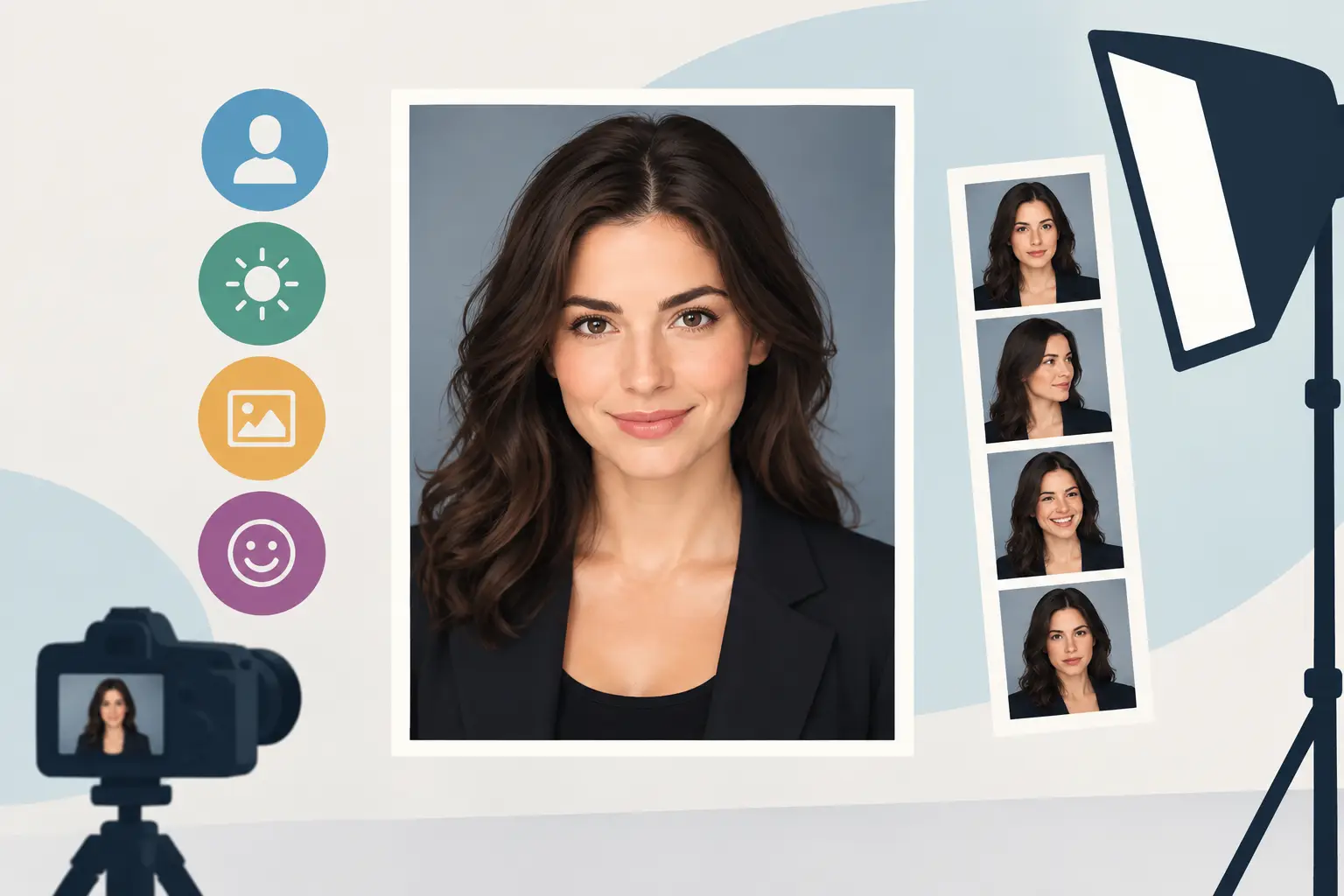
A casting director may only spend a few seconds looking at your submission before deciding whether to click through. That is what makes a strong actor headshot so valuable: it gives them a clear, believable sense of who you are and the roles you could play before you ever enter the room. It is not about looking like a different person or chasing a heavily styled image. It is about being recognizable, engaging, and easy to cast.
For actors, a headshot is working material. It needs to hold up on casting platforms, in a small thumbnail, and when someone compares it with your self-tape or meets you at an audition. A polished image helps, but honesty is what makes it useful.
What Makes a Strong Actor Headshot?
A strong actor headshot puts your face, expression, and casting potential first. The best images feel simple because every choice supports that goal. Your eyes are clear, the lighting is flattering without being distracting, and the photo still looks like you on a normal good day.
Casting teams are not looking for a generic version of “professional.” They are trying to quickly understand your age range, energy, and likely lane. Are you approachable and warm? Intense and grounded? Quick-witted? Thoughtful? Your headshot does not need to explain your entire range, but it should offer a truthful first impression.
That is why a technically sharp image alone is not enough. A beautifully lit photo can still miss the mark if the expression feels blank, the styling feels unlike you, or the retouching removes the features that make you recognizable.
Your eyes should do the work
In an actor headshot, the eyes carry the connection. They should be in focus and visible, with an expression that feels present rather than posed. This does not mean forcing a dramatic stare or a large smile. It means giving the camera something real to respond to.
Many people become stiff because they think they need to “perform” for the photo. Usually, a more natural approach works better. Good direction during the session can help you shift your focus, relax your face, and find small changes in thought and energy. Those subtle adjustments often create the frame that feels most castable.
A viewer should get the feeling that you are looking back at them, not just standing in front of a lens.
The photo should look like you now
Accuracy is one of the most practical parts of a successful headshot. If your hair is shorter, longer, darker, lighter, or styled differently than it appears in your photo, casting may have trouble matching the image to the person in the room. The same goes for noticeable changes in facial hair, glasses, or overall appearance.
Aim for an up-to-date headshot that reflects your current look. You do not need to wait until every detail is perfect. In fact, waiting for a version of yourself that is not yet real can lead to an image that does not serve your auditions. A current, confident headshot is more useful than a perfect-looking image from two years ago.
Retouching should also be light and thoughtful. Temporary blemishes can be cleaned up, and basic skin editing can create a polished finish. But lines, texture, freckles, and other natural features should not be erased to the point that the result feels unfamiliar. You want to arrive at an audition looking like the person they selected.
Expression Matters More Than a Perfect Pose
Actor headshots are not fashion portraits. They can be stylish, but the image should never make the clothes, pose, or editing more interesting than your face. A slight turn of the shoulders, relaxed posture, and a natural head angle are usually enough to create shape without making the image feel overly posed.
Expression is where the real variety happens. A theatrical headshot may carry more depth or edge, while a commercial headshot may feel more open, friendly, and approachable. There is overlap, of course. A comedic actor does not need to smile broadly in every photo, and a dramatic actor does not need to look serious all the time. The right expression depends on the roles you are pursuing and the qualities you genuinely bring on camera.
If you need more than one look, make the differences meaningful. A new shirt without a change in energy may not create a useful second option. Instead, think about contrasting casting directions: warm and relatable versus focused and self-assured, for example. A photographer who gives clear coaching can help you create variation without losing authenticity.
Simple Wardrobe Keeps the Focus Where It Belongs
Wardrobe should support your complexion, your personality, and your casting type without becoming a costume. Solid colors and subtle textures usually photograph well because they keep attention on your face. Choose clothing that fits properly and makes you feel comfortable sitting, standing, and moving.
There is no single best color for every actor. A deep blue may bring out one person’s eyes, while a warm earth tone may suit someone else better. The key is to avoid anything that competes with your expression: large logos, busy patterns, overly reflective fabrics, or accessories that pull the eye away from your face.
Bring a few options to your session if possible. A photographer can see how colors respond to the lighting and background, and can help you narrow choices based on the look you are building. Think in terms of necklines, layers, and tones rather than bringing an entire closet. Two or three strong options are usually more helpful than ten uncertain ones.
Hair and makeup should follow the same principle. Look camera-ready, but recognizable. For some actors, that means a polished version of an everyday look. For others, it means a little more definition so features read clearly under studio lighting. Either way, avoid trying a brand-new haircut, makeup style, or skin treatment immediately before the shoot.
Lighting and Background Should Feel Intentional
Professional lighting does more than make a photo look polished. It shapes the mood, brings attention to the eyes, and creates enough separation between you and the background. It should flatter your features while still preserving dimension and character.
For actor headshots, simple backgrounds are often the strongest choice. Neutral studio backdrops, clean outdoor settings, or softly blurred environments can all work well when they fit the actor’s type and the intended use. What matters is that the background does not create confusion or compete with the subject.
A dark background can add focus and intensity. A lighter setting can feel clean, open, and accessible. Neither is automatically better. The useful question is whether the final image supports the impression you want casting to receive. A relaxed commercial look may benefit from brighter tones, while a more dramatic image may suit deeper contrast. The decision should be based on your actual casting goals, not a passing trend.
A Strong Headshot Must Work at Small Sizes
Most casting decisions begin on a screen, often with a tiny image among many other submissions. That changes how a good headshot should be evaluated. If your face disappears into a wide composition, if the background is overly detailed, or if the expression only works when viewed large, the image may not do its job in a casting grid.
A closer crop is common for a reason. It makes your face easy to see and lets your eyes lead. The image should remain clear when reduced in size, while still looking professional at full resolution for a website, portfolio, or printed material.
Before choosing your final images, view them both large and small. Ask yourself whether the first impression is clear. Does the image still feel like you? Would someone understand your energy without needing extra explanation? Those questions are often more useful than asking which frame is simply the most flattering.
Direction Creates the Natural Moments
Most actors understand performance, yet many still feel nervous about being photographed. A headshot session is different from an audition because there is no scene partner, script, or character to lean on. That is why communication from the photographer matters so much.
Clear direction helps remove the guesswork. Small guidance on posture, breathing, where to place your attention, and when to reset can keep the session moving while giving you room to be yourself. You should not have to know every angle or pose before you arrive. The goal is a comfortable process that creates confident, natural images.
At RP Photography, sessions are designed to feel relaxed and practical, with coaching that helps clients avoid the frozen, over-rehearsed look they worry about. That approach is especially helpful for emerging actors in Cambridge, Kitchener, Waterloo, and Guelph who need professional images without feeling pressured to become a different person for the camera.
Choose the Image That Feels Most Believable
The strongest final headshot is not always the one with the biggest smile, the most dramatic lighting, or the most obvious polish. Often, it is the frame where your expression settles, your eyes are alive, and you look comfortable in your own skin.
Show your short list to someone who knows you well and ask a specific question: “Which one looks most like me when I am at my best?” Their answer may help you see past minor concerns about angles or perceived flaws. Casting is looking for a person they can believe in, not a perfectly manufactured image.
A good actor headshot opens a door. Keep it current, keep it honest, and choose a photographer who can help you show up with clarity and confidence when that first look matters.